


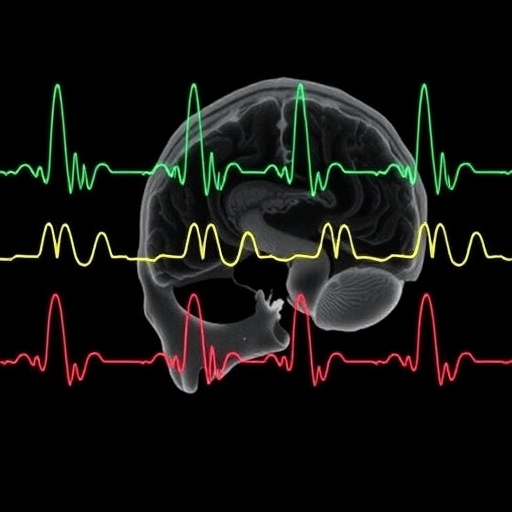
In a remarkable advance for neonatal intensive care, a recent study sheds new light on the neurological risks faced by newborns undergoing cardiac surgery. Despite significant progress in surgical techniques and perioperative care, the threat of neurological insult remains a pressing concern. The application of continuous electroencephalography (cEEG) as a real-time monitoring tool is transforming our understanding of postoperative brain function in these vulnerable patients, revealing critical insights into seizure incidence and prognostic brain activity patterns.
Neonatal cardiac surgery is an intricate procedure fraught with challenges, not least because the immature brain is particularly susceptible to ischemic and hypoxic injury during and after surgery. While the immediate cardiac outcomes have improved dramatically over the years, neurological complications such as seizures may go unnoticed without dedicated monitoring. Seizures in neonates are often subtle and non-convulsive, rendering clinical detection unreliable. Hence, continuous EEG monitoring emerges as a pivotal technology that can detect these covert events, enabling timely interventions.
The study spearheaded by Philliben, Keene, Campbell, and colleagues rigorously investigates the incidence of seizures in neonates after cardiac surgery using comprehensive cEEG, uncovering patterns that were previously underappreciated. Their research, published in Pediatric Research on May 7, 2026, employs advanced EEG analytic techniques coupled with detailed perioperative data to draw correlations between EEG background abnormalities and neurobehavioral outcomes. The findings hold profound implications for neurologic prognostication in this delicate patient population.
One of the keystones of the research is the continuous EEG background activity analysis. The cerebral background rhythms act as a barometer of cortical and subcortical integrity, with alterations potentially signaling underlying brain injury. The authors highlight how deviations from normal neonatal EEG patterns post-surgery correlate strongly with adverse neurodevelopmental trajectories. This suggests that cEEG background features are not merely passive reflections but active predictors of long-term functional outcomes.
Moreover, the detection of postoperative seizures via continuous EEG was more frequent than anticipated under standard care. The study reveals that many seizures are electrographic only, lacking clinical manifestations, thereby underscoring the necessity of cEEG for comprehensive seizure surveillance. The anecdotal clinical awareness of neonates’ seizure burden is often overshadowed by overt cardiac concerns, but these findings compel a paradigm shift, asserting that routine EEG monitoring should become an integral part of postoperative care protocols.
Notably, the study delves into perioperative factors influencing neurological sequelae. Variables such as cardiopulmonary bypass time, degree of hypothermia induced during surgery, and postoperative hemodynamic stability were rigorously examined. The investigation demonstrates that longer bypass times and deeper hypothermia correspond with greater EEG background abnormalities and higher seizure incidence, elucidating pathophysiological mechanisms potentially linking surgical stress with neural compromise.
Additionally, the temporal evolution of EEG abnormalities was meticulously documented, revealing that some neonates show transient disruptions in background patterns, while others experience persistent deranged activity. This temporal aspect of EEG monitoring allows clinicians to stratify patients by risk and tailor neuroprotective strategies. It highlights the potential for dynamic monitoring to inform therapeutic decision-making beyond immediate postoperative periods, extending into critical windows of neurodevelopment.
This research also interrogates the interplay between EEG findings and neurobehavioral assessments, revealing robust associations between early electrophysiological disturbances and subsequent cognitive and motor function. Integrating cEEG data with neurodevelopmental follow-up provides a multidimensional framework for understanding the profound impacts of perioperative brain insults. It places EEG monitoring at the frontline of prognostic evaluation, guiding both acute management and long-term rehabilitative planning.
The implications of continuous EEG findings extend into the realm of clinical practice guidelines. The clear identification of seizure incidence in postoperative neonates advocates for routine implementation of cEEG monitoring in cardiac intensive care units. Early seizure detection paired with timely antiepileptic treatment could mitigate the risk of escalating neurological damage. Furthermore, recognizing specific EEG background abnormalities may enable early identification of neonates at high risk for neurodevelopmental delays, facilitating proactive interventions.
Technological advancements in EEG acquisition and interpretation underpin the study’s success. Utilizing high-resolution EEG systems equipped with neonatal-specific electrodes and sophisticated software algorithms for artifact reduction enhanced the accuracy of seizure and background anomaly detection. The study underscores the necessity of specialized neurophysiology expertise in neonatal cardiac centers, pointing towards a multidisciplinary approach that integrates neurology, cardiology, and intensive care.
Beyond clinical utility, this investigation pushes forward the frontier of neonatal neurocritical care research. It invites a reevaluation of existing paradigms by emphasizing the brain’s vulnerability amidst complex cardiac interventions and spotlighting continuous brain monitoring technologies as indispensable tools. This fusion of cardiopulmonary and neurological expertise opens avenues for future studies to explore neuroprotective agents, optimize surgical techniques, and develop personalized management pathways based on real-time brain function metrics.
The ethical context of continuous EEG monitoring also merits reflection. While early and aggressive detection of seizures offers unmistakable benefits, it raises questions about the balance between intervention and the neonate’s overall burden of care. Families and healthcare providers must navigate these challenges with transparency, weighing the benefits of prolonged EEG monitoring against potential stressors. The evolving dialogue around neuroprotection must remain patient-centered, integrating family perspectives alongside clinical data.
In summarizing their findings, Philliben and colleagues assert that continuous EEG monitoring after neonatal cardiac surgery reveals a higher-than-expected incidence of electrographic seizures and significant background EEG abnormalities predictive of adverse neurodevelopmental outcomes. Their work establishes cEEG as a critical tool not just for seizure detection but also as a window into the brain’s recovery and resilience following cardiac interventions. These insights demand a recalibration of neonatal ICU protocols to incorporate neurological surveillance as a standard of care.
Looking forward, the integration of continuous EEG with other neuromonitoring modalities—such as near-infrared spectroscopy and advanced neuroimaging—promises an even more granular depiction of cerebral physiology during the perioperative period. Combining multimodal monitoring with machine-learning algorithms could facilitate predictive analytics, enabling precision medicine approaches that tailor interventions to individual neonate risk profiles. The future of neonatal cardiac care lies at the nexus of multidisciplinary innovation, combining clinical acumen with technological prowess.
In conclusion, this groundbreaking study illuminates the shadowed domain of neonatal neurophysiology in the context of cardiac surgery. It challenges clinicians and researchers alike to deepen their commitment to brain health in the tiniest patients. As the frontiers of neonatal neurocritical care expand, continuous EEG monitoring stands out as a beacon—transforming abstract electrophysiological patterns into actionable intelligence that promises better outcomes for the most fragile hearts and minds.
Cite Scienmag News
Harold Sullivan. (May 7, 2026). Continuous EEG Reveals Seizures After Neonatal Heart Surgery. Scienmag. https://scienmag.com/continuous-eeg-reveals-seizures-after-neonatal-heart-surgery/
Harold Sullivan. "Continuous EEG Reveals Seizures After Neonatal Heart Surgery." Scienmag, 7 May 2026, https://scienmag.com/continuous-eeg-reveals-seizures-after-neonatal-heart-surgery/. Accessed 3 September 2026.
Harold Sullivan. "Continuous EEG Reveals Seizures After Neonatal Heart Surgery." Scienmag. May 7, 2026. https://scienmag.com/continuous-eeg-reveals-seizures-after-neonatal-heart-surgery/


