


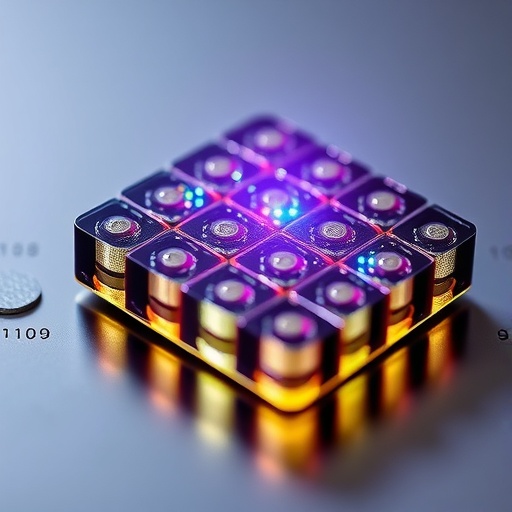
In a groundbreaking development poised to redefine the future of energy storage, researchers at the Korea Electrotechnology Research Institute (KERI) have unveiled a pioneering technology that promises to surmount one of the most stubborn challenges in the commercialization of all-solid-state batteries (ASSBs). Led by Dr. Nam Ki-Hun at KERI’s Battery Materials and Process Research Center, the team has developed an innovative nano-tin (Sn) interlayer control method that addresses the critical issue of interfacial instability between lithium metal anodes and solid electrolytes. This advancement marks a significant leap towards practical, high-performance ASSBs, which are often hailed as the next generation in battery technology due to their enhanced safety and energy density.
ASSBs have long been regarded as the “dream battery” by scientists and engineers. Their intrinsic advantage lies in replacing the traditional organic liquid electrolyte and graphite anodes with solid electrolytes and lithium metal, respectively. This substitution dramatically reduces the risk of fire—one of the dominant safety concerns with conventional lithium-ion batteries—while offering substantially improved energy density. However, the Achilles’ heel of these batteries has been the high interfacial resistance caused by unstable contact between the solid electrolyte and lithium metal anode, which impedes efficient ion flow and leads to the formation of lithium dendrites. These dendritic structures are microscopic, tree-like lithium deposits that pose severe risks to battery longevity and safety by penetrating the electrolyte and triggering short circuits.
To tackle these pervasive challenges, many research efforts have resorted to applying external pressure during battery operation—often up to tens of megapascals (MPa)—or employing complex, costly surface coatings to stabilize the lithium-solid electrolyte interface. Despite their effectiveness in experimental settings, these methods are impractical for real-world applications like electric vehicles. The heavy and bulky pressurization systems add weight and reduce space efficiency, undermining the primary advantages of ASSBs. Additionally, the complexity and expenses associated with sophisticated coatings escalate manufacturing costs, further hindering scalability and commercial viability.
KERI’s innovative approach circumvents these issues by introducing a delicate yet robust nano-tin (Sn) interlayer directly onto the lithium metal anode’s surface. This interlayer is composed of nano-sized tin particles possessing strong lithium affinity and excellent lithium storage capability. Utilizing a transfer printing technique, the researchers stamped this nano-Sn powder thin film uniformly onto the lithium metal’s surface, creating a highly effective buffer layer that facilitates stable, intimate contact with the solid electrolyte. This strategy dramatically reduces the physical degradation of lithium metal by minimizing interfacial resistance and simultaneously provides a more efficient ion transport pathway, leading to significant overall resistance reduction in the battery cell.
The implications of this technological breakthrough were emphatically demonstrated when the research team applied their nano-Sn interlayer to a pouch cell configuration—a key step towards industrially relevant battery formats. The resulting battery displayed a remarkable capacity retention exceeding 81% after 500 charge-discharge cycles under an external pressure as low as 2 MPa, a performance accompanied by an outstanding energy density greater than 350 Wh/kg. To put this into perspective, this value surpasses that of typical commercial lithium-ion batteries, which usually range between 150 to 250 Wh/kg. Such performance signifies a leap forward in realizing lightweight, powerful, and long-lasting all-solid-state batteries without the cumbersome mechanical pressurization of previous methods.
Beyond the engineering feats, KERI’s research integrates advanced theoretical insights as well. Collaborating with Dr. Kim Youngoh of the Next-Generation Battery Research Center at KERI, the team conducted first-principles computational simulations that delve into the atomic and electronic structure of the lithium-tin interface. These simulations clarified the fundamental mechanisms by which tin-based alloys enhance lithium ion transport and stabilize the interface, offering a robust theoretical foundation that complements the empirical results. This synergy between experimental innovation and computational science exemplifies the modern approach to materials research, where predictive modeling helps guide material design for superior battery performance.
The broader impact of this study extends into multiple strategic industrial sectors. Dr. Nam Ki-Hun emphasized the dual achievement of scalability and interfacial stability—both critical prerequisites for transitioning ASSBs from the laboratory to mass production. The modular thin-film interlayer concept is expected to be adaptable to large-scale manufacturing processes, paving the way for its application in electric vehicles, humanoid robotics, and energy storage systems (ESS). As these sectors demand batteries that combine safety, high energy density, and durability, KERI’s technology could become a cornerstone enabling next-generation electric mobility and smart technologies.
Moreover, the joint leadership in this study, including Dr. Ha Yoon-Cheol, highlighted the significance of this breakthrough in a highly competitive global context. As countries vie for supremacy in battery technology, the development of practical and scalable ASSB solutions provides a strategic competitive advantage. By securing intellectual property and advancing scientific knowledge, KERI is positioning South Korea as a key player in the future battery ecosystem. The research not only contributes to scientific progress but also aligns with national priorities in clean energy and technology sovereignty.
The research achievement is documented in a front cover article in the prestigious journal Advanced Energy Materials, an outlet with a substantial impact factor of 26.0 and recognized globally for publishing cutting-edge energy materials research. The publication, titled “Interface Stabilization via In Situ Lithiated Sn Interlayer in All-Solid-State Li-Metal Batteries: Toward Pellet-Type Cell to Pouch-Type Cell,” lays out the full technical details and experimental verification of the nano-Sn interlayer approach. This visibility underscores the scientific community’s recognition and the transformative potential of the innovation.
Supporting the core research efforts are the contributions from co-first authors Kim Garam and Im So-Jeong, emphasizing the collaborative nature of this achievement across academic and institutional boundaries, including the joint program between KERI and Changwon National University. The technology’s readiness for commercial exploitation is evidenced by the completion of a domestic patent application, safeguarding the innovation and opening pathways for future industry partnerships and commercialization strategies.
The research received targeted funding and support from KERI’s internal research programs and the Global Top Strategy Research Initiative (GT-3) under the Ministry of Science and ICT. These resources were crucial in enabling multidisciplinary research combining experimental development, theoretical calculation, and engineering validation. The intertwining of multiple research pillars illustrates the complexity and ambition involved in realizing high-performance all-solid-state batteries that could one day power everything from electric vehicles to grid-scale energy storage.
In sum, KERI’s nano-tin interlayer control technology marks a formidable advance in overcoming the interfacial challenges that have long bottlenecked the advancement of all-solid-state lithium metal batteries. By integrating material innovation, scalable manufacturing techniques, and computational insights, the research unlocks a clearer pathway toward the widespread adoption of ASSBs in next-generation power applications. This development not only enhances battery safety and energy density but also aligns with global efforts to embrace sustainable, high-efficiency energy storage systems essential for the clean energy transition.
News Publication Date: 1-Apr-2026
Web References: DOI link
Keywords
All-solid-state batteries, nano-tin interlayer, lithium metal anode, solid electrolyte, interface stabilization, dendrite suppression, energy density, battery safety, transfer printing, first-principles simulations, lithium ion transport, electric vehicle batteries
Cite Scienmag News
Faith Mcneil. (April 29, 2026). KERI Overcomes Interfacial Instability Challenges in Commercializing All-Solid-State Batteries. Scienmag. https://scienmag.com/keri-overcomes-interfacial-instability-challenges-in-commercializing-all-solid-state-batteries/
Faith Mcneil. "KERI Overcomes Interfacial Instability Challenges in Commercializing All-Solid-State Batteries." Scienmag, 29 April 2026, https://scienmag.com/keri-overcomes-interfacial-instability-challenges-in-commercializing-all-solid-state-batteries/. Accessed 1 September 2026.
Faith Mcneil. "KERI Overcomes Interfacial Instability Challenges in Commercializing All-Solid-State Batteries." Scienmag. April 29, 2026. https://scienmag.com/keri-overcomes-interfacial-instability-challenges-in-commercializing-all-solid-state-batteries/


