


Recent groundbreaking research conducted by scientists at the University of California, Los Angeles (UCLA) reveals that atmospheric dust plays a much more significant role in Earth’s climate system than previously understood. While airborne dust particles have long been recognized as agents that reflect sunlight and thus contribute to a modest cooling effect on the planet, this new study demonstrates that dust also traps heat in the atmosphere with roughly double the efficiency climate models had accounted for until now. This enhanced heat retention, akin to an insulating blanket, suggests that dust’s warming influence is approximately 10% of the magnitude of human-induced carbon dioxide warming—twice the prior estimates—reshaping our understanding of dust’s complex climatic effects.
Climate models currently form the backbone of our capacity to predict weather patterns and project future climate trajectories. These sophisticated simulations integrate myriad atmospheric components, including greenhouse gases and aerosols such as dust. However, until this latest research, the heat-trapping capabilities of dust particles had been underestimated by nearly half. Lead researcher Jasper Kok and his UCLA team synthesized a vast array of data streams, including satellite observations, in situ aircraft measurements, and refined climate simulations, to reassess the thermal effects of airborne mineral dust on Earth’s radiation budget. Their findings, recently published in the esteemed journal Nature Communications, underscore the necessity of updating climate models to incorporate dust’s amplified warming potential.
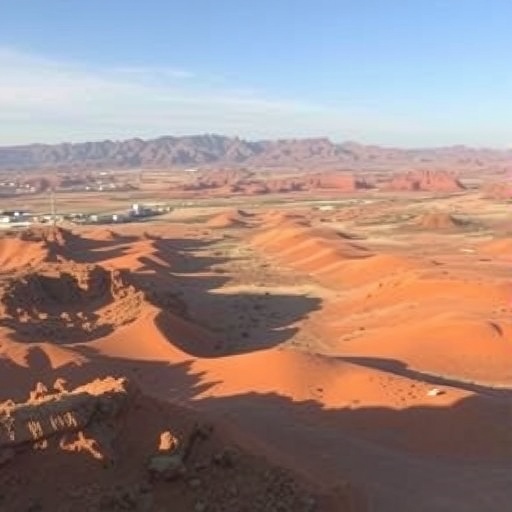
Dust aerosols suspended in the atmosphere originate primarily from arid and semi-arid regions where soil disturbance lifts fine mineral particles high into the air. Key sources include the Sahara Desert in Africa, the Gobi Desert in Asia, and desiccated lakebeds influenced by anthropogenic water management practices, such as the Salton Sea and Owens Valley in the United States. Once aerosolized, these mineral particles influence climate dynamics through two opposing mechanisms: direct radiative scattering of incoming solar radiation, which results in surface cooling, and absorption of longwave thermal radiation emitted by Earth, which promotes atmospheric warming. The net climatic effect of dust depends intricately on particle size distribution, altitude, concentration, and spatial dispersion.
Historically, climate models have emphasized dust’s reflective cooling role, estimating its net effect as producing a slight global temperature reduction that partially offsets greenhouse gas warming. However, Kok’s new analysis shows that this cooling is achieved after overcoming a considerably larger warming influence resulting from dust’s absorption and scattering of terrestrial infrared radiation. Coarse dust particles, in particular, emerge as potent heat absorbers, yet previous models substantially underestimated their atmospheric abundance. The research quantifies this discrepancy, revealing that about 20 million metric tons of very coarse dust particles—comparable in mass to around four million African elephants—reside in the atmosphere, nearly fourfold more than accounted for in extant simulations.
The implications of these findings resonate through both regional and global climate processes. Regions situated downwind of major dust sources—such as parts of North Africa, the Middle East, and East Asia—experience altered surface temperature regimes due to dust-induced warming. This, in turn, accelerates evaporation rates, modifies atmospheric moisture content, and shifts circulation patterns that govern precipitation timing and intensity. For example, areas influenced by Saharan dust plumes may observe suppressed rainfall, while other domains may experience enhanced precipitation events. Such redistributions complicate efforts to forecast regional hydrological cycles and demand more precise incorporation of dust dynamics in predictive models.
A core methodological strength of this new work lies in the integration of diverse observational platforms and modeling frameworks. Satellite instruments provided global-scale measurements of dust optical depth and radiative forcing parameters, while aircraft campaigns yielded detailed grain size distributions essential to understanding dust’s radiative properties. Climate model runs simulated dust transport and spatial heterogeneity, while meteorological datasets elucidated vertical temperature profiles critical for quantifying radiative heat transfer interactions. This multifaceted approach permitted a robust estimation of dust’s dual influence, surmounting limitations inherent in any single data source.
The study highlights temporal trends as well, noting a peak in global atmospheric dust loads during the 1980s, a phenomenon not yet fully explained but likely involving complex interactions between climate variability and land-use changes. Despite a subsequent decline, current dust concentrations remain elevated above pre-industrial baseline levels due to ongoing desertification, agricultural expansion, and hydrologic alterations. This enduring elevation underscores dust’s persistent role as a climatic actor amidst anthropogenic environmental change.
While the acknowledgment of dust’s augmented warming effect demands model refinements, Jasper Kok remains measured in his assessment of climate simulations. He emphasizes that existing models have effectively captured the trajectory of warming driven by greenhouse gases. Nevertheless, incorporating the enhanced radiative impact of dust will sharpen model fidelity, translating into improved accuracy for weather forecasts and climate projections alike. This enhancement is especially critical for predicting regional impacts and extreme weather events influenced by dust-related atmospheric processes.
Mechanistically, dust’s ability to absorb and scatter terrestrial infrared radiation acts as a feedback within the Earth’s energy balance. This process adds complexity to the aerosol–climate interaction matrix and challenges simplistic attributions of dust solely as a cooling aerosol. The research thus advances the paradigm by which aerosols are conceptualized, insisting on nuanced representation within Earth system models that consider spectral, particle size, and altitude-dependent effects.
The societal implications of these discoveries are far-reaching. Accurate climate forecasting underpins policy decisions, resource management, and adaptation strategies. Enhanced modeling precision will aid in anticipating water resource variability, agricultural productivity fluctuations, and extreme heat events, particularly in vulnerable regions sensitive to dust influences. Furthermore, understanding the full spectrum of dust’s radiative effects informs geoengineering proposals and mitigation frameworks that contemplate manipulation of atmospheric aerosols.
In summary, UCLA’s latest research elevates atmospheric dust from a peripheral player to a central component in the intricate machinery of Earth’s climate system. By quantifying dust’s underestimated heat-trapping power, the study prompts a recalibration of global energy balance assessments and calls for urgent integration of these findings into predictive climate models. The resulting improvements are poised to deepen scientific understanding and enhance societal preparedness as humanity confronts the accelerating challenges of climate change.
News Publication Date: Early 2024
Web References:
References: Funded by National Science Foundation, NASA, Department of Energy, among others.
Cite Scienmag News
Russell Cooper. (April 28, 2026). New Desert-Dust Research Promises Improved Weather Forecasts and Climate Models. Scienmag. https://scienmag.com/new-desert-dust-research-promises-improved-weather-forecasts-and-climate-models/
Russell Cooper. "New Desert-Dust Research Promises Improved Weather Forecasts and Climate Models." Scienmag, 28 April 2026, https://scienmag.com/new-desert-dust-research-promises-improved-weather-forecasts-and-climate-models/. Accessed 1 September 2026.
Russell Cooper. "New Desert-Dust Research Promises Improved Weather Forecasts and Climate Models." Scienmag. April 28, 2026. https://scienmag.com/new-desert-dust-research-promises-improved-weather-forecasts-and-climate-models/


