


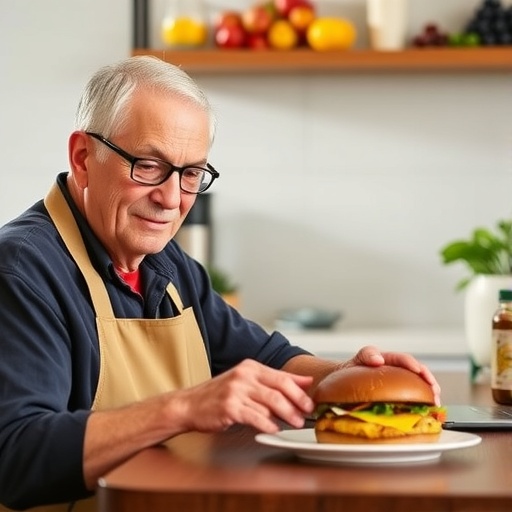
In a groundbreaking development in the field of geriatric health and nutrition, a recent randomized controlled trial has illuminated the transformative potential of virtual nutrition and teaching kitchen interventions for older Veterans struggling with impaired mobility. These findings, published in the prestigious BMC Geriatrics journal in 2026, have broad implications for how dietary quality and social engagement can be simultaneously enhanced through innovative technology-driven programs. The study, led by Capra, Addison, Falvey, and colleagues, ventures into relatively uncharted territory by comparing a specialized virtual group intervention to a traditional time- and attention-matched health education curriculum control, marking a major advance in addressing dietary challenges that accompany reduced mobility.
The core of the research revolves around a novel virtual intervention that combines nutrition education with practical cooking lessons in a teaching kitchen format, all delivered through a group-based online platform. This approach allows participants, who are older Veterans experiencing mobility impairments, to actively engage with nutritional guidance and culinary skill-building within the comfort of their own homes. The use of digital group settings overcomes common mobility barriers that often limit access to conventional in-person programs, signaling a major shift in how health promotion services can be delivered to aging populations.
Notably, the design of the intervention is grounded in behavioral science principles aimed at not only improving diet quality but paradoxically also fostering social engagement, an aspect critically important but frequently neglected in traditional dietary interventions. Social isolation and loneliness are prevalent concerns among older adults, particularly those with physical limitations, and they directly impact both physical and mental health outcomes. By positioning this teaching kitchen experience as a collective journey, the program creates opportunities for participants to connect, share experiences, and cultivate a sense of belonging, which researchers hypothesized would synergistically enhance the benefits of nutritional improvements.
The trial methodically compared this innovative virtual teaching kitchen intervention with a control group engaged in an equivalent time and attention health education curriculum. This methodological rigor—matching contact hours and educational content focus—ensured that differences in outcomes could more definitively be attributed to the interactive and practical nature of the cooking-focused sessions rather than mere exposure to health information. This design addressed a key limitation of many prior studies that lack proper control for attention effects, lending credibility and reliability to the reported findings.
Among the standout results was a significant improvement in dietary quality among participants enrolled in the virtual teaching kitchen sessions. Utilizing standard validated dietary assessment tools, the study documented meaningful shifts toward nutrient-dense foods and balanced meal planning. These dietary upgrades parallel documented health benefits associated with reduced incidence of chronic diseases such as hypertension, diabetes, and cardiovascular conditions, all of which disproportionately affect older adults with compromised mobility. The sustenance of these positive changes beyond the immediate intervention period illustrates the potential for durable lifestyle modifications encouraged by immersive skill-building.
Another striking element of the study was the demonstrable increase in social engagement among the intervention group. Unlike traditional nutrition programs that often operate in isolation for each participant, this model leveraged the inherently interactive nature of virtual group sessions. Participants reported enhanced feelings of connectedness, improved mood, and greater motivation to pursue healthy behaviors through the ongoing peer support cultivated during the interventions. Such psychosocial benefits can play a vital role in maintaining long-term adherence to healthful diets and mitigating depression and anxiety common in veteran populations.
Technologically, the intervention utilized an accessible videoconferencing platform optimized for participants with varying degrees of digital literacy. This inclusive design ensured minimal barriers to entry and allowed iterative feedback to tailor content and interaction styles to the participants’ needs and preferences. The research team provided technical assistance and preliminary training sessions, addressing a common limitation of digital health initiatives within older demographics. The successful deployment seen in the trial reinforces the viability of virtual health education in overcoming geographic and physical accessibility challenges endemic to aging individuals.
Furthermore, the randomized controlled trial included rigorous monitoring protocols to assess fidelity of implementation, participant adherence, and potential confounding variables such as baseline nutritional knowledge or social network sizes. This comprehensive data collection allowed researchers to refine the intervention’s components and isolate key drivers of success, paving the way for scalable replication in diverse veteran and non-veteran elderly populations. The consideration of impaired mobility as a central characteristic of the study cohort highlights the tailored nature of this intervention, addressing a critical yet underserved subgroup within geriatric healthcare.
Importantly, the study also explored the psychological mechanisms underpinning behavioral change induced by the teaching kitchen approach. Participants’ self-efficacy related to cooking and nutrition increased markedly, along with a reduction in perceived barriers to preparing healthy meals. These psychosocial shifts are essential mediators for sustained dietary improvements and illustrate how hands-on, practical education surpasses traditional didactic knowledge transmission. The combination of skill acquisition and peer reinforcement provided a robust framework that could be leveraged in future interventions aiming for long-lasting health outcomes in elderly individuals.
In terms of public health impact, the implications of these findings are profound. Given the rising number of older adults worldwide, many with coexisting chronic conditions and mobility impairment, scalable virtual nutrition programs represent a promising strategy to alleviate healthcare burdens. By harnessing technology to deliver meaningful, socially engaging education, healthcare providers and policymakers can empower at-risk populations to take proactive control over nutrition and wellness, potentially reducing hospitalizations and enhancing quality of life.
The research team’s pioneering work also signals important opportunities for interdisciplinary collaboration spanning geriatrics, nutrition science, behavioral psychology, and digital health technology. The intersection of these fields within this intervention underscores the future trajectory of personalized, accessible health promotion. Developing such hybrid models that integrate educational content, skill-building, and social connectivity may soon become standard practice in geriatric care paradigms.
While the study’s findings are encouraging, limitations exist, including the relatively small sample size and the specific veteran population that may differ from the general elderly demographic. Further research is needed to explore the long-term sustainability of dietary changes and social improvements, as well as cost-effectiveness analyses vital for health system integration. Nevertheless, this trial stands as a compelling example of how targeted virtual interventions can break traditional barriers and facilitate holistic health improvements for vulnerable aging populations.
The innovative combination of culinary education and nutrition science in a virtual group format challenges current conceptions of how dietary interventions can be structured for maximum engagement and impact. By enabling older adults with mobility challenges to experience cooking together, share insights, and support one another through digital means, the intervention not only enhances diet quality but also rekindles the social dynamics crucial for mental well-being.
This study’s digital-first approach is especially relevant amidst evolving societal norms around telehealth and virtual socialization accelerated by the global pandemic experience. The acceptability and popularity of virtual group sessions witnessed in this trial may signal a permanent shift, encouraging adoption of similar programs worldwide. Importantly, the focus on Veterans, who often face unique health challenges and accessibility barriers, highlights the broader potential for tailoring digital health interventions to meet the needs of subpopulations traditionally underserved by conventional healthcare delivery.
Ultimately, this randomized controlled trial opens new horizons for leveraging technology in geriatric nutrition and social care. By combining practical, interactive cooking education with supportive peer engagement, healthcare professionals can now envision more dynamic, patient-centered approaches to promoting healthy aging. The study marks a pivotal step towards integrating behavioral health technologies that do not merely inform but empower older adults to thrive despite physical challenges.
As research continues to evolve, the multidisciplinary model exemplified by Capra, Addison, Falvey, and colleagues will likely inspire further innovation and translation into real-world clinical and community applications. The successful virtualization of teaching kitchen interventions may soon become a blueprint used globally to address the complex interplay between nutrition, mobility, and social health in aging populations, heralding a new era in preventive geriatric care.
Cite Scienmag News
Daisy Hatcher. (April 28, 2026). Virtual Nutrition Program Boosts Older Veterans’ Diets, Engagement. Scienmag. https://scienmag.com/virtual-nutrition-program-boosts-older-veterans-diets-engagement/
Daisy Hatcher. "Virtual Nutrition Program Boosts Older Veterans’ Diets, Engagement." Scienmag, 28 April 2026, https://scienmag.com/virtual-nutrition-program-boosts-older-veterans-diets-engagement/. Accessed 1 September 2026.
Daisy Hatcher. "Virtual Nutrition Program Boosts Older Veterans’ Diets, Engagement." Scienmag. April 28, 2026. https://scienmag.com/virtual-nutrition-program-boosts-older-veterans-diets-engagement/


