


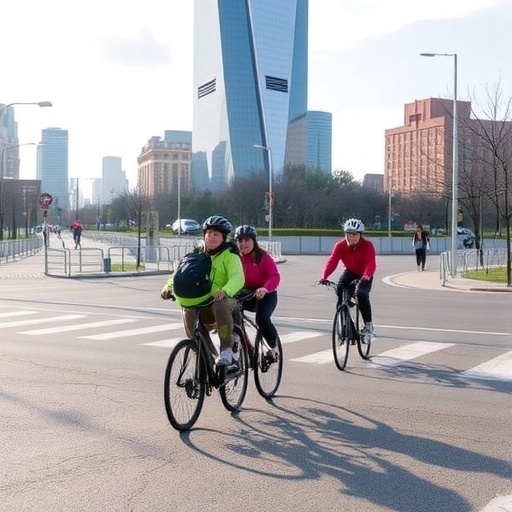
In the wake of the COVID-19 pandemic, a transformative shift in urban mobility has emerged, with some of the world’s largest cities witnessing a prolonged and substantial rise in cycling activity. This enhancement is more than a temporary reaction to lockdown conditions; it reflects a robust and enduring change propelled by concerted investments in safer and more effective cycling infrastructure. Recorded data spanning nearly two decades, from 2005 through 2023, reveals not only an increase in the number of bicycle trips but also a remarkable decline in cyclist fatality and serious injury rates across major cities such as Paris, London, New York City, and Berlin. This trend emphasizes that infrastructural improvements and public policy can yield tangible safety benefits even amid rising cycling volumes.
One of the most compelling findings from this longitudinal tracking is the dramatic per-trip drop in fatality rates. Paris tops the chart with an 88% decrease, followed by London at 82%, New York City at 62%, and Berlin at 37% in fatality incidents per 10 million bicycle trips. This data parallels a reduction in serious injury rates, which fell by 62% in New York City, 50% in London, and 37% in Berlin. Such figures underscore the critical impact of dedicated urban planning strategies focused on cycling safety and infrastructure quality, demonstrating that the increase in cycling does not inherently translate into more danger for riders.
The pandemic catalyzed an unprecedented surge in bicycle use, particularly pronounced in Paris where the share of daily journeys undertaken by bicycle more than doubled from 5% in 2019 to 11% by 2023. This remarkable uptick signals a profound modal shift in urban travel preferences toward active transportation, an evolution shaped by both necessity and infrastructural opportunity. Cities worldwide have faced soaring fuel prices and environmental concerns, and cycling presents a practical, sustainable alternative. The longevity of this trend is supported by studies that position the COVID-19 period as a launchpad rather than a temporary phase for increased cycling frequency.
At the heart of these advances is the development and integration of continuous cycling networks that are physically segregated from motor vehicle traffic. This infrastructural improvement reduces conflict points and protects cyclists from motorized vehicles, significantly lowering accident rates. Additionally, cities have implemented traffic calming initiatives—such as reduced speed limits, road diets, and the introduction of low traffic neighbourhoods—that further lower risks by moderating vehicle speeds and volumes in residential areas. For example, London’s aggressive roll-out of Low Traffic Neighbourhoods (LTNs) correlated with a 35% decrease in all cycling injuries and a 37% drop in people killed or seriously injured.
Berlin exemplifies sustained infrastructural growth and legislative commitment. Since the 1990s, the city steadily expanded its bikeway network, augmenting it substantially between 2002 and 2015, and then again between 2020 and 2023 with the addition of protected cycle lanes following the 2018 Mobility Law. This legal framework championed transportation efficiency and sustainability, contributing to Berlin maintaining the highest cycling mode share among the four cities studied—about 19% of daily trips. The continuous build-out of protected lanes underlines a strategic approach to cycling infrastructure that emphasizes quality, connectivity, and user safety.
New York City’s transformation in cycling infrastructure underscores the power of both expansion and quality enhancement. From 2006 to early 2024, NYC extended its network of protected bike lanes from a modest few to 413 kilometers by 2023. This network connectivity has been instrumental in steadily increasing NYC’s cycling mode share, from a mere 0.6% in 1990 to 3% in 2023, with implications for public health, environmental sustainability, and urban resilience. The success is attributed to the deliberate focus on physically protected pathways that segregate cyclists from vehicular traffic, a critical factor in reducing collisions and fatalities.
Paris, often considered a global exemplar in urban cycling, also witnessed a massive expansion of bike lanes totaling 503 kilometers by late 2020. During the pandemic, Paris implemented ‘pop-up’ bike lanes with high-quality protective measures that not only accommodated the surge in cyclists but also enhanced rider safety. The normalization of bicycling as a primary mode of transport is visible in Paris’s declining car trip share, which fell to 9% of daily journeys, the lowest among the four cities highlighted. This transition was bolstered by robust political backing and advocacy coalitions that provided the necessary policy continuity and financial resources.
The pandemic lockdowns provided a unique opportunity to pilot innovative cycling infrastructure rapidly and respond dynamically to shifting mobility needs. ‘Pop-up’ bike lanes, initially temporary, have largely been made permanent following their success, highlighting a broader paradigm shift in urban transport planning. Importantly, increased cycling participation was accompanied by a more diverse rider demographic, including women, children, and older adults, suggesting that high-quality infrastructure and safety improvements reduce barriers to cycling across population groups. This demographic broadening has implications for public health and social equity in urban environments.
The conceptual underpinning of these improvements is the “safety in numbers” effect. Contrary to conventional assumptions, increased cyclist numbers do not necessarily lead to higher injury or fatality totals; on the contrary, they correspond with enhanced safety. This phenomenon likely arises from heightened driver awareness, better traffic regulations, and more cohesive infrastructure that accommodates cyclists’ presence. For each city, this effect highlights the success of integrating cycling into the urban mobility fabric, transforming road-sharing dynamics between motor vehicles and bicycles.
While the gains in cycling safety and frequency are significant, the research cautions that there remain considerable opportunities for further advancement. Spatial and social inequalities in cycling uptake persist within these global cities, where neighborhoods with differing socioeconomic profiles vary in infrastructure provision and cycling rates. This underlines the necessity for equitable urban planning that addresses neighborhood disparities and ensures comprehensive access to safe cycling facilities for all residents. Without such equity-focused interventions, cycling’s benefits risk remaining confined to privileged demographics.
A key insight from the analysis is that pro-cycling infrastructure must be complemented by policies that disincentivize car use to maximize benefits. Measures that make driving slower, more expensive, and less convenient relative to cycling are essential to shift urban travel behaviors decisively. Without integrating such car-restrictive strategies, improvements in cycling infrastructure, though beneficial, cannot fully realize their potential to transform urban mobility ecosystems toward sustainability and safety. This integrated approach is fundamental to deepening the ongoing modal shift.
The study’s findings, while robust, have certain limitations. Variation in trip purpose definitions and survey methodologies across cities can complicate direct comparisons. Additionally, the multifactorial causes of shifts in travel behavior during and after the pandemic—such as remote work adoption—make isolating the direct impact of infrastructure challenging. Furthermore, these observations derive from major global cities with substantial resources and political will toward sustainability, and thus their direct applicability to smaller or less affluent urban areas may be limited. Adaptation of these lessons requires contextual sensitivity.
In conclusion, this comprehensive analysis of cycling trends in Paris, London, New York City, and Berlin reveals an optimistic trajectory for urban cycling, characterized by increasing participation and decreasing risk. The documented safety improvements resulting from expanded, high-quality, and interconnected cycling infrastructure demonstrate an effective pathway for cities worldwide aiming to promote active transportation, public health, and environmental sustainability. Equally, continued political commitment, strategic planning, and integrated policies that include car use restrictions are vital to sustaining and amplifying these positive outcomes in the years to come.
Cite Scienmag News
Kristina Jarvis. (April 23, 2026). Post-Pandemic Surge in Urban Cycling Driven by Enhanced Safety Through Advanced Infrastructure. Scienmag. https://scienmag.com/post-pandemic-surge-in-urban-cycling-driven-by-enhanced-safety-through-advanced-infrastructure/
Kristina Jarvis. "Post-Pandemic Surge in Urban Cycling Driven by Enhanced Safety Through Advanced Infrastructure." Scienmag, 23 April 2026, https://scienmag.com/post-pandemic-surge-in-urban-cycling-driven-by-enhanced-safety-through-advanced-infrastructure/. Accessed 4 September 2026.
Kristina Jarvis. "Post-Pandemic Surge in Urban Cycling Driven by Enhanced Safety Through Advanced Infrastructure." Scienmag. April 23, 2026. https://scienmag.com/post-pandemic-surge-in-urban-cycling-driven-by-enhanced-safety-through-advanced-infrastructure/


