

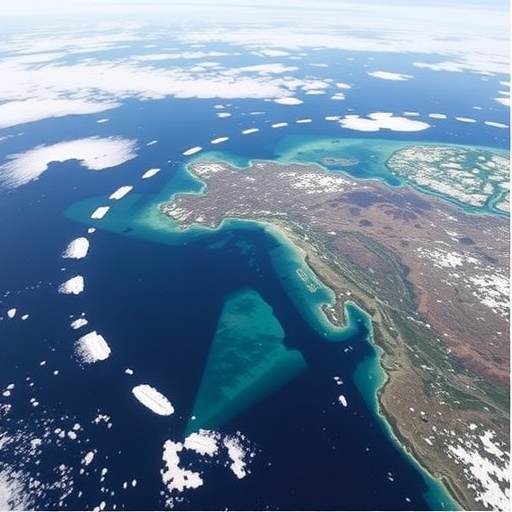
A groundbreaking study published in the open-access journal PLOS One unveils a comprehensive spatial atlas of fossil fuel development across the rapidly warming Arctic, highlighting critical intersections with Indigenous Peoples’ lands and ecologically sensitive areas. Led by Daniele Codato of the University of Padova, Italy, and colleagues, the research exposes the vast extent of oil and gas exploitation in the Arctic and raises urgent questions about environmental stewardship and social justice in this fragile region.
The Arctic represents one of the most dynamic and vulnerable ecosystems on the planet, experiencing warming rates nearly four times the global average. It has long been envisioned as a frontier rich in untapped hydrocarbon reserves, driving significant exploration and extraction activities. However, these ambitions collide with the reality of overlapping territories—where industrial interests infringe upon Indigenous homelands and regions essential for the conservation of iconic Arctic wildlife.
By synthesizing data from numerous open-access sources, the researchers produced the first-ever detailed atlas illustrating the distribution of oil and gas licenses, wells, pipelines, and seismic lines throughout the circumpolar Arctic. The accumulated dataset reveals over 512,000 square kilometers of Arctic land and sea under active or prospective fossil fuel operations—a land area comparable to that of Spain or Thailand. The granularity of this compilation underscores not just the scale but the complexity of the region’s energy landscape.
Of particular concern is the spatial overlap with protected ecological zones and habitats critical for key Arctic species, including polar bears, yellow-billed loons, and caribou. More than 7% of the exploited territory coincides with officially designated protected areas, while upwards of 13% overlaps with the ranges of these vulnerable animal populations. The intimate entanglement of industrial footprints with fragile ecosystems portends heightened risks of habitat degradation, pollution, and disruption of migratory patterns.
Equally striking is the fact that approximately 73% of the mapped oil and gas concessions encroach upon Indigenous Peoples’ lands. This intersection not only signals potential conflicts over land rights and resource governance but also calls attention to spatial justice concerns. Indigenous communities in the Arctic depend heavily on local ecosystems for cultural, nutritional, and economic needs, making the incursions by fossil fuel projects particularly contentious and impactful.
The atlas brings into sharp relief hotspots of exploitation that warrant immediate attention, such as Alaska’s North Slope and the Yamal Peninsula in Russia, regions characterized by intense industrial activity interwoven with rich biodiversity and Indigenous presence. These zones exemplify the difficult balancing act between economic development, environmental protection, and indigenous sovereignty inherent in Arctic policy debates.
Significantly, the authors advocate for the designation of the Arctic as a Fossil Fuel Non-Proliferation Zone, a concept gaining traction among scientists and policymakers aiming to preempt further carbon emissions from the region. The spatial evidence provided by the atlas underpins this policy proposal, suggesting that to meet global climate targets, a moratorium on new extraction and a strategic retreat from existing operations may be necessary.
The study also pushes for an inclusive approach to Arctic decision-making, emphasizing the necessity of integrating Indigenous perspectives and traditional ecological knowledge into regulatory frameworks. Such inclusivity is argued to be fundamental not only for equitable governance but also for effective conservation and sustainable management of the Arctic environment.
Yet the authors acknowledge challenges in their research, notably the fragmented nature of publicly available data on Arctic oil and gas infrastructure. Their effort to consolidate this scattered information represents a major step forward, but it highlights the pressing need for ongoing transparency and open data sharing to support scientifically informed policies.
Looking ahead, the study calls for more detailed, fine-scale analyses focusing on specific regions of concern, including Alberta and Alaska, home to significant fossil fuel activities and diverse ecosystems. Additionally, expanding research to incorporate species vital to Indigenous subsistence and culture would further enrich understanding and aid in crafting more sensitive management plans.
This unique atlas not only quantifies the scale of human footprint in the Arctic’s energy sector but also frames a new narrative about stewardship in an era of accelerating climate change. It embodies an urgent call for caution and deliberate action to prevent irreversible harm to one of Earth’s most critical and rapidly transforming regions.
Through this work, Codato and colleagues provide policymakers, scientists, and communities with a powerful tool to visualize and confront the complex spatial relationships that define the Arctic’s fossil fuel landscape. The atlas offers a tangible foundation to advance global climate goals while honoring the rights and heritage of Indigenous peoples and safeguarding ecologically sensitive habitats.
As the Arctic continues to warm and future energy demands rise, this study serves as a crucial reminder that where and when fossil fuels remain unexploited will shape the planet’s climate trajectory and the social-environmental fabric of the circumpolar north for generations to come.
News Publication Date: 22-Apr-2026
Web References: http://dx.doi.org/10.1371/journal.pone.0345775
References: Codato D, Vezzelli D, Ammaturo F, Lazazzera G, Stralla A, Pappalardo SE, et al. (2026) Unburnable carbon in the rapidly warming Arctic: Mapping spatial relationships among oil and gas development, ecologically sensitive areas and Indigenous Peoples’ lands. PLoS One 21(4): e0345775.
Cite this news
SCIENMAG. (April 22, 2026). Arctic Oil and Gas Development Encroaches on Indigenous Lands, Ecologically Sensitive Zones, and Critical Habitats of Key Arctic Species. https://scienmag.com/arctic-oil-and-gas-development-encroaches-on-indigenous-lands-ecologically-sensitive-zones-and-critical-habitats-of-key-arctic-species/
SCIENMAG. "Arctic Oil and Gas Development Encroaches on Indigenous Lands, Ecologically Sensitive Zones, and Critical Habitats of Key Arctic Species." Scienmag, 22 April 2026, https://scienmag.com/arctic-oil-and-gas-development-encroaches-on-indigenous-lands-ecologically-sensitive-zones-and-critical-habitats-of-key-arctic-species/. Accessed 28 August 2026.
SCIENMAG. "Arctic Oil and Gas Development Encroaches on Indigenous Lands, Ecologically Sensitive Zones, and Critical Habitats of Key Arctic Species." Scienmag. April 22, 2026. https://scienmag.com/arctic-oil-and-gas-development-encroaches-on-indigenous-lands-ecologically-sensitive-zones-and-critical-habitats-of-key-arctic-species/


