


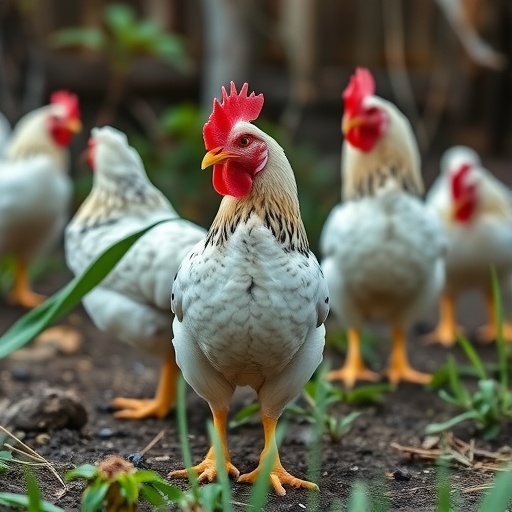
Chicken eggs have long served as biological factories for producing antibodies, offering protection against viral threats such as influenza. In a groundbreaking development at the University of Missouri, researchers have now taken a significant leap forward by pioneering a method to engineer chickens capable of producing a broader range of medically valuable proteins within their eggs. This innovative approach holds the promise of revolutionizing both medical therapeutics and agricultural biotechnology.
A central hurdle in the genetic modification of avian species has been the phenomenon of epigenetic silencing, wherein an introduced gene can become inactive over time, particularly as it is inherited by subsequent generations. This instability severely constrains efforts to develop reliably modified chickens that consistently express beneficial proteins. Traditional methodologies involving random insertion of genes into the chicken genome often fall victim to such silencing, leading to diminished expression and loss of the intended protective or therapeutic effects.
To circumvent this obstacle, the team at the University of Missouri, led by Professor Kiho Lee of the College of Agriculture, Food and Natural Resources, adopted a precision strategy utilizing the CRISPR gene-editing system. Instead of random gene insertion, they targeted a specific housekeeping gene encoding the enzyme glyceraldehyde 3-phosphate dehydrogenase (GAPDH). This enzyme is vital for the glycolytic pathway, a fundamental metabolic process ubiquitous and indispensable in virtually all living cells. By inserting the therapeutic gene segment precisely at this locus, the researchers hypothesized the gene would remain constitutively active, immune to epigenetic silencing.
To monitor the persistence of gene expression, the team linked the inserted gene to a fluorescent marker protein that emits bright green light when expressed. This ingenious visual indicator enabled real-time assessment of the gene’s activity within cultured chicken cells across multiple cell divisions. The results were unequivocal: after several months, the fluorescence remained robust and unwavering, demonstrating that the inserted gene neither diminished nor disappeared, effectively overcoming the silencing problem.
This milestone not only proves the concept but lays the foundation for developing a stable lineage of genetically engineered chickens. The implications for human medicine are vast, as these birds could be bred to produce eggs loaded with specialized proteins—ranging from antiviral agents to complex pharmaceuticals—directly within the egg white. Such a production platform would greatly reduce the costs and complexities associated with conventional biopharmaceutical manufacturing, while providing a scalable, ethically viable source of therapeutic proteins.
In addition to medical applications, the technology heralds new possibilities for agricultural biosecurity. Avian influenza remains a devastating epidemic, disrupting poultry industries globally and threatening food security. By integrating genes that confer resistance or reduce viral transmission into a chicken’s genome at the GAPDH site, scientists could develop flocks inherently resilient to disease. Crucially, the stability of gene expression would ensure that these protective traits persist through multiple generations, securing lasting benefits.
Professor Lee’s lab at the University of Missouri is uniquely equipped to pioneer this research. Renowned for its expertise in chicken cell biology and genetic engineering, the facility offers specialized infrastructure to maintain and manipulate the notoriously fragile avian cells in vitro. This specialized capability places Mizzou at a national frontier, complementing its already distinguished reputation in genetic modification of livestock such as pigs.
This study, titled “Highly efficient gene editing via targeted Cas9 insertion into chicken housekeeping gene,” was published in the journal Poultry Science and funded by the National Institute of Food and Agriculture, a branch of the U.S. Department of Agriculture. It represents a cross-disciplinary achievement integrating molecular biology, genetics, and agricultural sciences, demonstrating how cutting-edge gene-editing tools can address longstanding challenges in animal biotechnology.
Looking forward, the research team is collaborating with both academic scientists and industry partners to explore the full spectrum of genetic modifications that this platform can enable. These partnerships aim to tailor genetic inserts serving diverse stakeholders—from pharmaceutical producers to poultry farmers—who could all benefit from genetically enhanced poultry lines producing bioactive compounds for humans and animals alike.
The broader vision aligns with the land-grant mission of the University of Missouri, emphasizing research with tangible societal impact. According to Professor Lee, this work epitomizes foundational science designed to support producers and communities by advancing innovative solutions that improve health and economic vitality in Missouri and beyond. By establishing a reliable method for stable genetic modification in chickens, this research offers a transformative leap towards next-generation biotechnologies with wide-ranging benefits.
In summary, this revolutionary approach to gene editing not only solves a major restriction in avian genetic engineering but also opens a visionary path toward sustainable production of medical proteins and disease-resistant poultry. The success of this platform will likely inspire a new era in functional genomics and therapeutic protein synthesis in poultry, with profound implications for science, health, and agriculture worldwide.
News Publication Date: 1-Apr-2026
Web References:
http://dx.doi.org/10.1016/j.psj.2026.106585
Cite Scienmag News
Audrey B. (April 22, 2026). Breaking Ground in Eco-Friendly Chicken Gene Editing. Scienmag. https://scienmag.com/breaking-ground-in-eco-friendly-chicken-gene-editing/
Audrey B. "Breaking Ground in Eco-Friendly Chicken Gene Editing." Scienmag, 22 April 2026, https://scienmag.com/breaking-ground-in-eco-friendly-chicken-gene-editing/. Accessed 28 August 2026.
Audrey B. "Breaking Ground in Eco-Friendly Chicken Gene Editing." Scienmag. April 22, 2026. https://scienmag.com/breaking-ground-in-eco-friendly-chicken-gene-editing/


