


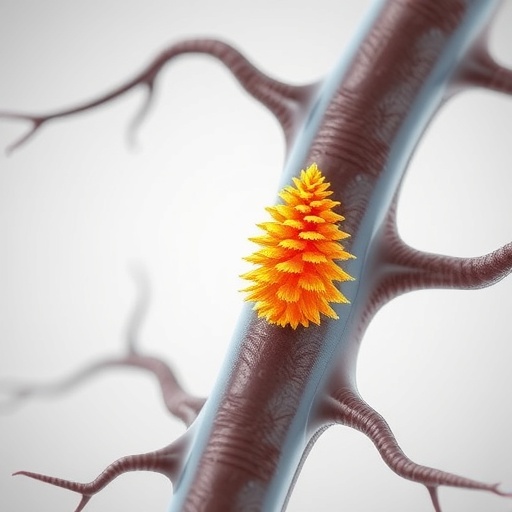
Peripheral nerve injuries (PNIs) represent a significant challenge in clinical neurology due to their prevalent occurrence and often irreversible impact on patients’ sensory and motor functions. Traditional solutions, such as autologous nerve grafts, remain the gold standard in addressing long-segment nerve defects; however, these methods are fraught with limitations including the scarcity of donor tissue, donor site morbidity, and the frequent issue of size mismatch between transplanted grafts and host nerves. Moreover, current synthetic nerve guidance conduits (NGCs) exhibit structural rigidity, characterized by fixed tubular architectures that fail to accommodate the anatomical variability in nerve diameters and geometries. The necessity for microsuturing in fixation further compounds the complexity of surgical intervention, demanding advanced technical skills while simultaneously increasing the risks associated with iatrogenic injury, inflammation, and scar tissue formation. Additionally, such microsuturing is often impractical in confined anatomical spaces where accessibility is limited.
Inspired by the intriguing hygroscopic behavior of pinecones, whose scales dynamically close in response to ambient humidity due to differential swelling of their layers, a research team has innovatively designed a suture-free adhesive conduit for peripheral nerve repair. This new conduit leverages a carefully engineered asymmetric composite film composed of hydrophobic polyurethane (PU) and hydrophilic γ-polyglutamic acid (PGA), termed PU/PGA_X, which exhibits autonomous curling behavior upon exposure to moisture. The fabrication process involves rapid high-temperature drying that exploits the surfactant properties of quaternary ammonium salts present in PU to enrich the upper surface of the film with PU, while PGA predominantly accumulates at the bottom. This gradient creates a distinct hydrophilic-hydrophobic interface critical for the material’s dynamic morphing capabilities.
Upon immersion in water or physiological saline, the hydrophilic PGA layer absorbs moisture and swells rapidly, in stark contrast to the structurally stable hydrophobic PU layer. This anisotropic swelling generates a bending force causing the initially planar film to self-assemble into a tubular configuration within seconds. This biomimetic shape change segregates the material’s properties, enabling it to envelop nerve stumps snugly without requiring mechanical sutures. By incorporating a biocompatible PU adhesive emulsion coating, the conduit gains robust tissue adhesiveness, facilitating secure fixation in vivo. The conduit’s adaptive architecture effectively conforms to severed nerve ends, resolving the long-standing issue of rigid artificial conduits unable to accommodate nerve heterogeneity.
Among various formulations, the PU/PGA₁₀ composite—containing 10% PGA—exhibited the most advantageous properties for nerve repair applications. It demonstrated a maximum bending curvature of approximately 1.02 mm⁻¹ within 90 seconds of aqueous immersion, allowing adaptation to tubular nerve structures with diameters ranging from 3 to 10 mm. This range covers most peripheral nerve calibers encountered clinically. Adhesion testing against porcine skin revealed a shear adhesion strength of 24.3 kPa, underscoring the conduit’s capacity for firm physiological anchoring without sutures. In vitro cytocompatibility assays further established the conduit’s safety profile, evidencing no cytotoxic effects on rat Schwann cells—the pivotal glial cells supporting peripheral nerve regeneration. Intriguingly, the material also fostered enhanced migration of these cells, a vital step in guiding axonal growth during nerve healing.
In addition to facilitating cellular migration, the PU/PGA₁₀ conduit manifested immunomodulatory functions by modulating macrophage behavior. It suppressed the release of pro-inflammatory cytokines and promoted the polarization of macrophages towards the M2 phenotype, widely recognized for pro-repair and anti-inflammatory roles. This immune milieu is crucial in mitigating the chronic inflammatory response often hindering optimal nerve regeneration. The creation of a conducive microenvironment underscores an integrated design where physical properties and biological interactions synergize to promote functional recovery.
To validate the conduit’s therapeutic potential, preclinical studies employed an established rat model with an 8 mm sciatic nerve defect, a benchmark for peripheral nerve repair. The PU/PGA₁₀ conduit led to significant regeneration outcomes after ten weeks, with treated rats showing marked improvement in the sciatic function index (SFI), a quantitative measure of motor recovery. Electron microscopy further revealed that regenerated nerves exhibited larger axon diameters and thicker myelin sheaths compared with controls treated with pure PU patches, closely mirroring the regenerative capacities achieved by autologous grafts. Correspondingly, the conduit effectively attenuated gastrocnemius muscle atrophy and fibrosis—secondary complications arising from prolonged denervation—thereby preserving muscular integrity alongside neural restoration.
Notably, the conduit’s suture-free design presents a streamlined surgical workflow that mitigates the risk of iatrogenic trauma associated with microsuturing techniques while promoting adaptive and secure nerve reconstruction. This novel approach directly addresses enduring clinical challenges by integrating bioinspired material design, robust adhesion, and immunomodulation in a single therapeutic platform. The versatility of this technology also suggests broader applicability in other soft tissue repair scenarios characterized by anatomically constrained and difficult-to-suture environments, amplifying its translational value.
Future research directions focus on developing a quantitative structure-property relationship model to precisely calibrate the conduit’s curvature dynamics and swelling responsiveness. Tailoring these parameters will enable customization according to the diverse anatomical and pathological contexts encountered in peripheral nerve repair. Such optimization is essential to accelerate the transition of this innovative technology from laboratory settings to clinical practice, potentially revolutionizing nerve regeneration strategies and patient outcomes.
The research team comprised Xiaolei Guo, Jinwei Li, Hongyu Xu, Shengrong Long, Junhong Li, Ao Wang, Wenkai Liu, Fan Zhang, Zhen Li, Feng Luo, Jiehua Li, Yanchao Wang, Hong Tan, and Ting Lan. Their multidisciplinary expertise enabled a comprehensive approach combining materials science, bioengineering, and neurobiology. Funding support was provided by the National Natural Science Foundation of China (grant numbers 52433015, 52373296, 52473138, and 52173287), the State Key Laboratory of Polymer Materials Engineering (sklpme2022-2-07), and the Outstanding Youth Foundation of Sichuan Cancer Hospital & Institute (Grant no. YB2025004).
The full details of this pioneering work are published in the journal Cyborg and Bionic Systems, under the title “Pinecone-Inspired Water-Responsive Curling Adhesive Conduit for Peripheral Nerve Repair” (DOI: 10.34133/cbsystems.0556), dated March 27, 2026. This cutting-edge study heralds a new paradigm in biomimetic materials for nerve injury treatment, with profound implications for regenerative medicine and surgical innovation.
Keywords
Peripheral nerve injury, biomimetic materials, polyurethane, γ-polyglutamic acid, nerve regeneration, adhesive conduit, suture-free fixation, Schwann cells, macrophage polarization, tissue engineering, functional recovery, immunomodulation
Cite Scienmag News
Denise Maddox. (April 21, 2026). Pinecone-Inspired Water-Activated Adhesive Tubes Revolutionize Peripheral Nerve Repair. Scienmag. https://scienmag.com/pinecone-inspired-water-activated-adhesive-tubes-revolutionize-peripheral-nerve-repair/
Denise Maddox. "Pinecone-Inspired Water-Activated Adhesive Tubes Revolutionize Peripheral Nerve Repair." Scienmag, 21 April 2026, https://scienmag.com/pinecone-inspired-water-activated-adhesive-tubes-revolutionize-peripheral-nerve-repair/. Accessed 4 September 2026.
Denise Maddox. "Pinecone-Inspired Water-Activated Adhesive Tubes Revolutionize Peripheral Nerve Repair." Scienmag. April 21, 2026. https://scienmag.com/pinecone-inspired-water-activated-adhesive-tubes-revolutionize-peripheral-nerve-repair/


