


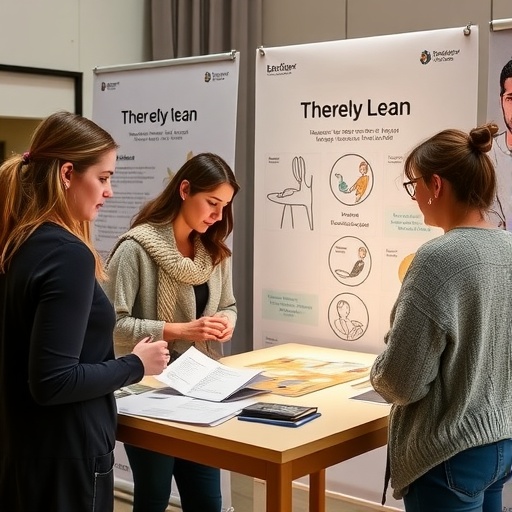
At the forefront of interior design education, faculty members Elif and Alp Tural at Virginia Tech’s School of Design are redefining how designers conceptualize and craft environments by centering empathy, accessibility, and well-being into their pedagogy and research. Their pioneering approach invites students to engage in a collaborative design process that transcends aesthetic considerations, urging them to understand the lived experiences of the people who inhabit the spaces they create. This philosophy represents a profound shift from designing for users as mere objects to designing intimately with them, highlighting the necessity of active listening and responsive adjustment in interior environments.
Both Elif and Alp Tural bring a rich academic pedigree to their roles, having earned their degrees from Arizona State University before joining Virginia Tech’s College of Architecture, Arts, and Design. Their educational journey and professional experience converge in a teaching methodology that emphasizes human-centered design principles while addressing practical challenges faced by diverse populations. By integrating theory with hands-on community engagement, the Turals prepare students not only to meet but also to anticipate the complex needs of users, particularly those with sensory and emotional vulnerabilities.
Elif Tural’s work exemplifies the intersection of design and psychological health, especially through her involvement with the Mount Rogers Community Services Smyth Campus Expansion—a behavioral health facility aimed at supporting individuals dealing with trauma. Her contribution is anchored in trauma-informed design, a nuanced approach that incorporates spatial layout, lighting, and natural visual access to mitigate stress and foster emotional resilience. Such design choices are tactical and deliberate, recognizing that environment profoundly influences psychological states and recovery trajectories.
Trauma-informed design approaches focus on minimizing environmental triggers that could exacerbate distress, creating spaces that convey safety and support. Elif Tural’s work accounts for the emotional well-being of clients arriving at the facility, many of whom carry significant trauma histories. Attention to natural light, spatial organization, and calming views constitutes a silent, yet powerful therapeutic tool, subtly facilitating healing while enabling behavioral health professionals to deliver care in optimized environments.
Parallelly, Alp Tural’s research dives deep into the rarely discussed domain of visual accessibility, exploring the intricate ways visual perception shapes experiences within interior spaces. His investigations cover elements that might appear mundane—such as carpet patterns, levels of light, and color contrast—but which critically influence how legible and comfortable a space feels. His studies stress that overlooking these factors can diminish a user’s ability to safely and confidently navigate their environment, underscoring the complex interface between sensory input and spatial cognition.
Visual accessibility considerations are particularly vital in environments catering to elderly populations, where declining visual acuity can pose significant risks. However, Alp Tural challenges conventional age-centric perspectives, asserting that visual limitations are more universally experienced across all age groups and visual conditions. This broader perspective compels designers to adopt inclusive strategies that accommodate a spectrum of visual abilities, enhancing safety, independence, and quality of life for all occupants.
One of Alp Tural’s significant contributions is the development of a novel methodology that employs mesopic and high dynamic range (HDR) imaging to analyze low-light conditions in senior residential environments. This workflow provides a rigorous, quantifiable framework for understanding how lighting affects navigation safety at night. By combining the physiological characteristics of human vision under low-light conditions with advanced imaging techniques, this research offers actionable insights to optimize lighting design for vulnerable populations.
This research, recently published in the Architectural Science Review, titled “Low-light analyses in senior residential environments: a mesopic- and HDR-based workflow to improve safe navigation at night,” represents a leap forward in translating complex visual science into practical architectural solutions. The integration of mesopic vision analysis—addressing intermediate light levels—and HDR imagery allows for a more nuanced appreciation of how seniors perceive their surroundings during nocturnal hours when traditional lighting design often falls short.
Alp Tural’s teaching approach mirrors his research philosophy, emphasizing an empathetic and comprehensive design process in his role as co-instructor of the Senior Interior Design Studio. This capstone studio synthesizes students’ accumulated knowledge—ranging from building codes and spatial planning to human factors—into the creation of holistic designs that prioritize human experience. By guiding students through real-world complexities, Alp instills a sense of responsibility and creativity essential for advancing inclusive architectural practices.
Together, the Turals’ work reveals the multifaceted nature of human-centered interior design, where emotional and sensory well-being intersect with functional aesthetics. They demonstrate that thoughtful design can transcend surface beauty, becoming a vehicle for enhancing mental health, physical safety, and overall quality of life. Their framework challenges the design community to embrace collaboration, empathy, and scientific rigor as foundational pillars for shaping environments of the future.
The impact of this research and pedagogy resonates far beyond academic spheres, influencing contemporary practice across healthcare, residential, and public environments. By embedding trauma-informed principles and visual accessibility into design norms, the Turals contribute to an ongoing transformation in which interiors become active agents of healing and inclusivity. Their work underscores the ethical imperative for architects and designers to engage deeply with human experience rather than merely aesthetics or functionality.
Moreover, the Turals’ interdisciplinary approach offers valuable blueprints for tackling emerging challenges posed by demographic shifts, aging populations, and increased awareness of mental health issues. Their innovative fusion of design science and empathy-driven education positions Virginia Tech as a leader in producing architects and designers equipped to respond to tomorrow’s complex social and sensory needs. This integration signifies a meaningful advancement in how human environments are understood, assessed, and realized.
Ultimately, the Turals advocate for an evolved vision of interior design where environments are not static backdrops but dynamic, responsive spaces co-created with users. This ethos transforms the discipline from a service-oriented field into a participatory forum that honors the diversity and dignity of all individuals. By championing empathy and accessibility through rigorous research and education, Elif and Alp Tural illuminate pathways toward interiors that truly nurture human flourishing.
News Publication Date:
11 March 2026
Web References:
Architectural Science Review Article
Keywords
Architecture, Architectural Design, Building Construction, Stress Management, Psychological Stress
Cite Scienmag News
Denise Maddox. (April 20, 2026). Elif and Alp Tural Show Students That Meaningful Design Starts with Understanding People. Scienmag. https://scienmag.com/elif-and-alp-tural-show-students-that-meaningful-design-starts-with-understanding-people/
Denise Maddox. "Elif and Alp Tural Show Students That Meaningful Design Starts with Understanding People." Scienmag, 20 April 2026, https://scienmag.com/elif-and-alp-tural-show-students-that-meaningful-design-starts-with-understanding-people/. Accessed 3 September 2026.
Denise Maddox. "Elif and Alp Tural Show Students That Meaningful Design Starts with Understanding People." Scienmag. April 20, 2026. https://scienmag.com/elif-and-alp-tural-show-students-that-meaningful-design-starts-with-understanding-people/


