


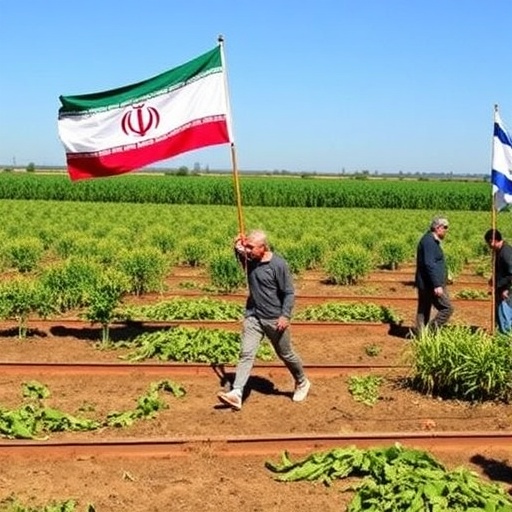
The ongoing conflict involving the United States, Israel, and Iran has precipitated a profound crisis that stretches far beyond the battlegrounds of the Middle East, reaching into the very bedrock of global food security. This war, ignited in late February 2026, has disrupted critical maritime trade routes in the Strait of Hormuz, a narrow but pivotal chokepoint responsible for the transit of roughly one-fifth of the world’s liquefied natural gas and petroleum supplies. The repercussions are not confined to energy markets alone but cascade through complex, interlinked food systems, reverberating from the Middle East and North Africa (MENA) to East Africa and beyond. This multidimensional crisis demands urgent attention as the war undermines the already fragile food security landscape that millions of vulnerable populations endure.
At the core of this turmoil is Iran’s strategic attempt to impede the passage of oil and trade through the Strait of Hormuz, triggering a lockdown that has compelled the United States to enforce a blockade on Iranian ports. This geopolitical flashpoint has led to dramatic increases in energy costs globally, a factor that intricately ties energy markets to food production systems. Natural gas, a vital input in the synthesis of fertilizers, has become increasingly scarce and expensive due to these conflicts, amplifying the costs associated with agricultural inputs, food processing, cold storage, and transportation. These inflationary pressures coupled with maritime insurance premium hikes contribute to a dizzying surge in food prices and threaten to render nutritionally adequate diets unaffordable for millions.
The research conducted by a team from the University of Sharjah, published in the journal Global Food Security, painstakingly unpacks these intertwined dynamics, revealing how they collectively threaten to destabilize physical, economic, and sociocultural food environments. The complex interdependencies within modern food systems mean that any perturbation—from raw material cost surges to logistical bottlenecks—can precipitate widespread insecurity. Unlike isolated supply shocks, the disruption experienced due to this conflict simultaneously elevates production input costs, inflates shipping expenses, and reduces household purchasing power, creating a synergistic negative feedback loop that amplifies food insecurity exponentially.
A particularly alarming dimension of the crisis relates to the soaring prices of fertilizers such as urea, whose production is heavily reliant on natural gas. Since the war’s outbreak, urea prices have experienced a staggering increase of approximately 36% above pre-conflict levels, while an estimated 3 to 4 million tonnes of fertilizer shipments have languished due to trade interruptions. Given that fertilizers underpin crop yields globally, this bottleneck jeopardizes future agricultural output, exacerbating the risk of sustained food shortages and price volatility. The MENA region, already beleaguered by decades of water scarcity, desertification, and institutional fragility, stands as one of the epicenters likely to endure the heaviest blows.
Beyond the direct impact on food availability and pricing, the study illuminates a subtler yet profoundly damaging consequence: the deterioration of diet quality. Shrinking household budgets force families, especially those in vulnerable regions, to forego nutrient-rich foods such as fruits, vegetables, and animal proteins. Instead, they gravitate towards cheaper, calorie-dense, ultra-processed alternatives that provide energy but fall short of meeting essential nutritional needs. This dietary shift not only compounds the immediate threat of undernutrition but also seeds chronic health problems, including malnutrition-related developmental deficits in children and pregnant women that have long-term societal and economic costs.
The biophysical disruptions to food systems are compounded by sociocultural impacts. Communities accustomed to diverse and balanced diets are pushed into monotonous eating patterns curated by affordability rather than preference or health. Such nutritional deprivation diminishes cognitive development, immune function, and overall well-being, thereby entrenching cycles of vulnerability. The long-term consequence is a potential loss of human capital, with children born into an environment of nutrient scarcity facing impaired growth trajectories that affect educational outcomes and labor productivity, imposing an economic burden that can reach up to 2–3% of national GDP.
Moreover, the research highlights how the interconnected nature of modern food systems amplifies the speed and severity of insecurity transmission triggered by energy and fertilizer shocks. Unlike localized agricultural crises caused by drought or pests, disruptions that influence both the production and distribution sectors simultaneously accelerate the spread of food insecurity across regions and populations. Countries far removed from the conflict’s epicenter are not immune; commodity speculation and insurance premium inflation ripple through global markets, reverberating in far-flung economies.
In recognizing the gravity of the crisis, the study synthesizes insights from past global disruptions, including the 2007–08 food price spikes, the COVID-19 pandemic’s impact on supply chains, and the ongoing Russia-Ukraine war, which similarly underscored the vulnerability of interconnected food and energy systems. These precedents illuminate the critical importance of proactive policy interventions rather than reactive crisis management. Governments that previously invested in strategic grain reserves and social protection measures demonstrated greater resilience in the face of shocks. The study calls for similar foresight and coordinated global action to preempt irreversible damage from the current conflict.
To address the multidimensional challenges wrought by the war, the research articulates a comprehensive three-tiered framework for mitigating food insecurity. At the household and community level, it emphasizes the need for preparedness through local resilience-building, emphasizing diversified food sourcing, improved nutrition education, and safety nets that cushion the financially vulnerable. Nationally, governments are urged to implement policies safeguarding food supply chains, investing in energy-efficient agricultural technologies, and reinforcing social protection systems. Internationally, the study underscores the moral and strategic imperative of reinforcing multilateral food security governance, advocating for reforms in institutions such as the Food and Agriculture Organization (FAO), International Energy Agency (IEA), International Food Policy Research Institute (IFPRI), World Food Programme (WFP), and the World Bank.
Failure to act decisively could precipitate catastrophic outcomes, disproportionately affecting the world’s most food-insecure populations. The war’s reverberations serve as a stark reminder of the fragility embedded within global systems and the profound consequences of geopolitical instability. As Farah Naja, the study’s lead author, succinctly states, the Strait of Hormuz represents not only a critical energy conduit but a pivotal food system chokepoint. Disruptions here ripple through every stage of the food supply chain—from farm production and processing to retail shelves and ultimately tables—highlighting the inseparability of energy and food security in the modern era.
The urgency of this study lies not only in its real-time analysis of an unfolding conflict but also in its clarion call for multi-level, coordinated action. Marshalling the political will and resources to implement the proposed framework can prevent the war from driving millions into hunger and malnutrition. The lessons etched by successive global crises emphasize that the cost of inaction greatly exceeds that of prevention. Periods of relative calm must be harnessed for strengthening the resilience of food and energy systems to safeguard human lives and livelihoods in an increasingly interconnected and volatile world.
News Publication Date:
1-Jun-2026
Web References:
http://dx.doi.org/10.1016/j.gfs.2026.100919
References:
Barkho, L., Naja, F., Alameddine, M., Hazim, K. (2026). Food security amid the US Iran war: a food system analysis and a framework for coordinated multilevel action. Global Food Security. DOI: 10.1016/j.gfs.2026.100919
Cite Scienmag News
Courtney Benton. (April 16, 2026). US-Israel-Iran Conflict Threatens Global Food Security, Pushing Tens of Millions into Extreme Poverty, New Study Finds. Scienmag. https://scienmag.com/us-israel-iran-conflict-threatens-global-food-security-pushing-tens-of-millions-into-extreme-poverty-new-study-finds/
Courtney Benton. "US-Israel-Iran Conflict Threatens Global Food Security, Pushing Tens of Millions into Extreme Poverty, New Study Finds." Scienmag, 16 April 2026, https://scienmag.com/us-israel-iran-conflict-threatens-global-food-security-pushing-tens-of-millions-into-extreme-poverty-new-study-finds/. Accessed 3 September 2026.
Courtney Benton. "US-Israel-Iran Conflict Threatens Global Food Security, Pushing Tens of Millions into Extreme Poverty, New Study Finds." Scienmag. April 16, 2026. https://scienmag.com/us-israel-iran-conflict-threatens-global-food-security-pushing-tens-of-millions-into-extreme-poverty-new-study-finds/


