


Psychiatric readmission represents a profound challenge in mental health care, carrying heavy personal and societal burdens, particularly in countries like Denmark where one in four psychiatric patients face rehospitalization. Understanding which individuals are at risk of relapse has remained elusive. However, groundbreaking research conducted by Professor Kamilla Miskowiak from the University of Copenhagen is illuminating potential neurobiological markers that could transform psychiatric prognostication and treatment. Her latest study delves deep into the brain’s response to emotional cues, unearthing distinctive neurological and behavioral signatures linked to future hospital admissions among patients with major depressive disorder and bipolar disorder.
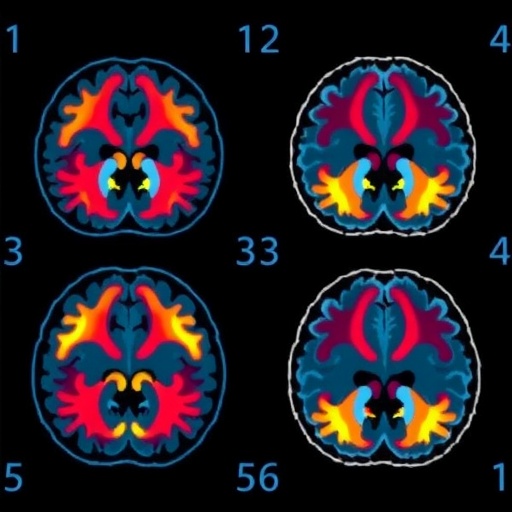
At the heart of this study lies the amygdala, a critical brain structure known as the brain’s “alarm button.” The amygdala orchestrates our instinctive responses to perceived threats, firing up to alert us of danger. Prof. Miskowiak’s team utilized functional magnetic resonance imaging (fMRI) to observe amygdala activity in 112 participants diagnosed with depression or bipolar disorder. Subjects were exposed to images of faces expressing happiness or fear, allowing researchers to quantify real-time neural responses to these emotional signals. This neuroimaging approach enabled them to pinpoint differences in how intensely individuals processed threatening stimuli.
Complementing the fMRI data, the researchers conducted behavioral assessments outside the scanner, involving rapid identification tasks of facial emotions including fear, happiness, sadness, anger, surprise, and disgust. By measuring participants’ speed and accuracy in recognizing negative versus positive emotional expressions, the team could gauge the degree of emotional reactivity and bias in perception. Importantly, variations emerged, revealing that some patients exhibited heightened sensitivity to negative or threatening facial cues compared to others.
Longitudinal follow-up over twelve months established a compelling link between these neural and behavioral markers and the risk of subsequent psychiatric hospitalization. Those exhibiting stronger amygdala activation specifically in response to fearful faces faced a statistically significant increase in readmission risk. Moreover, individuals who more rapidly detected negative emotions relative to positive ones similarly showed elevated vulnerability to illness exacerbation requiring hospital care. This association transcended diagnostic categories, applying to both depressive and bipolar disorders, suggesting a shared neurobiological vulnerability underpinning affective dysregulation.
The concept of a “negativity bias” emerged prominently in these findings, reflecting a tendency for the brain to amplify responses to negative emotional information while potentially disregarding neutral or positive signals. Such a skewed interpretative lens could cause patients to misread environmental cues as more threatening than they truly are, precipitating stress and symptom deterioration. Quantitatively, each incremental increase in amygdala reactivity to threat correlated with a 17% higher likelihood of hospitalization, underscoring the clinical relevance of this neurophysiological marker.
Professor Miskowiak emphasizes that these results challenge the outdated notion that psychiatric illnesses are solely psychological or self-inflicted, emphasizing instead a tangible neurological substrate for illness progression. A better grasp of these underlying brain mechanisms offers hope for therapeutic interventions tailored to recalibrate emotional processing circuits and mitigate relapse risk. Her research trajectory aims to harness this knowledge to develop practical screening tools that translate neuroscientific insights into everyday clinical practice.
Given the substantial economic impact of depression in Denmark—estimated at nearly 10 billion Danish Kroner annually in direct care costs and 25 billion in lost productivity—the imperative for improved risk stratification is urgent. With over 58,000 psychiatric hospitalizations occurring yearly and readmission rates hovering around 25% within 30 days, identifying individuals who require enhanced monitoring or intervention could substantially reduce healthcare burden and improve patient outcomes.
Though the use of sophisticated neuroimaging techniques like fMRI offers valuable mechanistic understanding, their expense and logistical complexity limit suitability for routine clinical application. Recognizing this, Miskowiak and colleagues are pioneering a more accessible alternative: an online behavioral test that evaluates patients’ reactions to facial emotion cues without the need for a brain scanner. This innovative digital screening tool promises to empower clinicians to quickly identify patients at elevated risk based on their emotional perception profiles, enabling proactive care adjustments.
Importantly, the proposed diagnostic approach is envisioned to complement, not replace, traditional clinical assessments. Incorporating factors such as patients’ medical histories and psychosocial context alongside these neurobehavioral biomarkers will yield a comprehensive risk evaluation. The overarching goal is a precision psychiatry model where individualized neural signatures inform and optimize treatment trajectories.
This line of research also addresses a critical unmet need in psychiatry—the absence of reliable biomarkers akin to those found in other medical specialties. Just as throat swabs can guide antibiotic use in infectious diseases, accessible markers predicting psychiatric prognosis would revolutionize diagnosis and management. The amygdala reactivity and negative emotion processing signature uncovered by this study holds promise as one of the first such biomarkers, potentially reshaping mental health care paradigms.
While the findings are compelling, further research is warranted to validate these markers in larger and more diverse populations, refine the predictive algorithms, and explore how interventions might normalize amygdala responsiveness or emotional perception biases. If realized, this neurobiological approach could curtail psychiatric hospitalizations, reducing human suffering as well as societal costs.
Professor Miskowiak’s work exemplifies the fusion of cognitive neuroscience and clinical psychiatry, translating complex brain data into tangible tools for frontline mental health practitioners. By elucidating the neural underpinnings of risk and resilience in affective disorders, this research offers a beacon of hope that psychiatry can evolve from symptom management to targeted prevention and personalized treatment based on brain signatures.
In conclusion, the discovery that amygdala reactivity to threat-related stimuli combined with negative facial emotion perception predicts future psychiatric hospital admissions represents a monumental step forward. It heralds the dawn of biomarker-informed psychiatry, where science-driven insights guide interventions to improve lives. As mental health burdens escalate globally, innovations such as these are urgently needed to shift the course of psychiatric disorders from cyclical readmissions toward sustained recovery and wellness.
News Publication Date: 15-Dec-2025
Web References: 10.1038/s41386-025-02291-0
Cite Scienmag News
Glenn Wilkins. (April 15, 2026). Brain Scans May Predict Risk of Psychiatric Hospitalization. Scienmag. https://scienmag.com/brain-scans-may-predict-risk-of-psychiatric-hospitalization/
Glenn Wilkins. "Brain Scans May Predict Risk of Psychiatric Hospitalization." Scienmag, 15 April 2026, https://scienmag.com/brain-scans-may-predict-risk-of-psychiatric-hospitalization/. Accessed 4 September 2026.
Glenn Wilkins. "Brain Scans May Predict Risk of Psychiatric Hospitalization." Scienmag. April 15, 2026. https://scienmag.com/brain-scans-may-predict-risk-of-psychiatric-hospitalization/


