


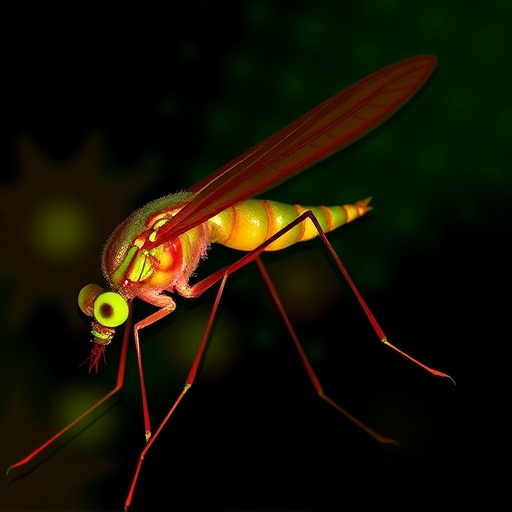
In a groundbreaking study published in Nature Communications, researchers have unveiled the pivotal role of the GID/CTLH E3 ubiquitin ligase complex in governing the cellular fate decisions that underpin the sexual development of Plasmodium falciparum, the parasite responsible for the most lethal form of human malaria. This discovery provides critical new insight into the molecular pathways that control parasite differentiation, offering promising avenues for novel therapeutic interventions against malaria, a disease that continues to claim hundreds of thousands of lives annually.
The life cycle of P. falciparum is notoriously complex, marked by a transition between asexual replication within human red blood cells and sexual differentiation into gametocytes, which are essential for parasite transmission via the mosquito vector. The switch to sexual development is a tightly regulated process fundamental to the parasite’s propagation and survival. Yet, the precise molecular mechanisms orchestrating cell fate decisions toward gametocytogenesis have remained elusive until now. This study fills a critical gap by identifying the GID/CTLH complex as a central regulator of these developmental pathways.
E3 ubiquitin ligases are powerful enzymes that tag proteins with ubiquitin molecules, directing them for degradation or modulating their activity and localization. By intricately controlling protein turnover, these complexes fine-tune cellular behaviors and developmental programs. The GID/CTLH complex, a multi-subunit E3 ligase previously characterized in yeast and mammals, had not been functionally implicated in Plasmodium biology before this publication. Utilizing an elegant combination of genetic engineering, proteomics, and biochemical assays, the authors demonstrate that the P. falciparum GID/CTLH complex orchestrates the balance between asexual proliferation and sexual commitment.
Genetic disruption of key GID/CTLH components significantly impaired gametocyte formation, underscoring the complex’s essential role in enabling the parasite to enter its sexual phase. Interestingly, the study reveals that the complex acts upstream of established sexual commitment factors, suggesting it operates as a master regulator, integrating environmental and intracellular signals to coordinate developmental outcomes. These findings redefine our understanding of the molecular framework controlling sexual differentiation in P. falciparum.
The mechanistic underpinnings unraveled show that the GID/CTLH complex selectively targets proteins involved in controlling transcription and chromatin remodeling, thereby modulating gene expression networks essential for sexual differentiation. Its ubiquitin ligase activity appears crucial for maintaining appropriate protein homeostasis during cell fate transitions. This facet positions the complex as a critical node where signal transduction pathways converge to instigate gametocytogenesis.
Beyond molecular characterization, the research team leveraged high-resolution mass spectrometry to map the ubiquitination landscape and identify novel substrate proteins impacted by GID/CTLH activity. This comprehensive approach illuminated previously unrecognized regulatory layers, revealing a sophisticated interplay between ubiquitin-mediated proteostasis and epigenetic control during parasite development.
The implications of these findings are profound. Targeting the GID/CTLH complex or its downstream effectors could constitute a novel antimalarial strategy that disrupts the parasite’s transmission cycle by preventing sexual differentiation. Such transmission-blocking interventions are urgently sought after to complement existing therapies focused on the asexual blood stages responsible for disease symptoms.
Moreover, the discovery has broader biological significance, as it expands the functional repertoire of the GID/CTLH family of E3 ligases to include critical roles in protozoan parasites. This cross-kingdom conservation highlights evolutionary parallels in how diverse organisms harness ubiquitin signaling to regulate development and suggests that insights gleaned from P. falciparum may illuminate fundamental cellular processes.
The multidisciplinary approach employed in this study—merging molecular genetics, proteomics, and cutting-edge cell biology—exemplifies how integrated methodologies can unravel complex biological questions. By decoding the regulatory logic behind parasite sexual development, the authors open new horizons for malaria biology, emphasizing the power of precise molecular targeting grounded in detailed mechanistic understanding.
Critically, the study also touches upon potential challenges in exploiting the GID/CTLH complex therapeutically. Given the complex’s presence in multiple organisms, achieving parasite-specific inhibition without host toxicity will require nuanced drug design efforts. Nonetheless, the identification of parasite-specific subunits and interaction motifs within the complex offers promising starting points for selective targeting.
Future research inspired by this work is poised to explore how environmental cues, such as metabolic status and host immune factors, converge on the GID/CTLH complex to modulate sexual commitment. Additionally, investigating potential cross-talk with other post-translational modification systems may uncover further regulatory sophistication governing P. falciparum development.
As malaria remains a global health menace exacerbated by challenges like drug resistance and climate-driven vector expansions, breakthroughs such as this refine our arsenal against the parasite. By illuminating the cellular decision-making machinery that enables P. falciparum to adapt and ensure transmission, this study empowers efforts to break the parasite’s life cycle and reduce disease burden.
In sum, the elucidation of the GID/CTLH E3 ligase complex as a master regulator of Plasmodium falciparum sexual development constitutes a landmark advance in parasitology. It showcases the intricacy of ubiquitin-dependent signaling in orchestrating pathogen biology and heralds new directions for malaria research aiming to disrupt parasite transmission at its root.
This seminal work exemplifies how dissecting the molecular basis of pathogen biology can reveal vulnerable nodes ripe for therapeutic exploitation. The detailed mechanistic insights provided here will undoubtedly catalyze further studies, driving innovation in antimalarial strategies with the potential to save millions of lives worldwide.
Cite Scienmag News
Ophelia Keating. (April 15, 2026). GID/CTLH E3 Ligase Drives Malaria Parasite Sexual Development. Scienmag. https://scienmag.com/gid-ctlh-e3-ligase-drives-malaria-parasite-sexual-development/
Ophelia Keating. "GID/CTLH E3 Ligase Drives Malaria Parasite Sexual Development." Scienmag, 15 April 2026, https://scienmag.com/gid-ctlh-e3-ligase-drives-malaria-parasite-sexual-development/. Accessed 7 September 2026.
Ophelia Keating. "GID/CTLH E3 Ligase Drives Malaria Parasite Sexual Development." Scienmag. April 15, 2026. https://scienmag.com/gid-ctlh-e3-ligase-drives-malaria-parasite-sexual-development/


