


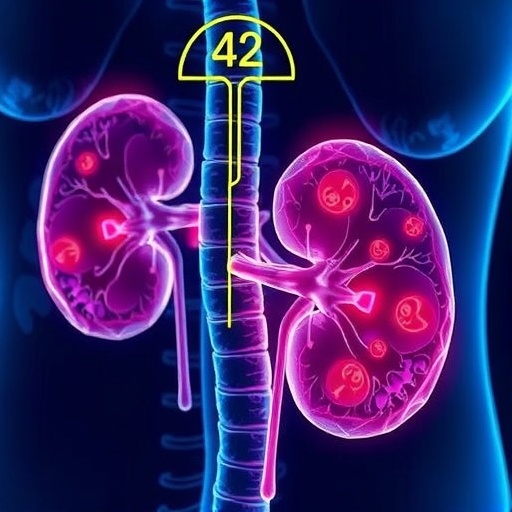
In a groundbreaking study published in 2026, researchers have unveiled a compelling new mechanism linking sodium overload to necrosis in kidney cells, shedding light on the pathophysiology of renal diseases intertwined with mitochondrial dysfunction. This innovative research not only deepens our molecular comprehension of renal injury but also opens promising avenues for targeted therapeutic strategies aimed at mitigating kidney damage through modulation of cellular ionic environments.
The kidneys, essential for maintaining systemic homeostasis by filtering blood and regulating electrolyte balance, are highly susceptible to disruptions in intracellular ion gradients. At the forefront of this vulnerability is sodium, a pivotal player in cellular function yet a potential harbinger of cellular demise when present in excess. While sodium’s role in renal physiology has been extensively studied, this new body of work highlights an uncharted pathological dimension: sodium-induced necrosis mediated by mitochondrial perturbations.
Central to this discovery is the intricate relationship between sodium overload and mitochondrial dysfunction. Mitochondria, the energy-producing organelles within cells, are responsible not only for ATP generation but also for regulating apoptotic and necrotic pathways. Excessive sodium accumulation within renal tubular cells appears to trigger a cascade of bioenergetic failures and oxidative stress within mitochondria, culminating in irreversible damage that leads to necrotic cell death. This contrasts with apoptosis, which is a more regulated and often less inflammatory form of cell death, emphasizing the catastrophic impact of sodium-driven necrosis.
The researchers employed advanced imaging and biochemical assays to trace the flow of sodium ions into renal cells and their subsequent effects on mitochondrial integrity. They demonstrated that sodium overload disrupts the electrochemical gradient critical for mitochondrial membrane potential maintenance. This disruption precipitates a failure in ATP synthesis, increased production of reactive oxygen species, and the opening of mitochondrial permeability transition pores (mPTPs), events collectively propelling the cells toward necrotic death.
This novel nexus between sodium and mitochondrial stability carries profound implications for understanding chronic kidney disease (CKD) and acute kidney injury (AKI), ailments frequently complicated by mitochondrial impairment. Patients with these conditions often exhibit heightened oxidative stress and compromised renal function, features now mechanistically linked to osmotic imbalances and ionic stress highlighted in this study.
Furthermore, the elucidation of sodium’s deleterious effect on mitochondria offers a fresh perspective on why certain mitochondrial diseases manifest with renal symptoms. Genetic mutations impairing mitochondrial function might render renal cells particularly vulnerable to the ionic disturbances stemming from sodium accumulation, creating a vicious cycle that exacerbates renal pathology.
The clinical ramifications extend beyond disease pathogenesis to potential interventional strategies. By recognizing sodium overload as a critical trigger of necrosis, therapeutic interventions can focus on modulating sodium handling within renal cells. This could involve the development of sodium channel blockers or agents that stabilize mitochondrial membranes, aiming to preserve renal cell viability and function.
Importantly, this research challenges the current paradigms that primarily attribute renal cell necrosis in disease contexts to ischemic injury or toxin exposure. Instead, it positions ionic dysregulation—specifically sodium overload—as an equally potent inducer of cellular demise, necessitating a revision of diagnostic and treatment frameworks to incorporate ionic homeostasis as a key factor.
Mechanistically, the team discovered that sodium overload induces a surge in mitochondrial calcium uptake due to altered sodium-calcium exchangers, further impairing mitochondrial respiration and promoting the release of pro-death factors. This interplay underscores the complex ionic crosstalk within renal cells, where sodium, calcium, and other ions converge to determine cell fate outcomes.
This discovery also opens a broader conversation about electrolyte management in systemic diseases. Given the kidney’s role in electrolyte regulation, systemic sodium imbalances—such as those arising from dietary excess or hormonal dysregulation—could have direct repercussions on renal mitochondrial health, emphasizing the need for holistic management of electrolyte disorders.
Moreover, these findings provide a new target for biomarker development. Detection of early mitochondrial distress signals triggered by sodium accumulation could serve as a prognostic tool to identify kidney disease at a stage amenable to intervention, potentially improving patient outcomes.
The research team emphasized the translational potential of their findings by exploring pharmacologic agents capable of modulating sodium uptake and mitochondrial response in preclinical models. Early data suggest that drugs attenuating sodium influx or enhancing mitochondrial resilience can significantly reduce the extent of renal necrosis, underscoring the therapeutic promise of these pathways.
This paradigm shift challenges researchers and clinicians alike to rethink kidney health through the lens of ionic regulation and mitochondrial dynamics. As the incidence of kidney diseases continues to climb globally, innovations such as these are paramount in driving forward precision medicine approaches tailored to the cellular microenvironment of affected tissues.
In summary, this landmark study elucidates a critical mechanism of renal necrosis involving sodium overload and mitochondrial dysfunction, bridging gaps in our understanding of kidney pathology and identifying new horizons for therapeutic intervention. As our knowledge of cellular ionic homeostasis deepens, so too does our capacity to combat the devastating consequences of renal disease, making this breakthrough a milestone in nephrology and cellular biology.
Subjecting these findings to further experimental scrutiny and clinical trials will be essential to translate this mechanistic insight into widely accessible treatments, forging a new frontier in the battle against renal diseases driven by ionic and mitochondrial dysregulation.
Cite Scienmag News
Jerry Hayes. (April 11, 2026). Sodium Overload Drives Kidney Disease via Necrosis. Scienmag. https://scienmag.com/sodium-overload-drives-kidney-disease-via-necrosis/
Jerry Hayes. "Sodium Overload Drives Kidney Disease via Necrosis." Scienmag, 11 April 2026, https://scienmag.com/sodium-overload-drives-kidney-disease-via-necrosis/. Accessed 3 September 2026.
Jerry Hayes. "Sodium Overload Drives Kidney Disease via Necrosis." Scienmag. April 11, 2026. https://scienmag.com/sodium-overload-drives-kidney-disease-via-necrosis/


