


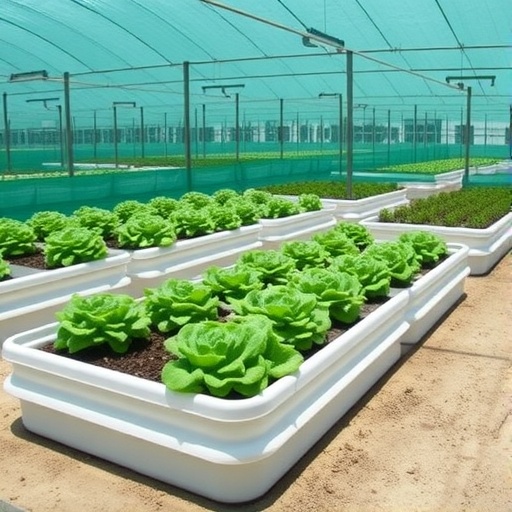
In the ever-evolving landscape of agricultural science, a groundbreaking advancement promises to reshape how fresh-market vegetables are cultivated sustainably and efficiently. Recent research spearheaded by Hansen, K.M., Shukla, S., Santikari, V.P., and their team uncovers an innovative approach to intensifying vegetable production through compact bed plasticulture, poised to revolutionize the agricultural sector by sustainably increasing yields while minimizing environmental footprints.
Fresh-market vegetables, integral to global nutrition, face mounting challenges due to climate change, land degradation, and resource limitations. Traditional farming methods, often expansive and resource-intensive, struggle to meet the burgeoning demand for high-quality produce. The research community’s quest has thus shifted toward integrating advanced cultivation techniques that harmonize productivity with ecological stewardship. This pioneering study introduces a method characterized by its strategic use of plasticulture within compact bed arrangements—a hybrid model designed to enhance resource use efficiency and crop performance.
Plasticulture, the practice of using plastic films and materials in agriculture, has been widely recognized for its benefits, including moisture conservation, temperature regulation, and weed suppression. However, the novel aspect highlighted in this research is the combination of compact bed design with plasticulture, an approach that has not been extensively explored. Compact beds are reduced in width and optimized in geometry to maximize planting density while maintaining ideal root zone conditions. This structural innovation, when paired with plastic mulch and drip irrigation systems, creates a microenvironment conducive to accelerated growth and higher yields.
The study meticulously details how compact bed plasticulture influences several crucial agronomic parameters. By reducing the physical footprint of beds, farmers can cultivate more plants per unit area, thereby intensifying production. Moreover, the plastic covers maintain soil moisture at optimal levels, mitigating evapotranspiration and reducing irrigation demands. Temperature buffering provided by the plastic mulch leads to earlier crop maturity and fewer incidences of thermal stress. Collectively, these effects enhance the overall sustainability profile of vegetable farming.
A core element of the research involved extensive field trials validating the efficacy of this method across diverse crop species typical of fresh-market vegetable production. These trials demonstrated consistent yield improvements ranging from 20% to 35% compared to conventional planting systems. Importantly, these productivity gains did not come at the expense of soil health—a critical consideration for long-term agricultural viability. Soil microbial activity and organic matter content remained stable or improved, signifying that intensive production did not degrade the biological foundations of the soil.
Another compelling dimension of compact bed plasticulture is its potential to reduce the use of agrochemicals. Weed suppression through plastic mulch diminishes the reliance on herbicides, while optimized irrigation reduces fertilizer leaching and runoff. This contributes directly to lower environmental contamination risks and supports integrated pest management strategies. The researchers also observed a reduction in pest pressure due to the altered microclimate under plastic mulch, which disrupted the life cycles of certain pests and diseases.
From a resource management perspective, the approach excels in water use efficiency. Drip irrigation, when coupled with plastic mulch on compact beds, allows precise delivery of water and nutrients directly to the root zone. This minimizes waste and enhances uptake efficiency, critical in regions experiencing water scarcity. The compact bed layout further saves space and aligns with mechanized planting and harvesting systems, improving labor efficiency and reducing operational costs.
Crucially, the technology addresses socioeconomic factors often overlooked in agricultural innovation. By enabling smallholder farmers to intensify production on limited land acreage sustainably, it holds promise for enhancing food security and generating higher incomes in vulnerable rural communities. The adaptability of compact bed plasticulture to varying scales and environments makes it a versatile tool for diverse agricultural settings, from peri-urban farms to commercial operations.
The sustainability implications extend beyond resource conservation. The reduced need for chemical inputs and enhanced crop resilience to environmental stresses align with global targets for low-impact agriculture and climate change mitigation. As fresh-market vegetable demand escalates due to population growth and shifting diet preferences, innovations like these provide vital pathways to meet demand without further exacerbating environmental degradation.
Technological integration and knowledge dissemination are pivotal for broad adoption. The researchers emphasize the importance of farmer training, extension services, and policy support to scale this innovation effectively. Integrating digital monitoring systems could further optimize water and nutrient management in compact bed plasticulture, amplifying its benefits while minimizing operational complexities.
Additionally, the research sheds light on future prospects for plasticulture materials themselves. Advances in biodegradable and UV-stabilized films could alleviate post-harvest plastic waste concerns, enhancing the overall sustainability profile. The adoption of recycled plastic mulch and integration with renewable energy-powered irrigation systems signal exciting directions to evolve this approach into a fully circular agricultural model.
Economic analyses within the study underscore the favorable cost-benefit ratios of adopting compact bed plasticulture. Initial investments in infrastructure and inputs are offset by increased yields, reduced input costs, and labor savings within a few growing seasons. This fiscal viability encourages farmers and agribusinesses to envision long-term gains rather than short-term expenditures, bolstering investment confidence.
Beyond the immediate agricultural community, this innovation resonates with policymakers and environmental stakeholders who seek scalable, impactful solutions to global food and environmental challenges. Its alignment with several United Nations Sustainable Development Goals, including zero hunger, clean water, responsible consumption, and climate action, renders it a compelling exemplar of science-driven sustainable development.
In conclusion, Hansen and colleagues’ research not only advances knowledge within agricultural production systems but also introduces a transformative method with profound practical and environmental benefits. Compact bed plasticulture exemplifies how precision engineering, ecological understanding, and strategic design converge to pioneer sustainable intensification in fresh-market vegetable farming. As the global community grapples with feeding a growing population under mounting environmental pressures, such innovations illuminate pathways toward resilient and responsible agriculture.
The publication of this research invites the agricultural ecosystem—farmers, scientists, policymakers, and industry innovators alike—to reimagine vegetable production in the 21st century. It underscores the necessity of interdisciplinary approaches that marry technology and sustainability, fostering a future where agricultural intensification is synonymous with ecological stewardship. Further research and collaboration will undoubtedly refine and expand the applicability of compact bed plasticulture, heralding a new era in crop production paradigms.
Cite Scienmag News
Violet Maxwell. (April 10, 2026). Compact Bed Plasticulture Boosts Sustainable Vegetable Production. Scienmag. https://scienmag.com/compact-bed-plasticulture-boosts-sustainable-vegetable-production/
Violet Maxwell. "Compact Bed Plasticulture Boosts Sustainable Vegetable Production." Scienmag, 10 April 2026, https://scienmag.com/compact-bed-plasticulture-boosts-sustainable-vegetable-production/. Accessed 4 September 2026.
Violet Maxwell. "Compact Bed Plasticulture Boosts Sustainable Vegetable Production." Scienmag. April 10, 2026. https://scienmag.com/compact-bed-plasticulture-boosts-sustainable-vegetable-production/


