


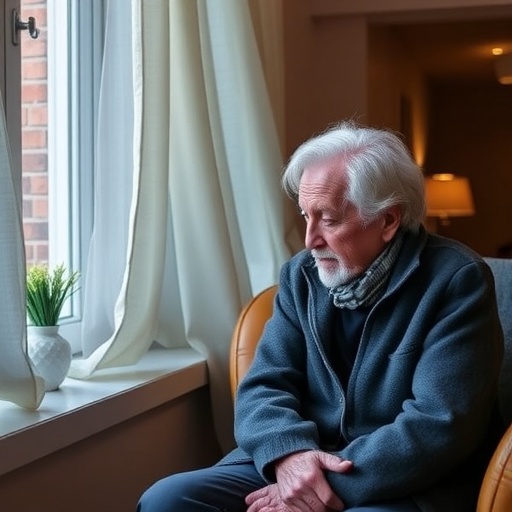
In an era where aging populations are growing exponentially, understanding the intricate dynamics of frailty in older adults is more crucial than ever. A groundbreaking longitudinal study recently published in Scientific Reports dives deep into the multifaceted nature of frailty and unravels its profound connections with depression and social participation. This extensive research offers new perspectives on aging, challenging traditional views and presenting a multidimensional framework that could redefine clinical approaches to elder care worldwide.
Frailty, long recognized as a pivotal predictor of adverse health outcomes in older adults, is traditionally understood as a syndrome marked by decreased physiological reserves and increased vulnerability to stressors. However, emerging evidence suggests that frailty extends beyond mere physical decline. The study spearheaded by Lee, Park, Kim, and colleagues employs a comprehensive methodology to analyze multiple dimensions of frailty—encompassing physical, psychological, and social components—and their complex interactions within community-dwelling older individuals over an extended period.
The longitudinal aspect of this investigation is particularly significant. By observing the same cohort over time, the researchers could capture the dynamic evolution of frailty and its reciprocal relationships with depression and levels of social engagement. Unlike cross-sectional studies that offer mere snapshots, this approach reveals temporal trends and causative pathways, advancing a deeper understanding of how frailty progresses and potentially intersects with mental health and social variables.
A key revelation from the study highlights the bidirectional relationship between multiple frailty and depressive symptoms. Older adults exhibiting higher frailty scores were more likely to develop depressive symptoms over time, while those with depression were prone to an escalation in frailty levels. This interplay not only underscores the psychological toll of physical decline but also accentuates how mental health issues can exacerbate biological vulnerability, creating a pernicious cycle that demands integrated intervention strategies.
Moreover, social participation emerged as a critical moderator in this triadic relationship. The data indicate that active involvement in social activities substantially mitigates the progression of frailty and buffers against depressive symptoms. Social participation in this context is understood as frequent and meaningful engagement in community events, social clubs, volunteerism, or informal social networks. This finding points to the protective role of societal connectedness and emotional support networks in sustaining both mental and physical health in late life.
Technically, the study utilized sophisticated statistical models such as latent growth curve modeling to quantify trajectories of frailty and depression. This approach permits nuanced insights into individual variations and group patterns over multiple waves of data collection. The robustness of these models lends credibility to the authors’ claims about the temporal and reciprocal associations among the studied variables.
From a physiological standpoint, the concept of “multiple frailty” considered in this work reflects a composite index integrating physical decrements—like weakness, slowness, and fatigue—with psychological and social frailty markers. This multidimensional model recognizes the heterogeneity in elder populations and advocates for the adoption of assessment tools sensitive to these overlapping domains, thereby promoting personalized health interventions.
Clinically, the implications of these findings are profound. Health care providers are encouraged to move beyond unidimensional frailty assessments centered solely on physical symptoms. Instead, incorporating evaluations for depressive states and social participation levels can facilitate early identification of high-risk individuals and tailor multidimensional treatment plans aimed at holistic well-being. This could translate into better resource allocation, improved patient outcomes, and potentially reduced healthcare costs stemming from frailty-related complications.
Additionally, public health policies should integrate these insights to promote community structures that foster social involvement among the elderly. Urban planning, social services, and eldercare programs can take inspiration from this research to design inclusive environments and social engagement opportunities that preserve autonomy and quality of life for aging populations.
The study also revives discussions on the biological underpinnings linking frailty, depression, and social isolation. Chronic inflammation, neuroendocrine dysregulation, and reduced neuroplasticity are hypothesized mechanisms that might explain this interconnectedness. By underscoring these physiological correlates, the research paves the way for interdisciplinary investigations bridging gerontology, psychiatry, and immunology.
Furthermore, the longitudinal data gathered may serve as a valuable resource for future predictive analytics and machine learning models. By integrating electronic health records and sensor-based monitoring with the study’s datasets, researchers could develop real-time risk assessment tools that proactively manage frailty trajectories in community settings.
The work by Lee et al. stands as a call to action for the scientific community, urging for broader incorporation of mental health and social determinants in the dialogue around aging and frailty. It challenges entrenched paradigms and offers a compelling argument for collaborative care models involving physicians, mental health specialists, social workers, and policy makers to holistically address elder health.
Notably, this research also touches on the socio-cultural dimensions affecting frailty and social participation. Variations in cultural attitudes towards aging, community engagement norms, and stigma around mental health may influence the observed associations. These factors highlight the need for culturally sensitive frameworks that respect diversity while implementing global health initiatives.
From a methodological angle, the study benefits from a large, representative sample and rigorous follow-up protocols. However, the authors acknowledge limitations, including potential selection bias and reliance on self-reported social participation measures that may be influenced by cognitive status or social desirability. Future research directions proposing the integration of objective social interaction metrics and biomarkers may enhance precision and validity.
In summary, this longitudinal inquiry into multiple frailty and its associations with depression and social participation provides a multifaceted lens through which to reinterpret aging trajectories. It offers evidence that frailty is not an isolated biological decline but a complex bio-psycho-social phenomenon profoundly influenced by mental health and the social environment. Such insights herald a paradigm shift prompting multifactorial strategies in elder care, encompassing clinical, communal, and policy-level interventions.
As populations worldwide face unprecedented demographic shifts, the urgency of deepening our understanding of frailty’s multifarious nature cannot be understated. This study equips stakeholders with critical knowledge to design responsive, integrated systems that honor the dignity, resilience, and well-being of older adults. Ultimately, the interplay of multiple frailty, depression, and social participation unearthed here is a testament to the intricate tapestry of human health, extending well beyond chronological age.
Cite Scienmag News
Glenn Wilkins. (April 5, 2026). Frailty, Depression, Social Participation Linked in Older Adults. Scienmag. https://scienmag.com/frailty-depression-social-participation-linked-in-older-adults/
Glenn Wilkins. "Frailty, Depression, Social Participation Linked in Older Adults." Scienmag, 5 April 2026, https://scienmag.com/frailty-depression-social-participation-linked-in-older-adults/. Accessed 3 September 2026.
Glenn Wilkins. "Frailty, Depression, Social Participation Linked in Older Adults." Scienmag. April 5, 2026. https://scienmag.com/frailty-depression-social-participation-linked-in-older-adults/


