


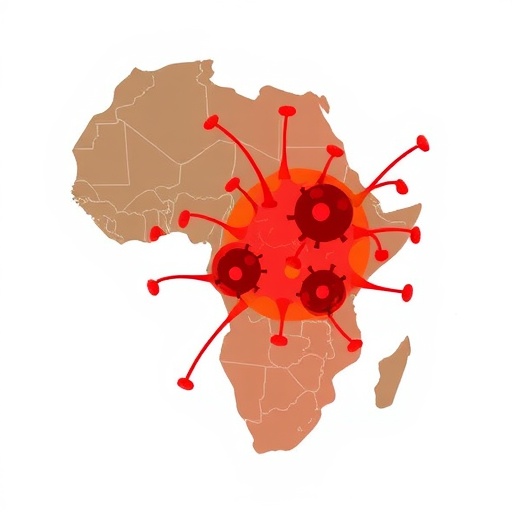
In a groundbreaking advancement poised to reshape public health landscapes across Africa, the Institut Pasteur has unveiled the ACT-CHIK initiative—an ambitious €15.3 million project designed to accelerate the clinical development and regional manufacturing capabilities of a novel chikungunya vaccine tailored specifically for African populations. This four-year endeavor, funded by the Global Health EDCTP3 Joint Undertaking under the European Union’s Horizon Europe program, aims to bring forth a vaccine solution that is both accessible and sustainable to meet the escalating threats posed by chikungunya virus outbreaks.
Chikungunya virus, predominantly vectored by Aedes aegypti and Aedes albopictus mosquitoes, represents a formidable arboviral challenge with debilitating clinical manifestations. Patients afflicted often endure acute febrile illness coupled with intense polyarthralgia that can persist long after acute symptoms have subsided, significantly impacting quality of life. The disease’s symptomatology, which also encompasses headaches, rash, and profound fatigue, mimics other endemic arboviral infections and malaria, complicating diagnosis and leading to chronic underreporting and misdiagnosis, especially within the African continent.
Over the past two decades, epidemiological surveillance has highlighted a disturbing uptick in chikungunya cases throughout Africa. This surge correlates with ecological and climatic changes favoring the proliferation and geographic expansion of vector mosquitoes. Rising global temperatures and altered precipitation patterns extend mosquito breeding habitats and seasons, amplifying transmission risks. Such environmental shifts underscore the urgent necessity for robust preventive strategies, including efficacious vaccines that are suited to endemic contexts.
Despite recent advancements leading to the licensure of chikungunya vaccines predominantly used in travelers from non-endemic regions, access and cost remain substantial barriers for affected communities in Africa. The existing vaccine landscape is marked by high prices and logistical challenges that hinder uptake and equitable distribution. Against this backdrop, the MV-CHIK vaccine candidate emerges as a pioneering intervention. Developed using a recombinant technology platform based on the highly attenuated measles virus Schwarz strain, MV-CHIK leverages a proven vector with a well-established safety and immunogenicity record, thus offering a promising alternative for widespread use in African populations.
MV-CHIK’s platform technology entails engineering the measles virus to express chikungunya antigens, inducing a potent immune response while maintaining measles protective efficacy. This dual immunogenic approach is underpinned by rigorous preclinical validations and supported by six completed Phase I and II clinical trials across Europe, the United States, and Puerto Rico involving nearly 600 adult volunteers. These studies have demonstrated robust safety profiles and immunogenicity, laying the foundation for more extensive evaluations in target populations.
The ACT-CHIK project will conduct an extensive Phase Ib/III multicenter clinical trial enrolling approximately 940 participants across diverse age cohorts—ranging from children aged five years to adults up to 55 years—in four African countries: Rwanda, Kenya, Nigeria, and Senegal. These sites have been strategically chosen to incorporate both endemic and non-endemic settings, encompassing varied epidemiological and ecological contexts. The trial aims to generate critical insights into the vaccine’s safety, immunogenicity, and efficacy in real-world African populations, including younger demographics often underrepresented in vaccine research.
A pivotal component of ACT-CHIK extends beyond clinical validation into the realm of vaccine manufacturing, reflecting Africa’s aspirations for self-reliance and regional production capacity. The project includes an exhaustive due diligence and gap analysis phase, preparing the path for technology transfer to the Institut Pasteur de Dakar—the continent’s only WHO-prequalified vaccine manufacturer. This strategic move aligns with broader efforts to bolster Africa’s pharmaceutical infrastructure and reduce dependency on external supply chains, an imperative highlighted during recent global health emergencies.
The Brazilian institution Fundação Oswaldo Cruz (Fiocruz), a key member of the Pasteur Network known for its vaccine production expertise, will collaborate closely in the technology transfer process. Fiocruz will prepare clinical trial-grade vaccine materials and provide vital support to optimize manufacturing protocols, ensuring scalability and quality assurance meet international standards. This South-South collaboration epitomizes the global partnership model essential for sustainable vaccine ecosystems.
Regulatory alignment forms another cornerstone of ACT-CHIK’s comprehensive strategy. An integrated regulatory pathway will be developed in partnership with national authorities and the World Health Organization’s prequalification teams. This approach ensures expedited licensure processes and facilitates broader access within African markets, thereby fast-tracking the availability of MV-CHIK post-trial completion. It underscores the emphasis on harmonized frameworks vital for efficient vaccine rollout during outbreaks.
The ACT-CHIK consortium encompasses seven institutions spanning four continents, each contributing specialized expertise spanning vaccine development, clinical research, manufacturing, regulatory affairs, and data dissemination. From the project coordination led by Institut Pasteur in Paris, the scientific governance steered by University of Rwanda, clinical assay capabilities of Institut Pasteur de Dakar, to the clinical trial sponsorship and regulatory pathway development anchored by the International Vaccine Institute in South Korea, this collective effort embodies a robust, multidisciplinary response to chikungunya.
Voices from consortium leaders amplify the strategic importance of this initiative. Dr. Sotiris Missailidis, ACT-CHIK Project Coordinator at Institut Pasteur, underscores the project’s role in generating evidence-based clinical data that addresses a significant public health gap in Africa while fostering regional vaccine production capacities. Similarly, Prof. Leon Mutesa of the University of Rwanda highlights the alignment of ACT-CHIK with African Union goals to enhance vaccine manufacturing and regulatory ecosystems, preparing the continent for improved epidemic response.
The CEO of Institut Pasteur de Dakar, Dr. Ibrahima Socé FALL, expressed a vision wherein Africa not only evaluates but produces vaccines addressing its unique epidemiological challenges. This local production capacity promises increased autonomy, enhanced supply chain resilience, and cultural congruence in public health interventions. Meanwhile, Dr. Anh Wartel of the International Vaccine Institute champions the trial’s rigorous clinical and regulatory pathways, emphasizing capacity building to establish lasting leadership in vaccine research within Africa.
At the clinical site level, Prof. Reuben Agbons Eifediyi of Nigeria’s Irrua Specialist Teaching Hospital—leading the trial conduct—reflects on the paucity of active chikungunya vaccine trials in the region, positing ACT-CHIK as a landmark endeavor bridging research gaps and augmenting preparedness. Prof. Okogbenin, Coordinating Principal Investigator at the same institute, reiterates commitments to ethical, community-engaged trial conduct reflecting the highest scientific standards.
ACT-CHIK’s multi-faceted framework—spanning clinical trials, technology transfer, regulatory strategy, and consortium coordination—articulates a comprehensive blueprint for combating chikungunya’s rising burden. By integrating cutting-edge virology with pragmatic manufacturing and regulatory pathways, this project aligns with Africa’s broader ambitions of achieving vaccine self-sufficiency and epidemic readiness, all underpinned by equitable access principles.
This initiative embodies a paradigm shift: moving from reactive disease management to proactive, locally empowered health security. Its success promises to revolutionize the chikungunya vaccine landscape not only by delivering effective immunization options but also by nurturing sustainable infrastructures capable of confronting emerging infectious diseases. The implications resonate beyond chikungunya, providing a scalable model for vaccine innovation with profound regional and global health implications.
News Publication Date: Not specified in the source content.
Web References:
- Institut Pasteur: https://www.pasteur.fr
- International Vaccine Institute: https://www.ivi.int
Keywords
Chikungunya, Vaccine Development, Measles Virus Vector, Clinical Trials, Africa, Aedes aegypti, Arboviral Diseases, Vaccine Manufacturing, Technology Transfer, Public Health, Emerging Infectious Diseases, Global Health, Epidemiology
Cite Scienmag News
Kristina Jarvis. (June 8, 2026). Speeding Up Chikungunya Vaccine Development in Africa: Introducing the ACT-CHIK Project. Scienmag. https://scienmag.com/speeding-up-chikungunya-vaccine-development-in-africa-introducing-the-act-chik-project/
Kristina Jarvis. "Speeding Up Chikungunya Vaccine Development in Africa: Introducing the ACT-CHIK Project." Scienmag, 8 June 2026, https://scienmag.com/speeding-up-chikungunya-vaccine-development-in-africa-introducing-the-act-chik-project/. Accessed 3 September 2026.
Kristina Jarvis. "Speeding Up Chikungunya Vaccine Development in Africa: Introducing the ACT-CHIK Project." Scienmag. June 8, 2026. https://scienmag.com/speeding-up-chikungunya-vaccine-development-in-africa-introducing-the-act-chik-project/


