


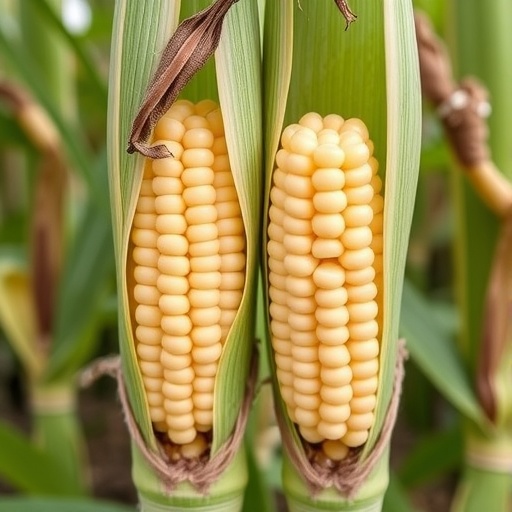
In a groundbreaking study that may redefine maize breeding strategies, researchers at the Xinjiang Academy of Agricultural Sciences have demonstrated that maternal inheritance and genomic imprinting play pivotal roles in regulating seed dehydration rates in hybrid maize. This discovery provides a novel molecular framework to improve harvest moisture content— a key determinant of seed quality, drying efficiency, and post-harvest viability —through targeted selection of maternal inbred lines combined with epigenetic insights. Published on March 4, 2026, in the journal Seed Biology, this study integrates multi-year field phenotyping, transcriptome-wide profiling, and allele-specific expression analyses to reveal the epigenetic underpinnings of seed dehydration dynamics in reciprocal maize hybrids.
Harvest seed moisture content is a critical agronomic trait in maize production. Lower moisture content at harvest reduces drying costs, improves seed storability, and enhances vigor. Traditionally, seed dehydration was conceptualized as a biphasic process: an initial genetically controlled physiological phase leading up to physiological maturity, followed by a physical desiccation phase driven largely by environmental conditions. However, the role of epigenetic phenomena, such as genomic imprinting, in modulating this trait remained largely unexplored. Genomic imprinting entails parent-of-origin-specific gene expression influenced by epigenetic marks, predominantly DNA methylation and histone modifications, which can create asymmetries in gene activity between maternal and paternal alleles.
The research team focused on dissecting the contribution of maternal effects and imprinting in the dehydration phenotype of maize kernels, using four inbred lines with contrasting dehydration speeds: the slow-dehydrating lines Zheng58 (Z1) and Dan360 (D), and the fast-dehydrating lines PH4CV (P) and Zheng30 (Z2). Reciprocal crosses were constructed between these parental lines to generate hybrids Z1P/PZ1, Z1Z2/Z2Z1, and DP/PD, enabling the disentanglement of maternal versus paternal influences on seed desiccation.
Through meticulous multi-year field trials, the researchers tracked seed moisture content from 30 to 60 days after pollination (DAP). Results consistently showed that hybrids inheriting the fast dehydration parental genome maternally (e.g., PZ1, Z2Z1, PD) exhibited significantly accelerated dehydration rates compared to their reciprocal counterparts. This maternal effect was especially pronounced with the PH4CV (P) line, which demonstrated the highest daily dehydration rates (~1.1-1.17% per day), while Zheng58 (Z1) displayed the slowest rates (~0.77-0.85% per day). These findings underscore the importance of maternal parent selection in designing hybrids optimized for moisture dynamics at harvest.
To unravel the molecular basis underlying these phenotypic observations, the team employed RNA sequencing of seeds collected at 55 DAP, the point of largest moisture divergence. High-depth transcriptome sequencing (~21.6 to 23.4 million reads per sample) mapped against the maize B73 reference genome uncovered approximately 30,600 expressed genes. Differential gene expression analysis revealed nearly 9,900 parent-of-origin differentially expressed genes (DEGs) and 1,158 DEGs between the reciprocal hybrids, with a substantial overlap (68.3%) between parent DEGs and hybrid DEGs. Hierarchical clustering further showed maternal transcriptome dominance, as the fast parent PH4CV and its corresponding hybrid PZ1 clustered together, distinct from the slow parent Zheng58 and its hybrid line.
Functional enrichment of shared DEGs implicated genes involved in nutrient reservoir activity and secondary metabolism, highlighting pathways potentially modulating nutrient deposition and metabolism during seed maturation. By contrast, hybrid-specific DEGs were enriched in transmembrane transport functions, suggesting that maternal regulation may alter nutrient fluxes across seed compartments, thereby influencing dehydration kinetics.
Allele-specific expression (ASE) analysis, leveraging over 117,000 well-characterized SNPs, quantified parent-of-origin allelic ratios genome-wide. On average, maternal alleles accounted for 52.4% of expressed transcripts, consistent with slight maternal bias expected under imprinting phenomena. The study identified 727 maternally expressed SNPs (ME-SNPs) and 318 paternally expressed SNPs (PE-SNPs), corresponding to 226 maternally expressed genes (MEGs) and 112 paternally expressed genes (PEGs). Notably, many imprinting candidates exhibited embryo-preferential expression, with MEGs enriched in carbon metabolism pathways and PEGs biased towards organelle function and protein processing. This dichotomy suggests functionally distinct roles for maternally and paternally expressed genes in seed development and dehydration.
The team validated two key maternally expressed genes, Zm00001d040697 and Zm00001d052744, via allele-specific quantitative PCR, affirming their strong maternal allele bias in reciprocal hybrid seeds. These genes now represent promising molecular markers for breeding programs aimed at selecting maternal lines that confer rapid seed dehydration without sacrificing vigor.
This comprehensive analysis reveals that non-additive genetic effects, such as those mediated by genomic imprinting, substantially influence an agronomically critical trait previously attributed primarily to additive inheritance and environmental factors. Breeders can leverage this new understanding by prioritizing maternal genotypes with favorable imprinting profiles, thereby accelerating the development of hybrids with improved drying efficiency and superior seed quality attributes.
Beyond immediate breeding applications, this study extends the conceptual framework of maize seed development by linking harvest moisture—an economically relevant trait—to precise epigenetic regulatory mechanisms. This integration of classical quantitative genetics with cutting-edge epigenomics sets a precedent for dissecting complex traits under multifaceted genetic architectures and paves the way for breeding innovation through marker-assisted selection of epigenetically modulated genes.
Future research directions will likely explore the mechanistic regulation of imprinted genes in nutrient transport and metabolism during late seed maturation phases, as well as environmental modulation of imprinting patterns. Such insights could facilitate environmentally stable hybrid phenotypes resilient to climate variability, ultimately contributing to global food security.
In summary, the discovery of maternal effects and imprinting genes that govern seed dehydration in maize marks a significant advancement in crop genetics and breeding. By exploiting these epigenetic phenomena, breeders can potentially reduce drying costs, mitigate post-harvest losses, and produce robust hybrids adapted for sustainable agricultural production systems in the face of growing global challenges.
News Publication Date: 4-Mar-2026
Web References: http://dx.doi.org/10.48130/seedbio-0025-0030
References: 10.48130/seedbio-0025-0030
Cite Scienmag News
Alan Morgan. (April 3, 2026). Maternal Genes Drive Faster Drying in Hybrid Maize Seeds Through Imprinting. Scienmag. https://scienmag.com/maternal-genes-drive-faster-drying-in-hybrid-maize-seeds-through-imprinting/
Alan Morgan. "Maternal Genes Drive Faster Drying in Hybrid Maize Seeds Through Imprinting." Scienmag, 3 April 2026, https://scienmag.com/maternal-genes-drive-faster-drying-in-hybrid-maize-seeds-through-imprinting/. Accessed 3 September 2026.
Alan Morgan. "Maternal Genes Drive Faster Drying in Hybrid Maize Seeds Through Imprinting." Scienmag. April 3, 2026. https://scienmag.com/maternal-genes-drive-faster-drying-in-hybrid-maize-seeds-through-imprinting/


