


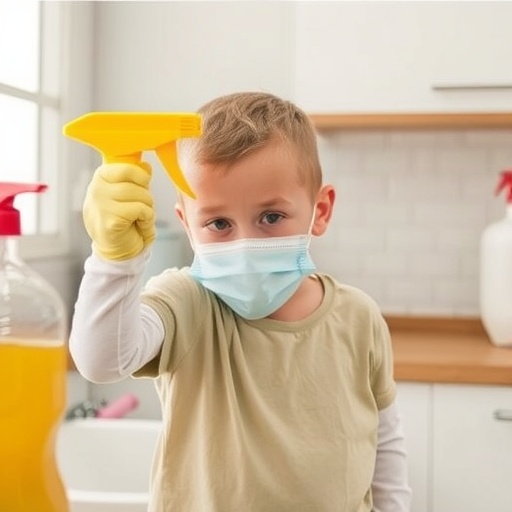
In a comprehensive study spanning 16 years, researchers affiliated with the Center for Injury Research and Policy at Nationwide Children’s Hospital have identified a significant public health concern: over 240,800 emergency department visits linked to injuries involving household cleaning products among children five years old and younger in the United States. This alarming statistic translates to a child suffering injury approximately every 35 minutes due to such products, underscoring the persistent risk these common household items pose to vulnerable populations.
The investigation leveraged data from the U.S. Consumer Product Safety Commission’s National Electronic Injury Surveillance System (NEISS) database, which meticulously tracks consumer product-related injuries treated across nationwide emergency departments. The analysis provides unique insights into injury trends related to household cleaners, emphasizing the dynamic nature of product hazards that evolve alongside market innovations and consumer behavior.
A notable shift uncovered by the study pertains to the considerable impact of single-use laundry and dish detergent packets, which entered the consumer market in 2012. These packets rapidly became a primary hazard, accounting for about one-third of all injuries related to detergents. The peak incidence of injuries occurred around 2015, after which a decline was observed, likely attributable to the adoption of improved safety mechanisms such as child-resistant packaging, opaque containers, delayed-dissolving films, and bitter-tasting coatings designed to deter ingestion.
The vulnerability of children aged one to two years stood out prominently in the findings, reflecting developmental factors such as natural exploratory behaviors that include mouthing objects coupled with an inability to read or comprehend hazard labels. These factors compound the risk presented by household cleaning products, as toddlers often encounter these substances in environments.
Spray bottles emerged as another significant source of injury, responsible for 28% of all cases. Injuries from spray bottles frequently targeted sensitive areas, particularly the eyes, resulting in consequences ranging from chemical burns to dermatitis and conjunctivitis. Alarmingly, a subset of injuries occurred when a person sprayed these substances directly at a child, whether intentionally or inadvertently, highlighting an often-overlooked vector of exposure.
The study’s findings reveal that ingestion remains the primary mode of injury, with poisoning identified as the leading diagnosis in emergency cases. The hospitalization rate near 7% represents a notable increase from prior years, pointing to an escalating severity or complexity of poisoning incidents. This data underscores the critical need for increased preventive measures and awareness to mitigate the serious health risks these products pose.
Bleach and detergents dominate the injury landscape, with bleach injuries maintaining a stable yet persistently high rate throughout the study period. The packaging of bleach predominantly involves spray bottles, correlating with the injurious patterns observed in such dispensers. Detergents, conversely, often come in packets, a factor directly linked to their significant injury rate.
Historical comparisons demonstrate that while injuries linked to spray bottles have remained steady over time, those associated with other container types, such as kitchenware and bottles, have decreased. This suggests targeted preventive efforts and possibly changing consumer habits may have contributed to reducing certain injury types, although spray bottles continue to be a critical focus area.
The researchers advocate for enhanced product packaging standards to protect children effectively. Emphasizing the necessity of child-resistant packaging and the redesign of spray mechanisms could curtail exposure risks inherent in these containers. Such regulatory interventions align with observed trends indicating injury declines following the introduction of improved packaging in detergent packets.
From a public health perspective, the data outlines actionable strategies for caregivers and families. Key preventive measures include securely storing cleaning products out of children’s reach, maintaining products in their original packaging to preserve safety features and labels, and ensuring immediate clean-up and closure of containers post-use. Additionally, memorizing and prominently displaying the Poison Help Line number can facilitate quicker response times in emergencies, potentially mitigating injury outcomes.
The sustained high incidence of household cleaning product-related injuries over nearly two decades signals an urgent need for concerted efforts spanning research, policy, manufacturing, and education sectors. Continued surveillance, coupled with innovations in packaging technology and community education, form the foundation upon which further reductions in pediatric injuries can be achieved.
In conclusion, the study not only elucidates the evolving risks posed by household cleaning products but also charts a course for preventive action. Integrating developmental science, product design, and injury epidemiology, these findings serve as a clarion call to prioritize child safety in consumer environments, reinforcing the delicate balance between domestic functionality and pediatric health.
- Center for Injury Research and Policy: https://www.nationwidechildrens.org/research/areas-of-research/center-for-injury-research-and-policy
- DOI link to study: http://dx.doi.org/10.1542/peds.2025-074551
References: Data obtained from the National Electronic Injury Surveillance System (NEISS) database, U.S. Consumer Product Safety Commission
Keywords: Pediatric injuries, household cleaning products, detergent packets, child-resistant packaging, emergency department visits, poisoning, spray bottles, bleach, child safety, injury prevention, developmental vulnerability
Cite Scienmag News
Courtney Benton. (April 2, 2026). New Study Identifies Household Cleaning Products as Major Contributor to Childhood Injuries. Scienmag. https://scienmag.com/new-study-identifies-household-cleaning-products-as-major-contributor-to-childhood-injuries/
Courtney Benton. "New Study Identifies Household Cleaning Products as Major Contributor to Childhood Injuries." Scienmag, 2 April 2026, https://scienmag.com/new-study-identifies-household-cleaning-products-as-major-contributor-to-childhood-injuries/. Accessed 3 September 2026.
Courtney Benton. "New Study Identifies Household Cleaning Products as Major Contributor to Childhood Injuries." Scienmag. April 2, 2026. https://scienmag.com/new-study-identifies-household-cleaning-products-as-major-contributor-to-childhood-injuries/


