


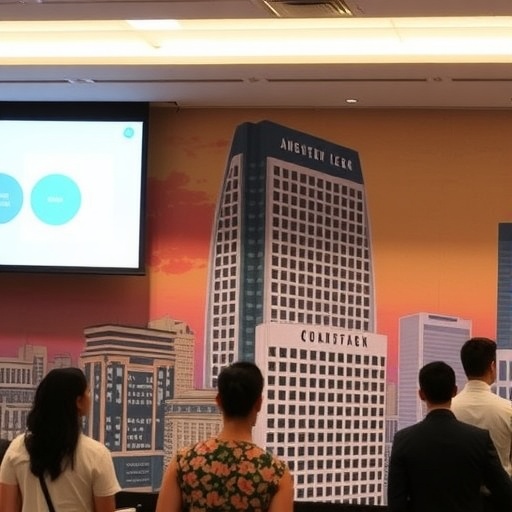
The University of Hong Kong’s Institute for Climate and Carbon Neutrality (ICCN) inaugurates Hong Kong Climate Week 2026 with the overarching theme “From Mitigation to Adaptation — Bridging Global Consensus and Local Implementation.” This landmark week-long gathering signals a pivotal transition from the traditional focus on reducing greenhouse gas emissions toward embracing adaptive strategies that reconcile global climate commitments with pragmatic local solutions. Situated at the heart of Asia’s leading international financial and technological ecosystem, Hong Kong is uniquely positioned to catalyze an inclusive, resilient path toward net-zero carbon futures.
In the contemporary era, artificial intelligence (AI) drives rapid technological transformations across industries but concurrently amplifies energy demands, presenting complex challenges amid geopolitical tensions that strain energy security worldwide. The convergence of these dynamics mandates a reevaluation of climate strategies—prioritizing not only mitigation through emissions reduction but actively developing adaptation mechanisms that ensure infrastructural and societal resilience. Effective climate policy, therefore, calls for integrating AI-powered innovations with cutting-edge green technologies, underpinned by agile regulatory frameworks and cross-disciplinary collaborations to stimulate green finance and sustainable development.
Opening remarks by Mr. Paul Chan, Financial Secretary of the Hong Kong Special Administrative Region Government, underscored the immense stakes and opportunities inherent in the climate crisis. He highlighted Hong Kong’s strategic advantage as a global financial nucleus and innovation hub capable of galvanizing capital flows and technological deployment to accelerate carbon neutrality goals. Mr. Chan emphasized the critical role of Hong Kong in deepening carbon market integration across the region, fostering AI-driven climate tech, and cultivating specialized talent in climate financial risk assessment and technological innovation.
HKU’s President and Vice-Chancellor, Professor Xiang Zhang, framed the university’s commitment as an engine of green transformation by advancing fundamental climate science research coupled with robust technology transfer mechanisms. He stressed the importance of human capital development, particularly the nurturing of young scientists and innovators equipped to address complex climate challenges over the coming decades. His remarks elucidated the symbiotic relationship between academic breakthroughs and societal impact necessary to sustain long-term climate resilience.
Complementing this vision, Professor Peng Gong, Vice-President of HKU, called for comprehensive engagement spanning global finance and grassroots activism throughout the week’s proceedings. His focus centered on translating dialogues into actionable partnerships harnessing innovations—from renewable energy advancements to AI-enhanced climate adaptation models. The prolific application of AI, according to Professor Gong, is revolutionizing research methodologies, enabling sophisticated modeling and knowledge dissemination that strengthen global responses to environmental crises while promoting human health.
This year’s Climate Week convened an unprecedented assemblage of climate stakeholders, including representatives from the United Nations, leading Chinese ministries, eminent scholars from the Chinese Academy of Sciences and Engineering, and executives from pioneering enterprises such as CATL, EQT Asia, Hang Seng Bank, Tencent, and Google. The interdisciplinary discourse underscored dynamic solutions integrating clean energy technologies, enhanced climate resilience strategies, and financial instruments designed to accelerate decarbonization trajectories aligned with international frameworks such as the Paris Agreement.
The geopolitical fragility impacting energy infrastructures intensifies the imperative to diversify the green energy portfolio. AI-enabled smart grids, energy storage optimization, and predictive analytics are emerging as vital technologies mitigating supply chain vulnerabilities and maximizing renewable resource utilization. Within this context, Hong Kong exemplifies a nexus where policy innovation and market-driven mechanisms coalesce to bridge mainland China’s ambitious green transitions with global investment communities.
On March 30, the “Action for Earth” Summit convened a high-level policy forum featuring prominent government officials including Mr. Tse Chin-wan, Secretary for Environment and Ecology of HKSAR, Ms. Yang Liu from China’s Ministry of Ecology and Environment, and Dr. Youssef Nassef from the United Nations Framework Convention on Climate Change. The summit emphasized pragmatic policy implementation and localized climate action plans, highlighting adaptive strategies tailored to urban resilience, carbon neutrality pathways, and equitable socio-economic transformation.
The integration of financial innovations such as green bonds, carbon trading schemes, and sustainable investment frameworks holds particular promise in mobilizing capital at scale. Hong Kong’s expertise as a financial center facilitates these mechanisms, coupled with regulatory oversight that balances risk management and market incentives. This financial dimension is critical to underpinning technological innovations and widespread deployment of climate solutions, thus accelerating global benchmarks toward net-zero emissions.
Simultaneously, cross-sector collaboration stands as a foundational pillar to overcoming the complex systemic challenges posed by climate change. Partnerships spanning academic institutions, corporate leaders, government agencies, and non-governmental organizations foster a multidisciplinary approach essential for holistic sustainability solutions. Hong Kong Climate Week 2026’s expanded scope—from focused forums in previous years to an inclusive city-wide movement—represents a vital evolution fostering sustained dialogue and impactful climate action.
The Institute for Climate and Carbon Neutrality at HKU emerges as a global hub facilitating rigorous climate science research and technological advancement. Its initiatives encompass studying ecological impacts of climate variability, innovating adaptive strategies for vulnerable populations, and promoting knowledge exchange within the Greater Bay Area and beyond. Such regional integration accelerates the diffusion of clean technologies and enhances resilience capacities across interconnected urban centers.
Looking ahead, the role of AI-powered tools in climate modeling, real-time emission tracking, and disaster risk management is increasingly indispensable. These technologies enable precise scenario analysis that informs policy decisions and investment priorities at multiple scales. Moreover, talent cultivation in climate finance and AI technology remains paramount to sustaining innovation ecosystems capable of responding dynamically to evolving environmental conditions.
Ultimately, Hong Kong Climate Week 2026 manifests as a crucial platform that harnesses the city’s distinctive assets—financial acumen, technological innovation, and strategic geopolitical positioning—to advance climate adaptation beyond rhetoric into concrete local and regional impact. By bridging global scientific consensus with actionable local interventions, HKCW accelerates a just, inclusive transition essential for safeguarding ecological integrity and socio-economic prosperity in the face of mounting climate risks.
News Publication Date: March 2026
Web References:
– Hong Kong Climate Week official site: www.hkclimateweek.org
– Institute for Climate and Carbon Neutrality, HKU: https://iccn.hku.hk/
Cite Scienmag News
Gavin Prescott. (April 1, 2026). HKU Kicks Off Hong Kong Climate Week 2026 Spotlighting Shift “From Mitigation to Adaptation”. Scienmag. https://scienmag.com/hku-kicks-off-hong-kong-climate-week-2026-spotlighting-shift-from-mitigation-to-adaptation/
Gavin Prescott. "HKU Kicks Off Hong Kong Climate Week 2026 Spotlighting Shift “From Mitigation to Adaptation”." Scienmag, 1 April 2026, https://scienmag.com/hku-kicks-off-hong-kong-climate-week-2026-spotlighting-shift-from-mitigation-to-adaptation/. Accessed 3 September 2026.
Gavin Prescott. "HKU Kicks Off Hong Kong Climate Week 2026 Spotlighting Shift “From Mitigation to Adaptation”." Scienmag. April 1, 2026. https://scienmag.com/hku-kicks-off-hong-kong-climate-week-2026-spotlighting-shift-from-mitigation-to-adaptation/


