


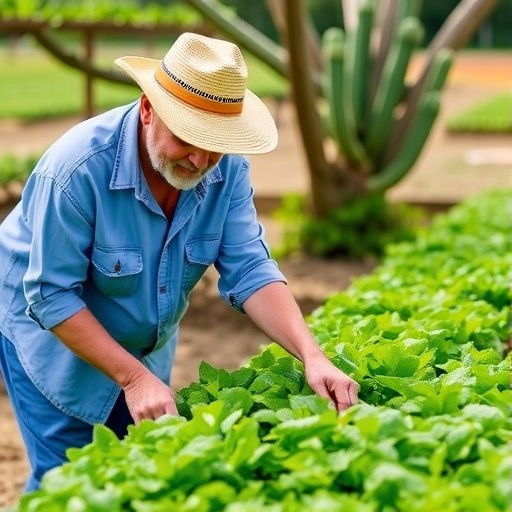
As the European Union races towards its ambitious 2030 target of dedicating at least 25% of agricultural lands to organic or ecological farming, the southern Spanish region of Andalusia has emerged as a crucial focal point of innovation and policy experimentation. Andalusia is home to over half of Spain’s organic agricultural land—a staggering figure that positions it as a natural laboratory for understanding the multifaceted motivations and barriers that farmers face when transitioning to organic methods. Despite the region’s significant contribution to the EU’s green farming goals, comprehensive analysis focusing on the human element—specifically the psychosocial factors influencing farmers’ decisions—has remained elusive until now.
Researchers from the University of Córdoba have recently bridged this gap with an insightful study that places the farmer’s mindset front and center, using a robust blend of theoretical frameworks to capture the nuanced interplay of motivations. By surveying approximately 200 farmers across Andalusia, from key provinces like Córdoba, Málaga, and Seville, they documented complex motivational structures that defy simple economic explanations. Their groundbreaking work reveals that moral considerations, such as environmental stewardship and social responsibility, weigh equally alongside pragmatic concerns like profitability and personal economic interest.
This equal weighting challenges longstanding assumptions within agricultural policy discourse, where economic incentives and subsidies are often presumed to be the primary drivers for adopting sustainable farming techniques. The researchers employed an integrative theoretical approach, combining the Theory of Planned Behavior, the Technology Acceptance Model, and the Norm Activation Model, to capture the diverse psychosocial determinants underpinning farmers’ intentions. This methodological synthesis allowed the team to move beyond strictly economic or agronomic variables and instead explore how attitudes, perceived social norms, and personal values interact in complex ways to shape behavioral intentions.
The study’s co-author, Sandra Sánchez Cañizares, distilled this finding by emphasizing the equilibrium between rational, utilitarian motivations and moral imperatives driving organic practice adoption. The research reframes organic farming not merely as a strategic business decision but as a meaningful commitment embedded within ethical frameworks—underscoring the importance of integrating environmental consciousness into policy design. This insight has profound implications for how agricultural policy should be conceived if the EU is to meet and perhaps exceed its sustainability benchmarks.
From a policy perspective, the heterogeneity within Andalusia’s farming sector emerges as a critical factor. Farmers display a broad spectrum of sociodemographic backgrounds and relationships with organic agriculture, highlighting the inadequacy of one-size-fits-all policies. The researchers advocate for tailored policy instruments that address distinct farmer profiles. For instance, for those already practicing organic agriculture, policy efforts should prioritize retention by streamlining bureaucratic processes and administrative tasks, thereby reducing friction and encouraging permanence within the organic sector.
Conversely, farmers hesitant or resistant to adopting organic methods require a markedly different approach. The study proposes policies rooted in moral engagement—strategies that resonate with farmers’ environmental ethics and social concerns. Providing targeted education and technical assistance to facilitate the transition is equally crucial. This two-pronged policy framework reflects an advanced understanding of behavioral economics and psychosocial dynamics, acknowledging that intrinsic motivations can be as powerful as extrinsic rewards.
The team’s focus on the psychosocial dimensions of agricultural decision-making represents a pivotal evolution in organic farming research. Unlike conventional analyses emphasizing crop types, subsidy mechanisms, or land use statistics, this approach humanizes the data, recognizing farmers as individuals whose values and intentions fundamentally drive agricultural transitions. Such a paradigm shift promises more effective policy frameworks that can be exported beyond Andalusia, shaping organic farming incentives across Europe.
In terms of broader context, Spain’s organic farming is still striving to align with EU objectives, making Andalusia’s advancements a beacon for the rest of the continent. With some 1.4 million hectares under organic management, Andalusia constitutes a substantial fraction of Europe’s organic landscape. This makes the region an experimental crucible where lessons learned can inform the EU’s overarching commitment to sustainability and ecological resilience.
Further technical analysis of the survey data revealed that farmers’ intentions to continue or initiate organic practices are strongly influenced by perceived behavioral control, subjective norms, and personal environmental norms—elements central to the combined theoretical models utilized. These findings demonstrate that policy must also address social reinforcement mechanisms and perceived ease of implementation, in addition to economic factors.
Additionally, the integration of the Technology Acceptance Model (TAM) into this research offers a fresh perspective on organic farming adoption. Traditionally applied to understand acceptance of new technologies, TAM’s inclusion signals recognition of organic farming transitions as quasi-technological innovations requiring farmer buy-in not only for agronomic compatibility but also for perceived usefulness and ease of use within existing farming systems.
The University of Córdoba team’s research thereby stands at the intersection of environmental sciences, behavioral economics, and social psychology, delivering a multidimensional understanding that transcends disciplinary silos. Such an interdisciplinary approach is vital for addressing the complex challenges inherent in scaling up organic farming while ensuring ecological and economic sustainability.
As this model gains traction, its implications could be profound: by prioritizing farmer-centered policy and psychosocial drivers, Europe can enhance the effectiveness of its green transition policies. This could pave the way for a new generation of agricultural strategies marked not just by land use statistics, but by genuinely sustainable farmer engagement and empowerment.
Ultimately, Andalusia’s experience presents a replicable blueprint—a fusion of scientific insight and practical policy design—that can fuel organic farming’s expansion across diverse European contexts. By deeply understanding “why” farmers choose organic paths, the EU can craft targeted interventions that resonate on both emotional and rational levels, dramatically accelerating progress toward its 2030 sustainability goals.
Cite Scienmag News
Courtney Benton. (June 2, 2026). Surge in Organic Farming Across Andalusia Fueled by Strong Beliefs and Market Demand. Scienmag. https://scienmag.com/surge-in-organic-farming-across-andalusia-fueled-by-strong-beliefs-and-market-demand/
Courtney Benton. "Surge in Organic Farming Across Andalusia Fueled by Strong Beliefs and Market Demand." Scienmag, 2 June 2026, https://scienmag.com/surge-in-organic-farming-across-andalusia-fueled-by-strong-beliefs-and-market-demand/. Accessed 3 September 2026.
Courtney Benton. "Surge in Organic Farming Across Andalusia Fueled by Strong Beliefs and Market Demand." Scienmag. June 2, 2026. https://scienmag.com/surge-in-organic-farming-across-andalusia-fueled-by-strong-beliefs-and-market-demand/


