


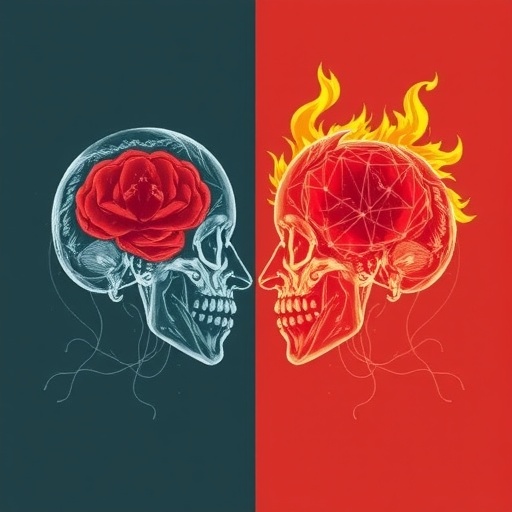
In the aftermath of armed conflict, the scars inflicted upon civilians run far deeper than physical injuries. Psychological wounds, often veiled beneath the surface, persist long after peace treaties are signed. New research sheds critical light on how the source of wartime violence—whether perpetrated by ethnic outgroups or members of the victim’s own ethnic community—profoundly influences mental health outcomes. A recent study conducted by Joan Barceló and Keshana Ratnasingham delves into this nuanced terrain by examining trauma among Tamil civilians in post-civil war Sri Lanka.
Sri Lanka’s brutal civil war, which concluded thirteen years ago, was marked not only by clashes between Tamil separatists and Sinhalese government forces but also by significant internal conflict within the Tamil community, primarily involving the Liberation Tigers of Tamil Eelam (LTTE). To better understand how different perpetrators impact trauma, the researchers surveyed 628 Tamil adults living in the Jaffna district—a region heavily affected by the conflict—in 2022, employing validated clinical psychological instruments to assess post-traumatic stress disorder (PTSD) symptoms and post-traumatic growth.
The findings reveal a stark disparity in trauma levels linked to perpetrator identity. Violence committed by coethnics—the intragroup violence—was found to inflict nearly four times greater PTSD symptoms compared to violence by ethnic outgroups. This suggests that betrayal and the erosion of communal trust have far more debilitating psychological consequences than violence from perceived enemies. The researchers quantified the trauma inflicted by intragroup violence as three to five times more severe than that caused by intergroup violence, indicating a need to reassess therapeutic interventions that often overlook the social dynamic of trauma source.
Intragroup violence disrupts the social fabric by impairing support networks that typically aid in resilience and recovery. When violence emerges from a familiar or “own” group, it has the potential to degrade trust within communities, leading to compounded feelings of alienation and suspicion. This breakdown of social cohesion is detrimental to mental health, as social support is one of the critical protective factors against chronic PTSD. The psychological impact of such internal betrayals is akin to a double wound—both physical harm and a profound breach of social bonds.
Interestingly, the study also showed a divergent pattern in relation to post-traumatic growth, a psychological phenomenon where individuals experience positive transformation following adversity, such as increased personal strength or heightened appreciation for life. While intergroup violence was positively correlated with post-traumatic growth, intragroup violence demonstrated no such association. This important distinction underscores that the community context and perpetrator identity profoundly affect not only the severity of trauma but also the potential for psychological recovery and resilience.
The fact that 43.3% of respondents met criteria for probable PTSD thirteen years after the war’s end emphasizes the enduring nature of trauma in conflict-affected populations. Moreover, 38.2% of individuals exhibited moderate-to-high post-traumatic growth, revealing the complex interplay where trauma can coexist with constructive psychological transformation. This dual outcome highlights the importance of tailored mental health services that accommodate both the heavy burden of PTSD symptoms and the potential for healing and growth.
Barceló and Ratnasingham’s work contributes to a growing recognition that trauma is not a monolithic construct but rather is deeply shaped by social context and relational dynamics. The intensity of trauma produced by intragroup violence can be likened to betrayal trauma theory, which posits that harm from trusted insiders results in particularly severe psychological distress. This mechanism may explain why intragroup violence leads to amplified trauma symptoms, as victims grapple with the complex emotions of betrayal alongside physical and emotional harm.
From a clinical standpoint, the findings advocate for differentiated mental health interventions post-conflict. Traditional trauma therapies often concentrate on helping survivors process violence from external aggressors. However, the evidence presented here urges clinicians and policymakers to integrate trust restoration and community reintegration into treatment plans for those affected by intragroup violence. Healing intra-ethnic divides and repairing severed social connections should be a cornerstone of mental health strategies in postwar settings.
Sociopolitical implications of this research resonate as well. Post-conflict reconciliation efforts focusing solely on interethnic peace may overlook the profound damage caused by internal factional violence. For Sri Lanka’s Tamil community, fostering intra-community reconciliation is as vital as interethnic dialogue for achieving sustainable peace and mental well-being. The authors’ call for nuanced understanding reminds us that the invisible wounds of war demand equally complex and context-sensitive responses.
Moreover, the study’s methodological rigor—the use of validated PTSD assessments and systematic sampling of civilians—adds weight to its conclusions. By situating psychological outcomes within the framework of perpetrator identity, it challenges conventional postwar mental health models that treat trauma sources homogenously. This research, published in the renowned journal PNAS Nexus, lays the groundwork for future studies in other conflict zones where multi-layered violence complicates trauma recovery.
The research also offers fresh perspective on the role of post-traumatic growth, which has often been neglected in war trauma literature. The positive transformations following intergroup violence, contrasted with their absence in intragroup violence cases, suggest different pathways through which survivors navigate adversity. Understanding these divergent trajectories can refine psychosocial support programs to harness growth potential among trauma survivors.
As the global community grapples with displaced populations and post-conflict recovery worldwide, these insights into trauma’s social etiology are imperative. Violence is rarely a binary conflict between clear “us” and “them.” Rather, intra-community strife significantly exacerbates suffering and complicates narratives of victimhood and culpability. Barceló and Ratnasingham’s findings compel humanitarian and mental health agencies to tailor interventions that recognize these multifaceted realities.
In conclusion, this pioneering study on the mental health impact of intragroup versus intergroup wartime violence not only enriches the scientific understanding of trauma but also carries urgent practical implications. Post-conflict mental health frameworks must transcend simplistic divisions of perpetrators to address the profound betrayal and trust deficits inflicted within communities. By recognizing the amplified trauma burden of intragroup violence and the nuanced dimensions of post-traumatic growth, stakeholders can better support healing and resilience among survivors—paving the way for more sustainable peace in war-ravaged societies.
News Publication Date: 31-Mar-2026
References:
Barceló, J., & Ratnasingham, K. (2026). Mental health impact of intragroup vs. intergroup wartime violence. PNAS Nexus.
Cite Scienmag News
Courtney Benton. (March 31, 2026). Psychological Impact of Intragroup Versus Intergroup Violence. Scienmag. https://scienmag.com/psychological-impact-of-intragroup-versus-intergroup-violence/
Courtney Benton. "Psychological Impact of Intragroup Versus Intergroup Violence." Scienmag, 31 March 2026, https://scienmag.com/psychological-impact-of-intragroup-versus-intergroup-violence/. Accessed 4 September 2026.
Courtney Benton. "Psychological Impact of Intragroup Versus Intergroup Violence." Scienmag. March 31, 2026. https://scienmag.com/psychological-impact-of-intragroup-versus-intergroup-violence/


