


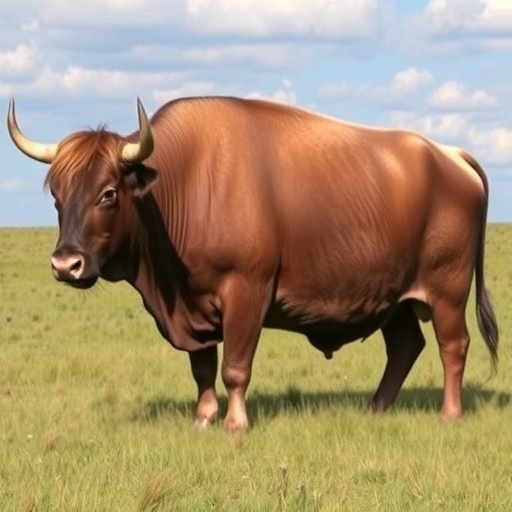
In a groundbreaking study published on June 3, 2026, in the open-access journal PLOS One, researchers have unveiled new evidence shedding light on the evolutionary origins of large-bodied bovines in Europe during the Early Pliocene epoch, approximately 4 to 4.4 million years ago. Spearheaded by paleontologist Leonardo Sorbelli from the Leibniz Institute for Evolution and Biodiversity Science in Germany, the investigation centers around the discovery and analysis of remarkably well-preserved fossil remains attributed to Parabos tigneresi, an ancient bovine species that marks a pivotal stage in the trajectory leading to modern buffalo and cattle.
Bovines, members of the tribe Bovini, encompass some of the most ecologically and economically significant mammals today, including bison, buffalo, and various cattle species. However, unraveling the evolutionary pathway that gave rise to this group has historically been hindered by the scarcity of critical fossil evidence from early geological periods. The excavation at Camp de Ninots, a maar lake sedimentary site in northeastern Iberia, has altered this landscape, yielding a cache of near-complete skeletons from at least fourteen individuals of Parabos tigneresi. These fossils have allowed an unprecedented in-depth anatomical and ecological evaluation, providing crucial data to address longstanding ambiguities regarding the early size increase and diversification of Eurasian bovines.
These newly described remains indicate that Parabos tigneresi individuals reached body masses nearing 500 kilograms—half a ton—thus earning the distinction as the first large-sized bovines documented in the European fossil record. While this body size is somewhat smaller than most present-day cattle breeds, it significantly surpasses those of other contemporaneous bovids. This morphological trend toward larger body sizes during the Early Pliocene is hypothesized to represent an adaptive response to fluctuating climatic and environmental conditions, marked by increased humidity and denser vegetation in Europe during that period. The anatomical features of these animals suggest a lifestyle predominantly within lush, water-rich habitats, corroborating paleoenvironmental reconstructions of the Camp de Ninots ecosystem.
From a phylogenetic perspective, the precise placement of Parabos within the broader bovine family remains contentious. Comparative analyses with other fossil and extant species suggest two principal hypotheses: either Parabos represents the earliest members of the tribe Bovini—direct ancestors to modern-day bison, buffalo, and cattle—or they constitute the last surviving representatives of the related but distinct lineage known as Tragoportacini. The latter group is thought to have been ultimately supplanted by true buffaloes and their bovine relatives. Disentangling these evolutionary relationships will require further anatomical and ecological study, emphasizing the unique value of the Camp de Ninots fossils in informing this debate.
The research team highlights the exceptional preservation state and abundance of the fossils as a critical factor enabling these insights. The near-complete skeletons and the quality of the skeletal remains have permitted detailed studies of morphology that were previously unattainable for such an early period. This level of data richness provides a window into a pre-human world, offering new perspectives on the evolutionary pressures and ecological dynamics that shaped the lineage of large-sized bovids. The implications extend beyond paleontology, enriching our understanding of how mammalian megafauna adapted to shifting Pliocene climates and environments.
Importantly, the findings contextualize the Early Pliocene as the dawn of an era characterized by increasing bovine body sizes across Eurasia, marking a transition from smaller ancestral forms to the robust, large-bodied species dominating many modern ecosystems. This evolutionary trend likely had cascading effects on vegetation patterns, predator-prey dynamics, and resource distribution. Moreover, it sets the stage for the complex interactions between bovines and early hominins that would unfold millions of years later, ultimately influencing the development of human agriculture and pastoralism.
The anatomical assessment involved careful comparisons with fossil specimens from various European Pliocene sites and modern bovine taxa. Detailed morphometric analyses revealed that Parabos tigneresi shared a suite of traits consistent with a heavily built, bovine form, yet retained some primitive features possibly inherited from Tragoportacini ancestors. Such findings underscore the mosaic nature of evolutionary change, where traits can emerge and persist in complex patterns rather than simple linear progressions.
Beyond its contribution to evolutionary biology, this study exemplifies the power of integrative paleontological research combining field excavation, advanced fossil preparation, and multi-faceted analytical approaches. It stresses the importance of protecting and studying fossil-rich sites like Camp de Ninots, which can illuminate critical intervals in Earth’s biological history. The multi-institutional collaboration fostering this research also highlights how cross-border scientific efforts can accelerate discoveries that resonate globally.
Looking forward, the researchers advocate for expanded paleontological explorations aimed at uncovering more fossil material linked to Parabos and related bovids. Such endeavors, coupled with modern technologies like CT scanning and isotope geochemistry, promise to refine our understanding of the species’ biomechanics, diet, habitat preferences, and evolutionary relationships. These future insights may ultimately resolve lingering questions about whether Parabos tigneresi represents the evolutionary dawn of the true Bovini or the twilight of an earlier lineage.
The study’s findings punctuate the narrative of Eurasian bovine evolution by identifying a critical evolutionary juncture. The emergence of half-ton-sized bovines approximately 4 million years ago demonstrates the adaptive landscape’s responsiveness to ecological shifts during the Pliocene and the dynamic evolutionary experimentation within the Bovidae family. This research not only enriches our scientific comprehension of the past but also enhances our perspective on the biodiversity and environmental changes that influenced modern mammalian fauna.
In conclusion, the discovery and study of Parabos tigneresi fossils present an invaluable glimpse into the evolutionary processes shaping large-bodied mammals. By demarcating the Early Pliocene as a pivotal epoch for increasing bovine body size and ecological expansion, this research opens new frontiers in paleobiology and evolutionary science. It underscores the intertwined trajectories of climate, environment, and anatomical innovation that have culminated in the iconic diversity of contemporary bovines integral to ecosystems and human societies worldwide.
News Publication Date: 3-Jun-2026
References: Sorbelli L, Bibi F, Madurell-Malapeira J, Grandi F, Moreno-Ribas E, Oms O, et al. (2026) First of a line or last of a dynasty? Parabos tigneresi and the evolution of eurasian bovinae in the early pliocene. PLoS One 21(6): e0340256. http://dx.doi.org/10.1371/journal.pone.0340256
Cite Scienmag News
Gavin Prescott. (June 3, 2026). Massive Early Bovines Weighed Half a Ton Roaming 4-Million-Year-Old European Grasslands. Scienmag. https://scienmag.com/massive-early-bovines-weighed-half-a-ton-roaming-4-million-year-old-european-grasslands/
Gavin Prescott. "Massive Early Bovines Weighed Half a Ton Roaming 4-Million-Year-Old European Grasslands." Scienmag, 3 June 2026, https://scienmag.com/massive-early-bovines-weighed-half-a-ton-roaming-4-million-year-old-european-grasslands/. Accessed 3 September 2026.
Gavin Prescott. "Massive Early Bovines Weighed Half a Ton Roaming 4-Million-Year-Old European Grasslands." Scienmag. June 3, 2026. https://scienmag.com/massive-early-bovines-weighed-half-a-ton-roaming-4-million-year-old-european-grasslands/


