


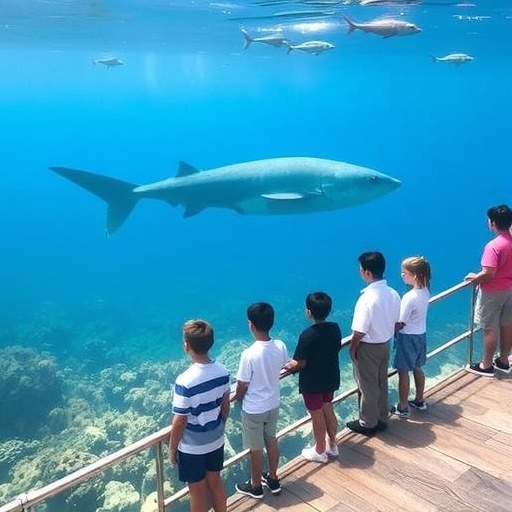
The Swire Institute of Marine Science (SWIMS) at The University of Hong Kong (HKU) has embarked on a transformative initiative aimed at cultivating the next generation of marine conservation leaders through its innovative programme, Exploring Marine Biodiversity: Empowering Youth Ambassadors for Ocean Stewardship. Backed by the Environment and Conservation Fund (ECF), this cutting-edge educational venture immerses local secondary school students in the intricate field of marine science, blending rigorous scientific methodologies with hands-on experiences to foster deep ecological understanding and stewardship.
In a landmark ceremony held on January 30th at HKU’s Rayson Huang Theatre, a distinguished assembly of academic and environmental leaders inaugurated this ambitious programme. Attendees included Professor Jay Siegel, HKU’s Vice-President and Pro-Vice-Chancellor for Teaching and Learning; Professor David Baker, Interim Director of SWIMS; Dr. Eric Kam-chung Cheng, Chairman of the ECF Committee; and Dr. Jim Chu, Assistant Director of Fisheries and Marine Conservation at the Agriculture, Fisheries and Conservation Department (AFCD). This event marked a significant milestone, drawing over 100 students and educators representing 25 secondary schools across Hong Kong, signifying broad institutional support for marine education and conservation.
The core of the programme is a comprehensive, four-day immersive training module conducted at SWIMS’ Cape D’Aguilar research station, adjacent to the Cape D’Aguilar Marine Reserve. Each school designates five student ambassadors to participate in this intensive curriculum, which seamlessly integrates advanced lectures, practical laboratory sessions, and explorations of ecologically diverse marine habitats. Field visits encompass critical ecosystems such as Hoi Ha Wan Marine Park, Telegraph Bay, and Tai Tam, focusing on coral reef communities, intertidal rocky shores, and mangrove forests, all vital to the region’s marine biodiversity and ecological resilience.
Within this context, students are introduced to sophisticated marine research technologies and methodologies. Key activities include drone-assisted mapping of restored mangrove areas, allowing for high-resolution spatial analysis of habitat changes and carbon sequestration potentials. Additionally, students engage with environmental DNA (eDNA) sampling techniques, a cutting-edge molecular tool enabling the detection of aquatic species from genetic material shed into the environment, revolutionizing biodiversity assessment by providing non-invasive, rapid, and highly sensitive species inventories. This hands-on approach not only acquaints students with contemporary scientific practices but also emphasizes the significance of multidisciplinary tools in monitoring and conserving marine ecosystems.
Beyond the technical training, the programme places significant emphasis on cultivating leadership competencies and advocacy skills. Participants are encouraged to act as conduits for knowledge transfer within their schools and local communities, amplifying the programme’s impact through peer education and outreach initiatives. Janis Mok, Outreach and Strategic Partnerships Manager at SWIMS, highlighted the programme’s inclusive vision, noting its appeal to both local and international schools across Hong Kong. With 175 students from 39 schools already enrolled, the initiative is surpassing initial expectations, illustrating a burgeoning youth interest in marine environmental stewardship.
Dr. Jim Chu of AFCD elucidated the broader societal implications of the programme, underscoring the urgency of fostering a collective guardianship mentality toward Hong Kong’s maritime ecosystems. Emphasizing holistic ocean conservation, Dr. Chu urged that the initiative transcends academic learning, aiming to embed a culture of sustainable interaction with marine environments among the general public. This aligns with Hong Kong’s strategic environmental objectives, aiming to safeguard marine biodiversity while promoting sustainable use and enjoyment of natural resources.
The inaugural workshop, titled Discovering Marine Biodiversity, took place on February 28th, providing participants with an interactive platform to explore marine life richness and its ecological roles. Activities were designed to deepen understanding of local species through the examination of organisms colonizing Autonomous Reef Monitoring Structures (ARMS), which simulate coral reef habitats and facilitate biodiversity monitoring. Students’ active engagement in species identification underscored the programme’s educational effectiveness, fostering observation skills critical for taxonomic and ecological research.
Josh Blue, Head of Education at the English Schools Foundation, praised the workshop’s dynamic and collaborative environment, emphasizing its role in instilling a sustainability mindset. He expressed optimism about the programme’s potential to cultivate a generation committed to marine ecosystem protection and global environmental stewardship. This feedback highlights the value of experiential learning models in science education, particularly in cultivating long-term conservation ethics.
Dr. Phil Thomson, Outreach and Education Officer at SWIMS, remarked on the enthusiasm displayed by the students and the pedagogical challenge of accurately identifying diverse marine species from ARMS collections. He reinforced the fundamental ecological principle communicated throughout the programme: biodiversity richness serves as an essential indicator of ecosystem health and resilience. The proficiency gained through these exercises equips students to appreciate and communicate the complexities inherent in marine ecological networks.
A poignant testimonial from Lolan Chiu, a Year 12 student at ESF Sha Tin College, exemplified the programme’s impact on aspiring scientists. Lolan shared her experiences of SCUBA certification in the Philippines and participation in CoralWatch in Thailand, activities that complement her current learning. She conveyed her surprise at the meticulous attention to morphological detail required in species identification, an aspect often understated in popular conceptions of marine biology. Her excitement to disseminate this knowledge among peers reflects the programme’s success in fostering scientific curiosity and peer-led educational empowerment.
Collectively, this programme signifies a crucial advance in youth engagement with marine science and conservation in Hong Kong, reflecting global trends toward integrating education, community involvement, and technology to address complex environmental challenges. By empowering students with both scientific expertise and advocacy capacities, SWIMS is nurturing informed citizens poised to contribute substantively to marine sustainability.
Founded in 1990, the Swire Institute of Marine Science operates within HKU’s Faculty of Science, specializing in the study of coastal and shallow seas. SWIMS has established itself as a world-leading marine research institution, emphasizing the interaction between human activities and marine ecosystems. Over the decades, SWIMS has cultivated a network of marine scientists internationally recognized for their contributions to marine ecology, conservation strategies, and policy formulation.
This programme’s integration of cutting-edge research techniques with community engagement aligns with SWIMS’ broader mission to enhance marine knowledge and stewardship. By directly connecting students to real-world research environments and conservation challenges, it bridges the gap between academic inquiry and societal action, fostering a new wave of ocean guardians dedicated to preserving marine biodiversity for future generations.
News Publication Date: March 2024
Cite Scienmag News
Violet Maxwell. (March 30, 2026). HKU Swire Institute of Marine Science Unveils Youth Program to Nurture Future Ocean Guardians. Scienmag. https://scienmag.com/hku-swire-institute-of-marine-science-unveils-youth-program-to-nurture-future-ocean-guardians/
Violet Maxwell. "HKU Swire Institute of Marine Science Unveils Youth Program to Nurture Future Ocean Guardians." Scienmag, 30 March 2026, https://scienmag.com/hku-swire-institute-of-marine-science-unveils-youth-program-to-nurture-future-ocean-guardians/. Accessed 3 September 2026.
Violet Maxwell. "HKU Swire Institute of Marine Science Unveils Youth Program to Nurture Future Ocean Guardians." Scienmag. March 30, 2026. https://scienmag.com/hku-swire-institute-of-marine-science-unveils-youth-program-to-nurture-future-ocean-guardians/


