


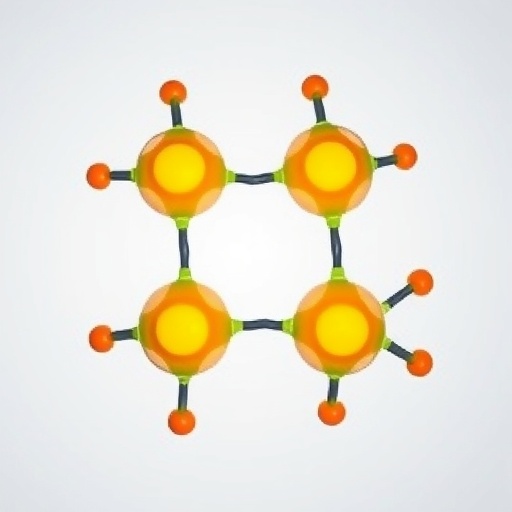
In a scientific breakthrough poised to transform environmental remediation technologies, researchers have developed a novel dual-site single-atom catalyst that demonstrates unprecedented control over directional adsorption and oxidation processes, significantly enhancing photo-Fenton-like reactions. This study, recently published in Nature Communications, reveals an innovative approach to catalysis that could pave the way for more efficient degradation of organic pollutants, heralding a new era in pollutant management and water purification.
Photo-Fenton reactions, a subset of advanced oxidation processes, leverage the generation of highly reactive hydroxyl radicals to break down hazardous organic compounds. Traditionally, the efficacy of these reactions has been constrained by the limited control over the adsorption and oxidation dynamics on catalyst surfaces. The revolutionary catalyst design introduced here addresses these limitations through atomic precision engineering, enabling the simultaneous placement and utilization of two distinct single-atom catalytic sites on a single material substrate.
By achieving directional adsorption-oxidation control, this dual-site catalyst optimizes the sequential steps of pollutant molecule interaction and subsequent oxidative degradation. This precise spatial and functional arrangement permits enhanced interaction between target molecules and reactive species, thereby improving reaction kinetics and selectivity. Such advancements fundamentally alter our capability to tailor the catalytic microenvironment at the atomic level, offering a glimpse into next-generation catalyst frameworks characterized by unparalleled specificity and efficiency.
Central to the success of this dual-site catalyst is its ability to manipulate electron transfer pathways in a controlled manner. The strategic positioning of single atoms within the catalyst matrix establishes discrete active centers that not only attract pollutant molecules selectively but also facilitate efficient generation and transfer of reactive radicals essential for the oxidative breakdown. This tailored electron flow is critical in sustaining high reaction rates under photoexcitation, ensuring the catalyst’s operational robustness over extended cycles.
Extensive characterization techniques, including aberration-corrected scanning transmission electron microscopy and advanced spectroscopy, reveal detailed structural and electronic configurations of the catalyst. These analyses confirm the isolated atomic dispersion of catalytic sites and elucidate their synergistic interaction, which underpins the catalyst’s remarkable performance enhancements. The research team’s meticulous synthesis and diagnostics provide compelling evidence for the mechanistic pathways governing the enhanced photo-Fenton process.
Moreover, computational modeling and density functional theory calculations corroborate experimental findings by predicting the energetics and reaction mechanisms at the dual catalytic centers. These simulations shed light on the preferential adsorption orientations and energy barriers associated with each step of the oxidation sequence. Such insights are invaluable for rational catalyst design, offering predictive capabilities that facilitate further refinement and scalability of catalytic systems.
The environmental implications of this advancement are profound. By dramatically improving the degradation rates and selectivity of photo-Fenton reactions, this catalyst presents an eco-friendly and economically viable solution for treating contaminated water sources. Its heightened catalytic efficiency reduces the reliance on excessive chemical inputs and minimizes secondary pollution risks, aligning with sustainable development goals aimed at preserving aquatic ecosystems.
In practical applications, the dual-site single-atom catalyst exhibits superior stability and recyclability, demonstrating sustained activity over multiple reaction cycles without significant loss of function. This durability is essential for real-world deployment, where catalyst longevity directly impacts cost-effectiveness and operational feasibility. The newly designed catalyst thus bridges the gap between laboratory-scale innovation and industrial-scale implementation.
Importantly, the dual-site approach is not limited to photo-Fenton reactions alone. The conceptual framework laid out in this research holds broad potential for extension to other catalytic processes, especially those involving complex multi-step reactions where spatial separation of active sites can prevent undesirable side reactions and enhance overall efficiency. This opens exciting avenues for diverse applications in energy conversion, chemical synthesis, and environmental catalysis.
The interdisciplinary nature of the research underscores the synergy between materials science, chemistry, and environmental engineering. It exemplifies how atomic-level precision in catalyst construction can unlock latent capabilities in well-established reaction systems, shifting paradigms in catalyst design philosophy. Such breakthroughs advocate for continued investment in fundamental studies that marry theoretical insights with advanced synthesis techniques.
Looking ahead, the research team envisions further refinements to the catalyst architecture, including tuning the electronic properties and exploring different metallic single-atom combinations to target a variety of pollutants. Equally, integrating these catalysts into modular water treatment devices offers a promising pathway to create adaptable and scalable purification technologies capable of addressing diverse contamination challenges globally.
As environmental challenges escalate amid industrialization and urbanization, innovations such as this dual-site single-atom catalyst represent vital steps toward sustainable solutions. Harnessing the subtle interplay of atomic-scale phenomena to drive macroscopic environmental benefits exemplifies the power of modern catalysis science in safeguarding human health and ecological integrity.
In summary, this pioneering work on directional adsorption-oxidation control via dual-site single-atom catalysts marks a significant milestone in advancing photo-Fenton-like reactions. It not only enhances mechanistic understanding but also delivers tangible improvements in catalytic performance and stability. This dual-functional catalyst system is poised to inspire a new generation of high-precision catalysts, underscoring the transformative impact of atomic-level engineering on sustainable environmental technologies.
Cite Scienmag News
Bethany Barker. (March 30, 2026). Dual-Site Single-Atom Catalysts Boost Photo-Fenton Reactions. Scienmag. https://scienmag.com/dual-site-single-atom-catalysts-boost-photo-fenton-reactions/
Bethany Barker. "Dual-Site Single-Atom Catalysts Boost Photo-Fenton Reactions." Scienmag, 30 March 2026, https://scienmag.com/dual-site-single-atom-catalysts-boost-photo-fenton-reactions/. Accessed 3 September 2026.
Bethany Barker. "Dual-Site Single-Atom Catalysts Boost Photo-Fenton Reactions." Scienmag. March 30, 2026. https://scienmag.com/dual-site-single-atom-catalysts-boost-photo-fenton-reactions/


