


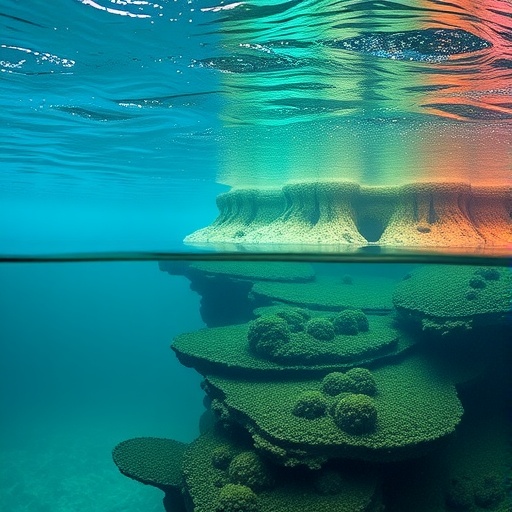
A groundbreaking study recently published in Communications Earth & Environment by researchers Weber and Kiro has brought to light compelling new insights into the subtle yet significant exchange of carbon and alkalinity between coastal aquifers and the ocean. Conducted with the urgency that global climate change demands, this research elucidates complex biogeochemical processes occurring beneath the ocean surface, processes that until now remained largely cryptic within the scientific community. By examining submarine groundwater discharge (SGD), the study reveals a critical pathway that influences marine chemistry, coastal ocean ecosystems, and potentially global carbon cycles.
Submarine groundwater discharge, the process by which groundwater flows from coastal aquifers through submarine sediments and enters the ocean, has been an enigmatic aspect of coastal hydrology. While the flux of freshwater itself was known to influence coastal salinity and nutrient distributions, the chemical composition and broader environmental implications of this flow remained poorly quantified. Weber and Kiro’s study demonstrates the importance of this subterranean water transport not merely as a hydrologic phenomenon but as a vital conveyor of alkalinity and carbon-based compounds into marine systems, influencing marine carbonate chemistry and buffering ocean acidity.
Alkalinity, a measure of water’s ability to neutralize acid, plays a pivotal role in regulating the chemical equilibrium of seawater. Coastal aquifers often host dissolved minerals and organic materials, including significant quantities of bicarbonate and carbonate ions, accrued from rock-water interactions and microbial activity underground. These ions contribute to the alkalinity that, when delivered through SGD, helps offset ocean acidification—a growing concern linked to increased atmospheric CO2. Weber and Kiro’s research employs advanced geochemical tracing and modeling techniques to quantify these alkalinity fluxes, illustrating their scale and variability across different coastal settings.
On a parallel front, the study sheds light on how carbon species, both dissolved inorganic carbon (DIC) and dissolved organic carbon (DOC), are mobilized from terrestrial aquifers and discharged into the ocean. This carbon transport affects coastal carbon cycling and has ramifications for carbon sequestration and greenhouse gas emissions. The findings underscore the dual nature of submarine groundwater flows; while they serve as a source of alkalinity beneficial for counteracting acidification, they also transport carbon forms that can either be sequestered or remineralized into CO2, influencing atmospheric concentrations indirectly.
The methodology underpinning this research is robust and comprehensive. Field sampling campaigns targeted various morphologically distinct coastal aquifers, while isotopic analyses were pivotal in distinguishing terrestrial groundwater signatures from seawater. Coupled with in-situ measurements of pH, alkalinity, and carbon concentrations, the study harnessed multiple lines of evidence to constrain flux magnitudes and pathways. This integrative approach highlights the intricate interplay between hydrology, geochemistry, and microbial processes governing the transformation and delivery of these chemical species.
Weber and Kiro also emphasize the spatial heterogeneity intrinsic to submarine groundwater discharge. Different aquifer compositions, geological substrates, and coastal topographies result in diverse chemical outputs, underscoring the need for site-specific assessments in future studies. Such heterogeneity poses challenges for scaling up these fluxes globally but also invites more precise, localized management strategies for coastal ecosystems impacted by nutrient and carbon inputs.
Implications of this study extend far beyond coastal chemistry, touching on ecosystem health and resilience. The influx of alkalinity can foster calcifying organisms such as corals and shellfish, which are increasingly threatened by acidification. Conversely, altered carbon fluxes may modulate microbial communities and influence oxygen consumption, potentially exacerbating hypoxic conditions. Understanding these dynamics affords coastal resource managers new tools to predict and mitigate adverse environmental outcomes in vulnerable shoreline regions.
Moreover, the research adds a crucial dimension to models of the global carbon budget. Traditional assessments have often overlooked subsurface inputs to the ocean, focusing mainly on riverine and atmospheric exchanges. Incorporating submarine groundwater discharge into these models could improve accuracy in estimating carbon fluxes and forecasting climate-driven changes in ocean chemistry. Weber and Kiro’s findings thus call for integration of groundwater pathways into broader earth system models, bridging terrestrial and marine realms.
On the technological front, the study embodies the growing sophistication in environmental monitoring techniques. The use of isotopic tracers and geochemical proxies represents a powerful toolkit for disentangling complex natural fluxes. The research sets a benchmark for future investigations that seek to unravel hidden connections in the Earth’s hydrosphere, encouraging interdisciplinary collaboration across hydrogeology, oceanography, and environmental chemistry.
Finally, this study underlines a paradigm shift in our understanding of coastal interfaces and their role in global biogeochemical cycling. Coastal aquifers are not mere reservoirs of fresh water; they are active participants in earth system processes that regulate atmospheric composition and ocean health. Recognizing and quantifying the chemical contributions of submarine groundwater discharge enhances our ability to safeguard marine ecosystems in an era characterized by rapid environmental change.
As climate change accelerates ocean acidification and disrupts hydrological patterns, scientific endeavors like this provide a crucial foundation for adaptive management. They offer pathways towards mitigating impacts on coastal livelihoods, biodiversity, and carbon management strategies. The revelations by Weber and Kiro illuminate the hidden geochemical dialogues occurring beneath our oceans, emphasizing that the answers to global sustainability may often lie beneath the waves, flowing unseen but immensely influential.
Cite Scienmag News
Violet Maxwell. (March 27, 2026). Coastal Aquifers Fuel Ocean Carbon and Alkalinity. Scienmag. https://scienmag.com/coastal-aquifers-fuel-ocean-carbon-and-alkalinity/
Violet Maxwell. "Coastal Aquifers Fuel Ocean Carbon and Alkalinity." Scienmag, 27 March 2026, https://scienmag.com/coastal-aquifers-fuel-ocean-carbon-and-alkalinity/. Accessed 4 September 2026.
Violet Maxwell. "Coastal Aquifers Fuel Ocean Carbon and Alkalinity." Scienmag. March 27, 2026. https://scienmag.com/coastal-aquifers-fuel-ocean-carbon-and-alkalinity/


