


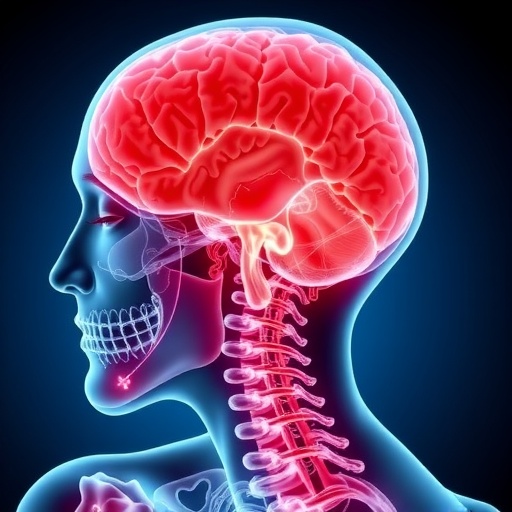
In the evolving landscape of oncology, sarcopenia, characterized by the progressive loss of skeletal muscle mass and function, is emerging as a critical factor influencing outcomes in cancer patients. A recent study by van Heusden and de Bree, published in the British Journal of Cancer, delves into the intricate challenges of defining skeletal muscle mass cut-off values specifically in patients suffering from head and neck cancers. This exploration not only underscores the biological and clinical complexities of sarcopenia but also illuminates the urgent need for standardized diagnostic criteria that can be universally applied to improve patient management and prognostication.
Sarcopenia has long been recognized as a multifaceted syndrome, with its roots extending into aging and chronic diseases. However, its specific manifestation in the context of head and neck cancer introduces unique complexities. Cancer-related sarcopenia goes beyond simple muscle wasting; it implicates metabolic alterations, inflammatory responses, and treatment-induced toxicities that collectively exacerbate muscle degradation. Van Heusden and de Bree highlight this confluence of factors, making the determination of muscle mass thresholds a task fraught with variability and clinical nuance.
One of the pivotal issues tackled in the study is the heterogeneity of current sarcopenia cut-off values used across clinical trials and practice settings. Skeletal muscle mass assessment methodologies vary widely — from computed tomography (CT) segmentations at different vertebral levels to bioelectrical impedance analysis and dual-energy X-ray absorptiometry (DEXA). Each modality brings its own biases and degrees of precision, complicating the ability to define a universal cut-off. The authors argue that this methodological disparity is a significant roadblock in translating sarcopenia research into actionable clinical guidelines, especially in a patient population as heterogeneous as those with head and neck cancer.
Moreover, the physiological uniqueness of head and neck cancer patients introduces additional challenges. Muscle loss in these patients is often compounded by factors such as dysphagia, malnutrition, and the catabolic effects of radiotherapy and chemotherapy. Van Heusden and de Bree emphasize that these contributing variables can substantially distort skeletal muscle measurements, obscuring the distinction between sarcopenia caused by cancer pathophysiology versus treatment side effects. This differentiation is crucial because it directly informs therapeutic decision-making and nutritional interventions.
Adding another layer of complexity is the demographic diversity within the patient cohort. Age, sex, ethnicity, and baseline nutritional status all influence baseline muscle mass and the rate of sarcopenia progression. Standard cut-off values derived predominantly from Western populations may not be applicable to global cohorts where anthropometric profiles differ substantially. Through meticulous review, the authors advocate for tailored cut-offs that account for these demographic and clinical parameters, which would enhance the sensitivity and specificity of sarcopenia as a prognostic marker in head and neck oncology.
The study also draws attention to the dynamic nature of sarcopenia, proposing that skeletal muscle mass should not be viewed through a static lens. Temporal changes before, during, and after treatment can reveal critical insights into patient resilience, response to therapy, and survival outcomes. Van Heusden and de Bree suggest that integrating longitudinal muscle mass assessments into routine oncological care could revolutionize personalized treatment plans, enabling early interventions that mitigate muscle loss and improve quality of life.
Crucially, the authors call for the integration of functional assessments alongside muscle mass quantification. Muscle strength, endurance, and performance tests can provide complementary information about sarcopenia’s clinical impact, bridging the gap between radiological findings and patient-centered outcomes. Such multimodal approaches could pave the way for precision medicine frameworks that not only identify sarcopenia but also tailor rehabilitative strategies to individual patient profiles.
The implications of accurate sarcopenia identification extend beyond prognostication. Emerging evidence suggests that sarcopenia influences pharmacokinetics and treatment tolerance in chemoradiation protocols. Muscle-depleted patients may experience heightened toxicity and suboptimal drug metabolism, which underscores the necessity for clinicians to incorporate muscle mass evaluation into therapeutic stratification and dosing regimens. Van Heusden and de Bree’s work thus champions the operationalization of sarcopenia metrics in clinical oncology workflows, promoting safer and more effective cancer care.
To confront these multifaceted challenges, the study advocates for collaborative, interdisciplinary research endeavors. Oncologists, radiologists, nutritionists, and rehabilitation specialists must converge to establish consensus guidelines that are reflective of both biological realities and practical clinical utility. Large-scale, multicenter studies that validate cut-off values across diverse populations and treatment settings are urgently needed to foster evidence-based standardization.
Technological advances such as artificial intelligence (AI) and machine learning offer promising avenues to streamline sarcopenia assessment. The authors posit that automated image analysis tools could significantly reduce the variability associated with manual muscle segmentation and enable rapid, reproducible quantification. Coupling these innovations with electronic health record integration can facilitate real-time sarcopenia monitoring, thus embedding muscle health assessment within standard cancer care protocols.
Furthermore, the exploration of molecular and genetic markers associated with sarcopenia may unlock new diagnostic and therapeutic horizons. Understanding the pathophysiological underpinnings at the cellular level can enable the development of biomarkers that predict susceptibility to muscle loss and responsiveness to interventions. Van Heusden and de Bree highlight this as a fertile area for future investigations that could ultimately inform targeted therapies to halt or reverse sarcopenia in head and neck cancer populations.
Importantly, patient advocacy and education should not be overlooked in this equation. Raising awareness about the significance of muscle mass maintenance and its influence on cancer prognosis empowers patients to engage actively in nutritional and physical rehabilitation programs. The study underscores the value of multidisciplinary supportive care teams that include physiotherapists and dietitians in the holistic management of sarcopenia.
In conclusion, the deconstruction of skeletal muscle mass cut-off value complexities as presented by van Heusden and de Bree heralds a paradigm shift in the approach to sarcopenia within head and neck oncology. Their insights compel the medical community to move beyond simplistic metrics and toward nuanced, individualized assessment frameworks that reflect the biological and clinical reality of these patients. The future of cancer care may well hinge on such tailored approaches that integrate sarcopenia assessment as a cornerstone of precision medicine.
This landmark study not only reframes the discourse surrounding muscle mass assessment but also charts a roadmap toward improved clinical outcomes through standardized, evidence-based sarcopenia characterization. As research accelerates in this domain, the integration of cutting-edge imaging technologies, functional evaluations, and molecular profiling promises to unlock new avenues for intervention and recovery in a patient population historically challenged by muscle wasting.
Ultimately, the challenge lies in translating these scientific insights into everyday clinical practice. Van Heusden and de Bree’s work serves as both a clarion call and a foundational reference for oncologists, researchers, and healthcare policymakers committed to enhancing the prognostic and therapeutic landscape for individuals grappling with head and neck cancer-associated sarcopenia.
Cite Scienmag News
Nathaniel Bowman. (March 26, 2026). Sarcopenia Challenges in Head and Neck Cancer. Scienmag. https://scienmag.com/sarcopenia-challenges-in-head-and-neck-cancer/
Nathaniel Bowman. "Sarcopenia Challenges in Head and Neck Cancer." Scienmag, 26 March 2026, https://scienmag.com/sarcopenia-challenges-in-head-and-neck-cancer/. Accessed 4 September 2026.
Nathaniel Bowman. "Sarcopenia Challenges in Head and Neck Cancer." Scienmag. March 26, 2026. https://scienmag.com/sarcopenia-challenges-in-head-and-neck-cancer/


