


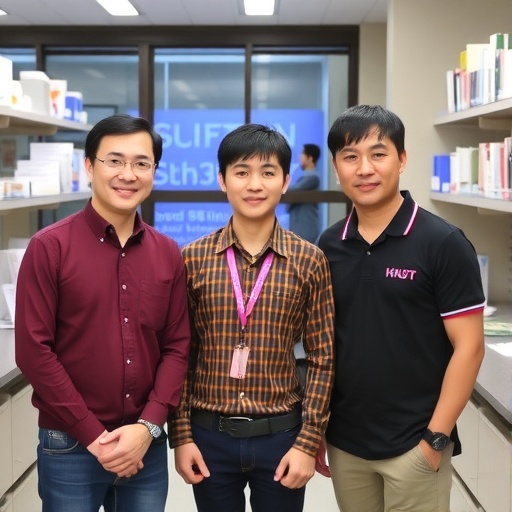
A groundbreaking advancement in organic synthesis and medicinal chemistry has been achieved by the research group led by Professor Sun Jianwei, Chair of the Department of Chemistry and Director of the Hong Kong Branch of the Chinese National Engineering Research Centre for Tissue Restoration and Reconstruction at The Hong Kong University of Science and Technology (HKUST). The team has pioneered a novel, air-stable chiral phosphine-catalyzed enantioselective methodology to synthesize enantioenriched S(IV)-stereogenic vinyl sulfinamides, a relatively unexplored class of organosulfur compounds that demonstrate significant antiviral potential.
Chiral sulfur-containing compounds have long been regarded as critical components in drug development and synthetic chemistry. Sulfur atoms are present in more than 25% of top-selling small-molecule pharmaceuticals, reflecting their indispensable role in medicinal design. Among these, chiral sulfinamides featuring S(IV) stereogenic centers hold particular promise, acting as essential building blocks for the development of novel medicines, asymmetric synthesis auxiliaries, and catalytic ligands. Yet, despite their importance, the synthetic access to enantioenriched sulfinamides has remained largely reliant on methodologies involving transition metal catalysis and organometallic nucleophiles, which often lack operational simplicity and environmental tolerance.
Addressing these limitations, Professor Sun’s team has reported a revolutionary organocatalytic approach published in Nature Chemistry, introducing a bespoke C₂-symmetric chiral phosphine catalyst named QianPhos. This catalyst is ingeniously derived from the SPHENOL chiral skeleton, conferring it with remarkable air stability and pronounced structural rigidity. These unique features facilitate a highly chemo-, enantio-, and diastereoselective construction of C−S bonds via a [3+2] annulation reaction between Morita–Baylis–Hillman (MBH) esters and sulfinylamines. The strategy diverges mechanistically from classic transition metal-catalyzed processes by generating phosphorus ylides in situ, which act as vinyl nucleophiles, driving the formation of chiral cyclic vinyl sulfinamides with exceptional enantiopurity.
What distinguishes this method mechanistically is the dual functionality of sulfinylamines. They serve not only as reaction partners but also as promoters for the formation of the pivotal catalytic intermediate—a unique phosphonium species. Such intricate catalytic behavior was elucidated through rigorous mechanistic investigations employing complementary techniques, including density functional theory (DFT) computations, and advanced spectroscopic analysis using ³¹P and ¹⁹F nuclear magnetic resonance (NMR). These studies revealed that the phosphonium intermediate represents the catalyst’s resting state and plays a central role in governing the reaction’s remarkable selectivity.
The resulting cyclic vinyl sulfinamide products exhibit extraordinary antiviral binding capabilities, particularly toward proteins essential to viral infectivity. Experimental binding assays demonstrated high affinity of these sulfinamides for the mutant spike protein of SARS-CoV-2, the virus responsible for the COVID-19 pandemic, as well as for the HIV-1 envelope (ENV) protein critical for viral entry into host cells. These findings underscore the practical implications of this chemistry for antiviral drug discovery, offering a new chemical space ripe for therapeutic intervention.
This organocatalytic approach represents a paradigm shift in sulfur chemistry. Traditional approaches rely heavily on transition metals, which often suffer from air-sensitivity, cost, and environmental concerns. The air stability of QianPhos enables more practical and scalable synthetic processes, overcoming common challenges associated with the handling and storage of sensitive catalysts. Moreover, tuning the chiral environment via the SPHENOL framework provides a versatile platform for asymmetric synthesis, potentially applicable to diverse substrate scopes and target molecules.
In addition to synthetic utility, the method’s operational simplicity promises significant impact on pharmaceutical manufacturing. The avoidance of transition metal contaminants aligns well with regulatory demands for cleaner processes and purer drug substances. As such, this work could ease the pathway from bench chemistry innovation to industry application, bridging the gap for the production of chiral organosulfur compounds.
The research also contributes key insights to the broader understanding of phosphine catalysis mechanisms. The creation and behavior of the phosphonium resting state, facilitated by the sulfinylamine’s dual role, reveal new dimensions of catalyst-substrate interplay. These revelations have the potential to inspire the design of improved chiral catalysts, both in sulfur chemistry and other domains of organic synthesis.
From a broader perspective, the successful enantioselective synthesis of S(IV)-stereogenic sulfinamides may stimulate renewed interest in chiral sulfur compounds as antivirals, expanding the medicinal chemistry toolbox. As viral pathogens evolve and resistance mechanisms advance, novel molecular scaffolds such as the ones derived from this platform become invaluable assets in drug development efforts.
Looking ahead, the integration of this organocatalytic platform with medicinal chemistry programs could accelerate lead compound discovery and optimization. The ability to reliably access enantioenriched vinyl sulfinamides opens avenues for structure-activity relationship studies, enabling fine-tuning of antiviral potency and pharmacokinetic profiles. Moreover, exploration of other related substrates may extend this methodology to even more exotic and bioactive sulfur-containing targets.
This breakthrough exemplifies how precision catalyst engineering and mechanistic clarity can unlock previously inaccessible chemical landscapes. Professor Sun’s team has elegantly harnessed the unique reactivity of air-stable chiral phosphines to transform a challenging synthetic problem into a robust, selective, and practically viable solution with profound implications for antiviral drug discovery.
The development of QianPhos and its application herald a new chapter in the chemistry of sulfur stereogenic centers, marrying synthetic innovation with therapeutic potential. As the global health community continues to combat viral diseases, the creation of novel small molecules that effectively inhibit viral proteins remains a top priority. This research lays a solid foundation for such progress, combining fundamental organocatalysis with urgent medicinal aims.
Professor Sun’s visionary work not only fills a longstanding gap in synthetic chemistry but also charts a compelling path forward for the discovery of antiviral drugs rooted in unique organosulfur structures. It reflects the power of interdisciplinary collaboration between synthetic methodology, mechanistic study, and molecular pharmacology—a synergy poised to yield impactful solutions for some of today’s most pressing biomedical challenges.
Cite Scienmag News
Bethany Barker. (March 25, 2026). HKUST Researchers Pioneer Organocatalytic Method to Synthesize Chiral Sulfinamides with Antiviral Properties. Scienmag. https://scienmag.com/hkust-researchers-pioneer-organocatalytic-method-to-synthesize-chiral-sulfinamides-with-antiviral-properties/
Bethany Barker. "HKUST Researchers Pioneer Organocatalytic Method to Synthesize Chiral Sulfinamides with Antiviral Properties." Scienmag, 25 March 2026, https://scienmag.com/hkust-researchers-pioneer-organocatalytic-method-to-synthesize-chiral-sulfinamides-with-antiviral-properties/. Accessed 4 September 2026.
Bethany Barker. "HKUST Researchers Pioneer Organocatalytic Method to Synthesize Chiral Sulfinamides with Antiviral Properties." Scienmag. March 25, 2026. https://scienmag.com/hkust-researchers-pioneer-organocatalytic-method-to-synthesize-chiral-sulfinamides-with-antiviral-properties/


