


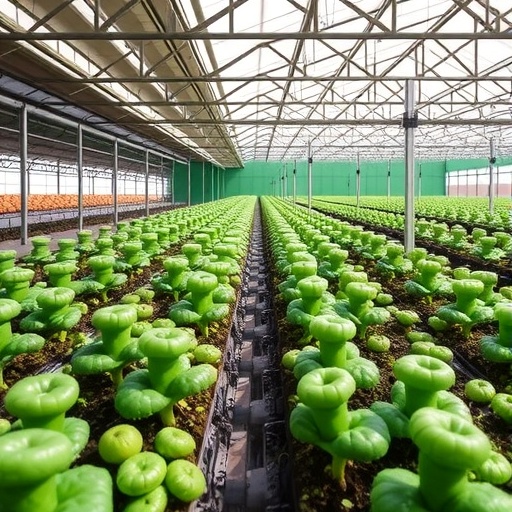
Amid mounting environmental concerns and escalating global demand for sustainable food sources, a groundbreaking study emerges from the labs of Beijing University of Chemical Technology, pioneering a novel approach that may redefine protein production worldwide. This innovative research explores the cultivation of methane-oxidizing bacteria (MOB) as a potent alternative to traditional protein sources like soy and fish meal, offering a path to dramatically greener and more economically viable protein production.
Currently, protein production heavily relies on resource-intensive methods: vast tracts of arable land are cleared for soybean cultivation, leading to deforestation and biodiversity loss, while fish meal production exerts relentless pressure on marine ecosystems, depleting fish stocks and disturbing aquatic balances. These conventional systems incur significant ecological costs, including high water usage, greenhouse gas emissions, and soil degradation. The research team, led by Yanping Liu and Ziyi Yang, has systematically quantified these impacts and compared them against a microbial protein system founded on methane-consuming bacteria grown under controlled conditions.
The core premise leverages the metabolic capability of MOB to utilize methane—a potent greenhouse gas—as a carbon and energy source, converting it into biomass rich in high-quality protein. This biotechnological process operates within closed bioreactor systems, decoupling protein production from traditional variables such as arable land availability and freshwater resources. Unlike conventional agriculture, this system promises a mathematical reduction in land footprint and water consumption, directly addressing key sustainability bottlenecks.
Crucially, the research incorporates a comprehensive life-cycle assessment encompassing three distinct supply chains: soybean meal, fish meal, and microbial protein derived from MOB. By tracing environmental footprints from input resource extraction to final protein output, the study provides a holistic comparison of ecological burdens. Soybean cultivation was found to entail extensive land conversion and intense agrochemical use, while fish meal production relied on energy-intensive harvesting techniques that exacerbate marine depletion and escalate carbon emissions.
In contrast, the MOB-based microbial protein system exhibited remarkable environmental advantages. Despite requiring substantial energy inputs for methane cultivation and bacterial growth, the process’s design allows for significant reductions in ecosystem damage indicators. The controlled nature of bioreactors eliminates land and freshwater requirements, effectively mitigating deforestation and freshwater scarcity concerns. Moreover, the modularity of bioreactor systems offers scalability and localization possibilities, which could be transformative for food production in land- or water-limited regions.
A detailed techno-economic analysis substantiates the environmental findings with compelling financial viability. MOB protein production not only meets but exceeds profitability expectations, boasting a highest net present value of $3.40 million within modeled scenarios. The return on investment hovers at an impressive 51%, underscoring that environmental stewardship can coincide with fiscal success. This financial robustness positions microbial protein as a highly attractive candidate for industrial scaling, potentially disrupting entrenched agricultural and aquacultural markets.
The researchers also delved into optimizing methane purification techniques integral to the MOB cultivation chain. Methane sourced from industrial or biogas processes often requires purification to ensure bacterial growth efficiency and product consistency. Among tested methodologies, Pressure Swing Adsorption (PSA) emerged as the optimal solution, significantly curtailing resource depletion by over 140% relative to alternative membrane-based technologies. This improvement highlights the importance of fine-tuning upstream processes to maximize overall system sustainability.
Beyond the raw data, the study’s implications transcend economics and ecology. It reimagines how humanity sources protein—a critical macronutrient—aligning food security with climate action. Developing nations with severely degraded farmland or compromised fisheries stand to benefit particularly, gaining access to decentralized, environmentally benign protein production that reduces supply chain vulnerabilities. This microbial platform could serve as a foundation for resilient food ecosystems amid global environmental challenges.
While microbial protein is not without its technological and infrastructural requirements, ongoing biotechnological advancements continue to enhance bacterial growth rates, methane utilization efficiency, and downstream processing. Coupling these improvements with renewable energy inputs could further improve the system’s carbon footprint, establishing a virtuous cycle toward carbon-neutral or even carbon-negative protein production.
The authors emphasize that transitioning from laboratory-scale demonstrations to industrially robust systems necessitates multidisciplinary collaboration. Integrating bioprocess engineering, environmental science, economics, and policy frameworks will be vital to unlocking the full potential of MOB-based protein. Furthermore, public acceptance, regulatory pathways, and supply chain integration represent critical pillars for successful commercialization.
This comprehensive study, published in the journal Carbon Research, marks a pivotal milestone in sustainable food production research—demonstrating that innovative microbial biotechnology can simultaneously achieve environmental conservation, economic gains, and scalable protein synthesis. It challenges the status quo of protein sourcing paradigms and invites the global community to rethink agricultural futures in the light of climate imperatives.
As the global protein demand is projected to rise substantially in the coming decades—driven by population growth and urbanization—the imperative for sustainable alternatives grows ever more urgent. Methane-oxidizing bacterial protein synthesis emerges from this research as a beacon of scientific ingenuity and practical feasibility, promising to shift the trajectory toward a more sustainable and equitable food system.
By showcasing the ecological savings and financial incentives of MOB protein production, Yanping Liu and Ziyi Yang have laid robust groundwork to inspire further research and industrial interest. The convergence of environmental necessity and economic attractiveness portrayed in this study underscores microbiological innovation’s transformative potential to feed humanity without sacrificing planetary health.
Cite Scienmag News
Violet Maxwell. (March 25, 2026). Turning Greenhouse Gases into Protein: A Sustainable and Profitable Alternative to Traditional Farming. Scienmag. https://scienmag.com/turning-greenhouse-gases-into-protein-a-sustainable-and-profitable-alternative-to-traditional-farming/
Violet Maxwell. "Turning Greenhouse Gases into Protein: A Sustainable and Profitable Alternative to Traditional Farming." Scienmag, 25 March 2026, https://scienmag.com/turning-greenhouse-gases-into-protein-a-sustainable-and-profitable-alternative-to-traditional-farming/. Accessed 4 September 2026.
Violet Maxwell. "Turning Greenhouse Gases into Protein: A Sustainable and Profitable Alternative to Traditional Farming." Scienmag. March 25, 2026. https://scienmag.com/turning-greenhouse-gases-into-protein-a-sustainable-and-profitable-alternative-to-traditional-farming/


