


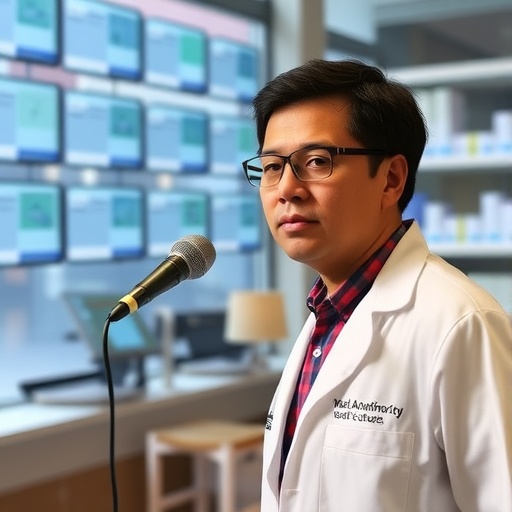
At the forefront of oncology research, The University of Texas MD Anderson Cancer Center continues to deliver transformative insights that are shaping the future of cancer treatment and management. Recent studies unveiled from this prestigious institution emphasize groundbreaking advances across several challenging cancer types, including metastatic breast cancer, glioblastoma, prostate cancer, and triple-negative breast cancer (TNBC). These investigations not only offer renewed hope for patients but also underscore the power of interdisciplinary collaboration between clinicians and scientists driving translational research in cancer care.
One of the most compelling breakthroughs involves a novel combination therapeutic regimen addressing leptomeningeal metastasis (LM) in HER2-positive breast cancer patients. LM represents a dire prognosis, often associated with rapid neurological decline and limited life expectancy. A Phase II clinical study explored integrating tucatinib and trastuzumab, both targeted agents directed towards HER2, with capecitabine, a chemotherapy component. This combination nearly doubled median overall survival from a historical 4.4 months to an unprecedented 10 months. Notably, 41% of patients remained alive at 18 months, a remarkable feat in this otherwise grim clinical scenario. Additionally, the treatment prolonged central nervous system progression-free intervals and improved neurological function in a majority of evaluable patients, signifying both survival and quality of life enhancements.
Mechanistically, tucatinib’s selective inhibition of HER2 and enhancement of blood-brain barrier penetration synergizes with trastuzumab’s monoclonal antibody targeting and capecitabine’s cytotoxic activity. This tri-modal strategy effectively combats the unique tumor microenvironment within the leptomeningeal spaces. Rashmi Murthy, MD, the study’s lead author and associate professor of Breast Medical Oncology, frames this development as a significant leap forward, offering a viable therapeutic route where none previously existed. The ability to extend survival while also mitigating neurological deficits underscores the potential for integrated targeted and chemotherapeutic modalities in managing central nervous system metastases.
Switching focus to glioblastoma (GBM), an aggressive primary brain tumor notorious for its immunosuppressive microenvironment and refractory nature, researchers have pioneered a dual blockade immunotherapy strategy. GBM cells exploit “don’t eat me” signals to escape immune surveillance, particularly via two pathways that inhibit phagocytosis by macrophages and diminish T-cell activation. The MD Anderson research team, led by Wen Jiang, MD, PhD, and Betty Kim, MD, PhD, identified that simultaneous disruption of these redundant immune-evasion signals amplifies antitumor immune responses. Preclinical models demonstrated that this combined inhibition effectively unmasks tumor cells, facilitating their recognition and destruction by immune effector cells.
This approach represents a paradigm shift in immunotherapy for GBM by overcoming traditional immune resistance mechanisms, often dubbed the “invisibility cloak” of cancer cells. The heightened immune activation achieved resembles a potent “one-two punch,” fostering an environment where checkpoint inhibitors and other immunomodulatory agents may become more effective. These findings provide a mechanistic blueprint for future clinical trials aiming to harness the immune system’s full potential against notoriously treatment-resistant malignancies such as glioblastoma.
Turning to prostate cancer, a longitudinal study has unearthed a notable correlation between endogenous testosterone levels and cancer progression risk during active surveillance. Among men diagnosed with early-stage prostate cancer, those with lower baseline testosterone exhibited increased likelihood of disease advancement to more aggressive phenotypes. This revelation carries critical clinical implications for risk stratification and underscores the nuanced role of endocrine factors in modulating tumor biology. Justin R. Gregg, MD, associate professor of Urology and Health Disparities Research, emphasizes that while active surveillance remains a safe, preferred management approach for many, integrating hormonal assessments could enhance personalized monitoring protocols.
The intersection of endocrinology and oncology illuminated by these findings prompts a reevaluation of how prostate cancer patients are monitored longitudinally. Understanding how systemic testosterone influences tumor dormancy or progression may open new avenues for therapeutic intervention and precision surveillance. This biomarker-driven approach could ultimately spare patients from overtreatment while promptly identifying those warranting earlier aggressive management.
In the domain of triple-negative breast cancer (TNBC), hailed for its heterogeneity and limited treatment targets, bioinformatics and computational biology have delivered a significant advancement in predicting chemotherapy response. Wenyi Wang, PhD, and colleagues have developed an innovative deconvolution algorithm that disentangles the complex gene expression profiles of tumors by accounting for their distinct microenvironmental contexts. This refined computational approach surpasses existing models by more accurately reflecting the cellular heterogeneity intrinsic to TNBC, thereby improving predictive power regarding chemotherapy efficacy.
The algorithm performs a meticulous breakdown and quantification of gene expression patterns within tumor and stromal compartments, providing granular insights into population-level molecular characteristics. Such an approach is critical given TNBC’s aggressive nature and variable responsiveness to standard chemotherapeutic regimens. Dr. Wang highlights the importance of making these deconvolution methodologies accessible beyond specialized computational centers to facilitate widespread adoption and accelerate precision oncology research. The development underscores the transformative potential of integrating bioinformatics into clinical biomarker discovery and treatment planning.
Collectively, these four cutting-edge studies epitomize a comprehensive strategy in cancer research—melding targeted therapies, immunological insights, hormonal biology, and computational analytics to confront some of oncology’s toughest challenges. The convergence of these disciplines at MD Anderson Cancer Center exemplifies the translational paradigm, bridging benchside discoveries with bedside applications, and ultimately, tangible benefits for patients.
Such advancements are particularly timely given the global burden of cancer and the urgent need for novel interventions in metastatic and resistant cancers. They reinforce a theme that effective cancer management hinges not only on innovative drug development but also on understanding tumor microenvironments, immune evasion, and systemic physiological influences. Furthermore, the integration of computational biology tools heralds a new era where big data and precision medicine coalesce to revolutionize oncology.
With these promising developments, the future landscape of cancer therapy appears poised to shift radically. The new combination treatment for HER2+ breast cancer patients with leptomeningeal metastasis offers a blueprint for tackling brain-involved malignancies via multi-agent targeted regimens. Similarly, the dual targeting in glioblastoma harnesses the immune system more robustly, potentially redefining immunotherapy paradigms in neuro-oncology. Concurrently, the recognition of hormonal biomarkers in prostate cancer surveillance underscores personalized medicine’s critical role in optimizing patient outcomes. Lastly, sophisticated computational approaches for TNBC will empower clinicians to tailor chemotherapy regimens with unprecedented accuracy.
As the scientific community absorbs these insights, continued interdisciplinary collaboration will be paramount to translating them into clinical protocols that enhance survival, alleviate symptoms, and improve quality of life. The MD Anderson team’s work exemplifies a model for how cancer centers can drive innovation through synergy between laboratory research and patient care, ultimately contributing to the global fight against cancer.
- 30 –
News Publication Date:
March 18, 2026
Web References:
- Breast cancer leptomeningeal metastases study in Nature Cancer: https://www.nature.com/articles/s43018-026-01120-7
- Glioblastoma dual targeting immunotherapy in Nature Communications: https://www.nature.com/articles/s41467-026-70221-9
- Prostate cancer and testosterone study in The Journal of Urology: https://www.auajournals.org/doi/10.1097/JU.0000000000004986
- TNBC computational biomarker study in Cell Reports Medicine: https://www.cell.com/cell-reports-medicine/fulltext/S2666-3791(26)00027-3
References:
All studies conducted and published under the auspices of The University of Texas MD Anderson Cancer Center research divisions.
Cite Scienmag News
Nathaniel Bowman. (March 19, 2026). UT MD Anderson Unveils Latest Research Breakthroughs. Scienmag. https://scienmag.com/ut-md-anderson-unveils-latest-research-breakthroughs/
Nathaniel Bowman. "UT MD Anderson Unveils Latest Research Breakthroughs." Scienmag, 19 March 2026, https://scienmag.com/ut-md-anderson-unveils-latest-research-breakthroughs/. Accessed 4 September 2026.
Nathaniel Bowman. "UT MD Anderson Unveils Latest Research Breakthroughs." Scienmag. March 19, 2026. https://scienmag.com/ut-md-anderson-unveils-latest-research-breakthroughs/


