


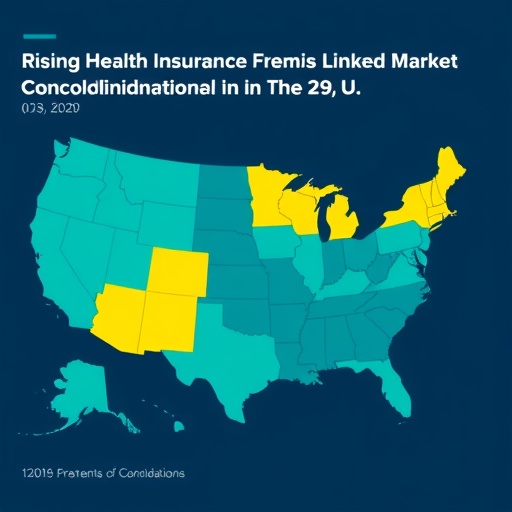
The landscape of health insurance in the United States is predominantly shaped by private markets, which cater to the majority of insured Americans. Yet, these markets are characterized by increasing concentration, raising critical questions about their efficiency and fairness. A comprehensive new analysis conducted by economists from Carnegie Mellon University and Northwestern University delves deep into the mechanics of this phenomenon, elucidating how insurer consolidation and asymmetric information interact to influence premiums, plan design, and overall consumer welfare within commercial, Medicare Advantage, and Medicaid markets.
This incisive inquiry sheds light on the multifaceted challenges posed by market concentration within health insurance. Over decades, the number of dominant players in these markets has dwindled, resulting in enhanced market power for remaining insurers. This consolidation, the researchers argue, exerts upward pressure on premiums, restricting consumer choice and potentially compromising coverage quality. The paper, emerging from a collaboration between Martin Gaynor of Carnegie Mellon and Amanda Starc of Northwestern, underscores that the functioning of the U.S. healthcare system fundamentally depends on the competitive health insurance markets underpinning it.
Market concentration is not a simple issue of fewer competitors; rather, it interlocks with inherent imperfections typical of insurance markets. Central among these imperfections is asymmetric information, notably adverse selection. This arises when insurers cannot perfectly differentiate between high-risk and low-risk applicants. To mitigate this risk, insurers may design plans that preferentially attract healthier individuals or implement subtle constraints on care delivery, often subverting optimal market outcomes. The intricate interplay between market power and information asymmetries thus complicates the economics of health insurance beyond classical competitive frameworks.
The analysis explores how these forces manifest across distinct segments of the market. Commercial insurance markets, typically employer-based, and government-subsidized realms such as Medicare Advantage and Medicaid, exhibit varying degrees of concentration and regulatory oversight. Importantly, Medicare Advantage has garnered significant antitrust scrutiny owing to rapid insurer consolidation. Geographic disparities further exacerbate the uneven availability of plans, constraining consumer choice based on location and underscoring equity concerns. This spatial dimension offers crucial insights into the complexity of regulating competitive dynamics in fragmented healthcare markets.
In addition to horizontal consolidation among insurers, vertical integration—where insurers acquire healthcare providers—complicates the competitive landscape further. Vertical consolidation can reshape bargaining dynamics between insurers and providers, potentially leading to higher prices and altered care pathways for consumers. The researchers highlight that these structural shifts necessitate updated theoretical and empirical frameworks to evaluate their cumulative impact on consumer welfare, premiums, and care accessibility. Understanding how vertical and horizontal integration interrelate is pivotal to effective policy design and antitrust enforcement.
Risk adjustment mechanisms, designed to compensate insurers for enrolling higher-risk populations, are a critical policy tool discussed in the study. By reallocating funds based on enrollee risk profiles, these systems aim to counteract incentives for adverse selection and encourage fair competition. However, the efficacy of risk adjustment is contingent upon accurate data and robust administration. Inadequate calibration may foster unintended consequences, enabling insurers to engage in risk segmentation strategies that thwart equitable coverage. The researchers advocate refining these mechanisms to better align insurer incentives with consumer welfare goals.
Regulatory frameworks overseeing the health insurance sector also play a vital role in shaping market dynamics. The study argues for comprehensive oversight that addresses both market power and information asymmetry challenges. Effective regulation must not only prevent anti-competitive consolidation but also ensure transparency and adequacy of coverage. Moreover, the authors suggest that informational interventions, improving consumer understanding and plan comparability, could empower more informed enrollment decisions, thereby enhancing competitive pressures that benefit consumers.
The researchers emphasize the significance of establishing clear “rules of the road” to govern competition within health insurance markets. Given the complexities arising from combined effects of insurer market power and imperfect information, piecemeal policies are insufficient. Instead, cohesive and coordinated approaches involving antitrust authorities, regulators, and policymakers are essential. Such frameworks should prioritize consumer welfare by promoting competitive yet equitable insurance landscapes, capable of adapting to evolving market structures and regulatory challenges.
Furthermore, the analysis advocates for centralized monitoring and oversight, ideally at a state level, with a single entity tasked with comprehensive policy implementation and enforcement. This structure would streamline efforts to address market concentration and asymmetric information challenges, allowing for tailored responses that reflect local market characteristics. The potential for such institutional innovation represents a significant step toward more resilient and consumer-friendly health insurance markets.
The implications of this study resonate across various stakeholder groups. Consumers face rising premiums and limited plan options as consolidation intensifies. Insurers navigate complex incentive environments shaped by risk adjustment and regulatory constraints. Policymakers are called upon to design nuanced interventions balancing competition, access, and affordability. The authors highlight that addressing these intertwined challenges is crucial to improving the overall performance of the U.S. healthcare system, which remains heavily reliant on the mechanics of health insurance markets.
In sum, the research underscores a pressing need for vigilant antitrust enforcement and regulatory oversight in the health insurance domain. Market power arising from consolidation, compounded by asymmetric information and adverse selection, distorts premium structures, coverage designs, and ultimately diminishes consumer welfare. This comprehensive study offers both theoretical insights and practical policy recommendations aimed at fostering competitive, transparent, and equitable health insurance markets that can better serve the health needs of millions of Americans.
Reflecting on the relevance of the research, Martin Gaynor remarks that the efficacy of the U.S. health insurance system rests squarely on the quality of its underlying markets. Echoing this sentiment, Amanda Starc emphasizes that substantial market imperfections demand robust monitoring and innovative policy solutions to ensure these markets function optimally. Their collaborative work constitutes a vital contribution to ongoing debates about the future of health insurance and health care delivery in the United States, charting a path forward amid complex economic and structural realities.
As health insurance continues to evolve amid technological, demographic, and regulatory shifts, the rigorous analysis provided by this study serves as a foundational reference for researchers, policymakers, and industry stakeholders alike. Addressing the dual challenges of market concentration and information asymmetry through well-informed regulation and oversight will be indispensable for advancing a more equitable, efficient, and sustainable health insurance ecosystem.
News Publication Date: 10-Mar-2026
Web References: 10.3386/w34928
Cite Scienmag News
Courtney Benton. (March 18, 2026). Rising Health Insurance Premiums Linked to Market Consolidation in the U.S. Scienmag. https://scienmag.com/rising-health-insurance-premiums-linked-to-market-consolidation-in-the-u-s/
Courtney Benton. "Rising Health Insurance Premiums Linked to Market Consolidation in the U.S." Scienmag, 18 March 2026, https://scienmag.com/rising-health-insurance-premiums-linked-to-market-consolidation-in-the-u-s/. Accessed 4 September 2026.
Courtney Benton. "Rising Health Insurance Premiums Linked to Market Consolidation in the U.S." Scienmag. March 18, 2026. https://scienmag.com/rising-health-insurance-premiums-linked-to-market-consolidation-in-the-u-s/


