


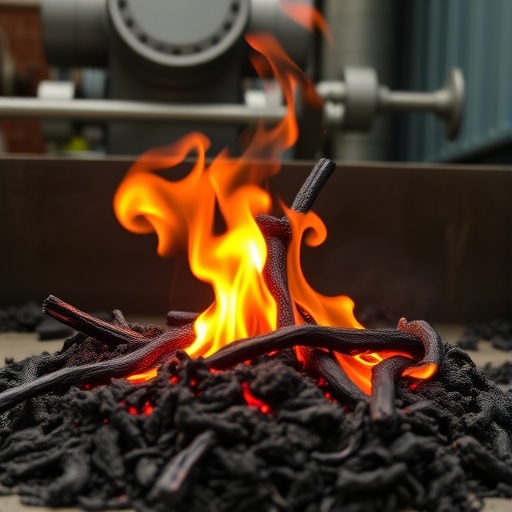
In the face of rapidly surging urban wastewater volumes worldwide, modern sewage treatment plants are compelled to adopt more sophisticated methods to ensure environmental protection and public health. Traditional biological treatment approaches, while effective, are often energy-intensive and spatially demanding. This predicament has spurred interest in more efficient solutions, among which Chemical-Enhanced Primary Treatment (CEPT) emerges as a promising alternative. CEPT innovatively employs chemical agents to accelerate flocculation and coagulation processes, sidestepping the reliance on microbial activity inherent to conventional treatments. This approach not only diminishes energy consumption but also trims operational overheads, making it an attractive candidate for sustainable urban wastewater management.
Sewage sludge, the residual semi-solid material generated during treatment, traditionally undergoes various handling and disposal strategies. However, to valorize this byproduct and reduce ecological footprints, thermal transformation methods such as pyrolysis have garnered considerable attention. Pyrolysis decomposes organic sludge constituents under oxygen-deprived high-temperature conditions, yielding biochar — a carbon-rich, stable material with extensive utility in agriculture, soil remediation, and carbon sequestration. The properties and environmental safety of biochar depend intricately on both the origin of the sludge and the pyrolysis parameters. Notably, biochar derived from CEPT sludge (CS) has shown divergent characteristics compared to that from biologically treated sludge (BS), particularly concerning heavy metal retention and stability.
Heavy metals inherent to sewage sludge, including copper, lead, cadmium, and zinc, pose significant environmental challenges due to their toxicity and potential bioaccumulation. Their behavior during pyrolysis determines the environmental risks of biochar usage, especially when intended as soil amendments. Despite its importance, the scientific community has yet to fully unravel how CEPT influences heavy metal dynamics during biochar formation. This knowledge gap is critical as improper thermal treatment might inadvertently mobilize these metals, leading to secondary pollution through leaching and atmospheric dispersion.
A breakthrough study conducted by Professor Kitae Baek and his research team at Jeonbuk National University endeavors to demystify these aspects by directly comparing the heavy metal characteristics and stabilities in biochars originating from CEPT and conventional sludge. Using experimental setups involving optimized pyrolysis at distinct temperature regimes, the team meticulously assessed metal speciation, retention rates, and leaching potentials, aiming to identify thermal treatment parameters that maximize safety and sustainability.
The research unveiled stark contrasts in biochar yields and heavy metal retention between the two sludge types. CEPT sludge biochar production displayed substantially lower yields—ranging from 32.1% to 40.9%—relative to biologically treated sludge, which achieved yields up to 75.2%. This decrease in yield suggests more substantial organic degradation or volatilization during CEPT sludge pyrolysis. Moreover, heavy metals presented lower retention within CS-derived biochars across the pyrolysis temperature spectrum, indicating a heightened propensity for these metals to escape into the environment under thermal treatment.
Further investigations into thermal stability revealed that at elevated pyrolysis temperatures exceeding 800 °C, CS biochars exhibited markedly increased heavy metal mobility, rendering these metals susceptible to leaching when in contact with water or soil. Such findings herald significant environmental concerns, as mobile heavy metals can infiltrate groundwater and enter food chains, undermining ecological and human health. Contrarily, when pyrolysis was conducted at an optimized temperature of approximately 550 °C, both CEPT and conventional sludge biochars demonstrated commendable heavy metal stability, with metals effectively immobilized within the biochar matrix.
These insights underscore the necessity of carefully calibrating pyrolysis parameters to harness the benefits of CEPT sludge without exacerbating environmental hazards. The study advocates for employing lower-temperature pyrolysis regimes when treating CEPT sludge, balancing effective pollutant degradation with retention of heavy metals. This strategy aligns with sustainable waste management principles, facilitating the reclamation of biochar for beneficial uses such as soil enhancement and carbon sequestration, thereby closing the loop in urban resource recycling.
Professor Baek emphasizes the broader implications of their findings: “While CEPT offers tangible advantages in reducing energy consumption for sewage treatment, our work articulates the critical importance of integrating environmental risk assessments into the entire treatment chain. Appropriate thermal management of CEPT sludge is vital to mitigating potential secondary pollution and ensuring that biochar applications do not inadvertently compromise soil and water quality.”
Methodically, the study employed an array of analytical techniques including sequential chemical extraction, leaching tests, and advanced spectroscopic methods to quantify heavy metal speciation and mobility. This rigorous approach ensured a multifaceted understanding of how thermal processes influence metal transformations, providing robust evidence to shape future guidelines and regulatory frameworks.
The ramifications of this research extend beyond local sewage treatment facilities, offering a template for urban centers worldwide contending with burgeoning wastewater challenges. By highlighting the nuanced interplay between treatment chemistry and thermal processing, the study bridges critical knowledge gaps, inspiring innovation in resource recovery and sustainable infrastructure design.
Moreover, these findings resonate within the broader context of global environmental conservation and climate action. Wastewater treatment plants are significant energy consumers and contributors to greenhouse gas emissions. Adopting CEPT alongside optimized biochar production methods promises to curtail these impacts, augmenting the resilience and environmental stewardship of urban systems. This research thus aligns with the growing paradigm shift towards circular economy practices in environmental engineering.
In conclusion, the pioneering work led by Professor Baek delineates a sophisticated framework to exploit CEPT-derived sewage sludge via pyrolysis, emphasizing thermal regimes that safeguard against heavy metal dispersion while maximizing biochar utility. This comprehensive assessment not only addresses current environmental concerns but also propels the field towards integrated, eco-efficient wastewater management solutions, fostering a sustainable future for urban ecosystems worldwide.
News Publication Date: 15 January 2026
References: DOI: 10.1016/j.psep.2025.108338
Keywords
Chemical-enhanced primary treatment, CEPT, Sewage sludge, Pyrolysis, Biochar, Heavy metals, Heavy metal stability, Environmental risk, Thermal treatment, Wastewater treatment, Soil amendment, Sustainable wastewater management
Cite Scienmag News
Denise Maddox. (March 17, 2026). Jeonbuk National University Scientists Develop Safer Chemical Sewage Sludge Management Through Pyrolysis. Scienmag. https://scienmag.com/jeonbuk-national-university-scientists-develop-safer-chemical-sewage-sludge-management-through-pyrolysis/
Denise Maddox. "Jeonbuk National University Scientists Develop Safer Chemical Sewage Sludge Management Through Pyrolysis." Scienmag, 17 March 2026, https://scienmag.com/jeonbuk-national-university-scientists-develop-safer-chemical-sewage-sludge-management-through-pyrolysis/. Accessed 3 September 2026.
Denise Maddox. "Jeonbuk National University Scientists Develop Safer Chemical Sewage Sludge Management Through Pyrolysis." Scienmag. March 17, 2026. https://scienmag.com/jeonbuk-national-university-scientists-develop-safer-chemical-sewage-sludge-management-through-pyrolysis/


