


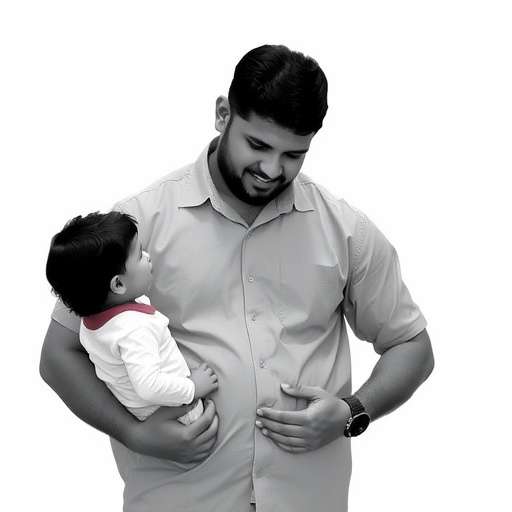
Emerging research from the University of Southampton, in collaboration with international experts, elucidates a transformative understanding of paternal influences on pregnancy and offspring health. Traditionally, medical and public health strategies have emphasized maternal behaviors as the predominant determinants of pregnancy success and child well-being. However, this novel transdisciplinary review published in The Lancet systematically integrates biological, behavioral, and social sciences evidence, establishing fathers as critical, albeit persistently overlooked, agents shaping the trajectory of future generations.
For decades, the clinical lens has fixated on maternal factors such as nutrition, prenatal care, and lifestyle choices with little consideration of paternal contributions. Yet, as Professor Keith Godfrey, a senior investigator from the University of Southampton and NIHR Southampton Biomedical Research Centre, highlights, “Fathers have demonstrable effects on pregnancy outcomes that in some domains surpass maternal influences.” This insight pivots our scientific gaze toward fathers’ preconception health as a vital variable that warrants comprehensive scrutiny and intervention.
Biologically, paternal health status prior to conception imprints on gamete integrity and epigenetic programming. Factors including paternal age, body mass index, and substance use exert profound effects on sperm quality, influencing embryogenesis and fetal development. More intriguingly, these paternal exposures can catalyze multigenerational repercussions by transmitting molecular alterations acquired during the father’s own early life, thereby creating interlinked cycles of health disparities.
The research further delineates how psychosocial elements—such as stress and educational attainment—modulate paternal physiological and behavioral states, which in turn impact partner health behaviors during pregnancy. Dr. Danielle Schoenaker elaborates that men’s lived experiences throughout their life course, encompassing mental health and environmental exposures, cascade into the prenatal period, shaping both prenatal care adherence and in utero environments pivotal for infant development.
Equally critical are the social and ethical dimensions uncovered by this investigation. The researchers emphasize that exclusive attribution of reproductive responsibility to birthing individuals perpetuates entrenched gender biases, diminishing opportunities for equitable shared accountability. Jonathan Huang of the University of Hawai’i underscores the compounded challenges faced by men of color, whose health trajectories are intertwined with historic and systemic legacies of racism and colonialism. Cultural disruption in community and family structures requires tailored, context-sensitive programs that restore familial bonds and elevate men’s health within their cultural identities.
Policy implications stemming from these findings advocate for a multisectoral approach involving healthcare providers, policymakers, and men themselves to foster comprehensive preconception health frameworks. Such initiatives should integrate paternal health assessments and interventions at primary care and community levels. By doing so, health systems can address intergenerational inequities and enhance collective pregnancy outcomes through proactive paternal engagement.
Furthermore, this paradigm shift invites a reconfiguration of preconception research paradigms to encompass paternal lifecourse dimensions, acknowledging that effective prevention and health promotion must start well before conception and pregnancy. This approach aligns with global health objectives aiming to rectify disparities in maternal-child health by adopting inclusive, family-centered models of care, which recognize fathers as partners and caregivers throughout reproductive journeys.
From a translational perspective, these scientific revelations necessitate innovative clinical guidelines and public health messaging that elevate men’s preconception well-being without undermining the critical importance of maternal health. This delicate balance aims to cultivate supportive interpersonal dynamics and equitable parenting roles, thereby optimizing conditions for fetal development and child health trajectories.
The comprehensive nature of this research is underscored by its interdisciplinary collaboration spanning academia and clinical research across the United Kingdom, United States, New Zealand, and Singapore. The international consortium’s consolidation of diverse datasets and methodologies fortifies the robustness and generalizability of their conclusions, advocating for global adoption of inclusive preconception health paradigms.
In sum, this groundbreaking study posits that investing strategically in men’s health, from childhood through reproductive years, is an indispensable lever for mitigating health inequities entrenched across generations. By shifting the narrative to one of shared reproductive responsibility and recognizing the multifaceted impact of paternal health, the research provides a compelling scientific and ethical foundation for reshaping reproductive health policies and practices worldwide.
Cite Scienmag News
Harold Sullivan. (March 17, 2026). Fathers’ Health: A Key Factor in Enhancing Pregnancy and Child Development Outcomes. Scienmag. https://scienmag.com/fathers-health-a-key-factor-in-enhancing-pregnancy-and-child-development-outcomes/
Harold Sullivan. "Fathers’ Health: A Key Factor in Enhancing Pregnancy and Child Development Outcomes." Scienmag, 17 March 2026, https://scienmag.com/fathers-health-a-key-factor-in-enhancing-pregnancy-and-child-development-outcomes/. Accessed 4 September 2026.
Harold Sullivan. "Fathers’ Health: A Key Factor in Enhancing Pregnancy and Child Development Outcomes." Scienmag. March 17, 2026. https://scienmag.com/fathers-health-a-key-factor-in-enhancing-pregnancy-and-child-development-outcomes/


