


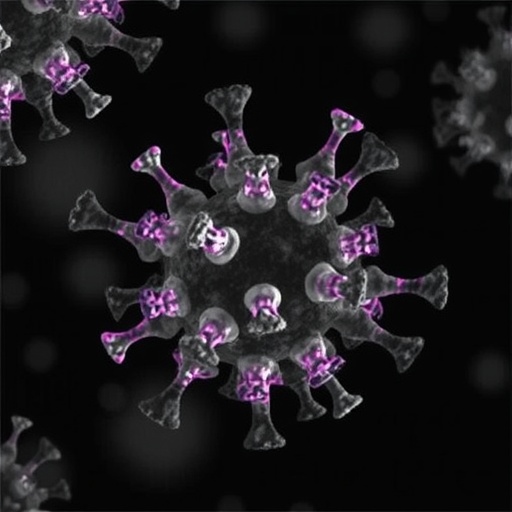
In a groundbreaking study published in npj Viruses, researchers have unveiled the crucial role of Site-1 protease (S1P) in mediating glycoprotein precursor (GPC) processing, a step essential for the persistence of Lymphocytic Choriomeningitis Virus (LCMV) Clone 13. This discovery marks a significant leap in our understanding of viral persistence mechanisms, which could pave the way for novel therapeutic interventions targeting chronic viral infections.
LCMV Clone 13 has long been recognized as a paradigm for studying viral persistence and immune evasion, given its ability to establish lifelong infections despite an active immune response. At the heart of this persistence lies the viral glycoprotein complex, synthesized initially as a single GPC that must undergo precise proteolytic cleavage to become functionally competent. The current study focuses on the enzymatic role of Site-1 protease, a host enzyme known to participate in the cleavage of several viral and cellular substrates, in facilitating this essential maturation step.
The investigative team led by Zhou, R., Witwit, H., and Ai, T. employed a combination of molecular virology techniques, biochemical assays, and in vivo infection models to delineate the functional dynamics of S1P in LCMV Clone 13 infections. Their comprehensive approach revealed that disrupting S1P activity drastically impairs GPC processing, ultimately hindering the virus’s capacity to maintain persistent infection within the host.
Understanding viral glycoprotein processing pathways has been a challenging frontier, primarily because these processes often involve host proteases that have critical physiological roles. In this context, the identification of S1P as an essential mediator presents a dual opportunity and challenge. It suggests that carefully timed inhibition of S1P activity could block viral maturation without catastrophic effects on host cell biology, thus constituting a potential antiviral strategy.
Detailed structural analyses further illuminated the cleavage specificity of S1P for GPC. The protease recognizes a conserved cleavage motif within the glycoprotein, orchestrating its processing into subunits essential for viral entry and immune system interactions. This proteolytic step is not merely about viral assembly but also modulates immune recognition, thereby influencing viral persistence through immune evasion.
The virus-host interplay uncovered in this study highlights an intricate co-evolution where LCMV commandeers a host enzymatic pathway to ensure its survival. By exploiting S1P-mediated processing, LCMV Clone 13 adapts to the host intracellular milieu, avoiding immune clearance and establishing long-lasting infections. This adaptation underscores the selective pressure viruses exert on cellular protease functions, which may have broader implications for other persistent viral infections.
Functional assays conducted in cell cultures demonstrated that pharmacological inhibition or genetic silencing of S1P results in accumulation of unprocessed GPC, inhibiting the virus’s ability to infect new cells effectively. Furthermore, in vivo studies correlated impaired GPC processing with decreased viral loads and reduced chronic infection markers, attesting to the translational relevance of targeting this pathway.
This research also sheds light on previously ambiguous aspects of arenavirus biology. While S1P had been implicated in processing viral proteins in other viruses, its definitive association with LCMV GPC processing solidifies its position as a critical determinant in arenavirus lifecycle progression. Such mechanistic insights are invaluable for designing broad-spectrum antiviral agents against arenaviridae.
The implications of S1P-mediated GPC processing extend beyond viral persistence to vaccine design. Understanding how viral glycoproteins mature and evade immunity can inform strategies to engineer viral immunogens that mimic natural processing states, enhancing vaccine efficacy. Additionally, targeting protease-mediated processing could complement existing antiviral therapies by curtailing viral spread early in infection.
Future studies are poised to explore the interplay between S1P activity and host immune responses during chronic viral infections. Identifying host factors that modulate S1P expression or function could reveal new dimensions in antiviral defense and viral persistence modulation. Moreover, given that protease functions are tightly regulated within physiological contexts, the fine balance between antiviral efficacy and host toxicity warrants rigorous investigation.
This landmark investigation into the role of Site-1 protease in LCMV Clone 13 persistence not only advances fundamental virology but also opens translational avenues for combatting chronic viral diseases. It underscores the importance of host proteases as both facilitators of viral infection and potential Achilles’ heels to be exploited in therapeutic development, setting a precedent for future studies in viral pathogenesis.
By shining a spotlight on the enzymatic choreography behind viral glycoprotein maturation, the authors present a compelling narrative of host-virus co-dependence that transcends LCMV, offering a blueprint for understanding persistence mechanisms in other viral systems. Their work exemplifies the power of integrative molecular research in unraveling complex biological phenomena underpinning chronic infections.
In summary, the study delineates a critical proteolytic step governed by Site-1 protease that is indispensable for LCMV Clone 13 to establish and maintain persistent infection. The findings underscore a sophisticated viral strategy to hijack a host enzyme, facilitating viral survival and immune evasion, thereby contributing vital insights into arenavirus biology and chronic infection therapeutics.
The identification of S1P as a potential therapeutic target heralds a promising direction in antiviral research, with the prospect of developing inhibitors that can disrupt viral persistence without impairing essential host functions. As chronic viral infections continue to pose significant healthcare challenges globally, innovations stemming from this research could have far-reaching clinical implications.
This comprehensive elucidation of the molecular basis of GPC processing mediated by Site-1 protease affirms the importance of host-virus interactions in shaping infection outcomes. It calls for continued interdisciplinary efforts to translate these findings into practical interventions that can mitigate the burden of persistent viral diseases through targeted molecular therapeutics.
Cite Scienmag News
Kristina Jarvis. (March 14, 2026). Site-1 Protease Essential for LCMV Clone 13 Persistence. Scienmag. https://scienmag.com/site-1-protease-essential-for-lcmv-clone-13-persistence/
Kristina Jarvis. "Site-1 Protease Essential for LCMV Clone 13 Persistence." Scienmag, 14 March 2026, https://scienmag.com/site-1-protease-essential-for-lcmv-clone-13-persistence/. Accessed 4 September 2026.
Kristina Jarvis. "Site-1 Protease Essential for LCMV Clone 13 Persistence." Scienmag. March 14, 2026. https://scienmag.com/site-1-protease-essential-for-lcmv-clone-13-persistence/


