


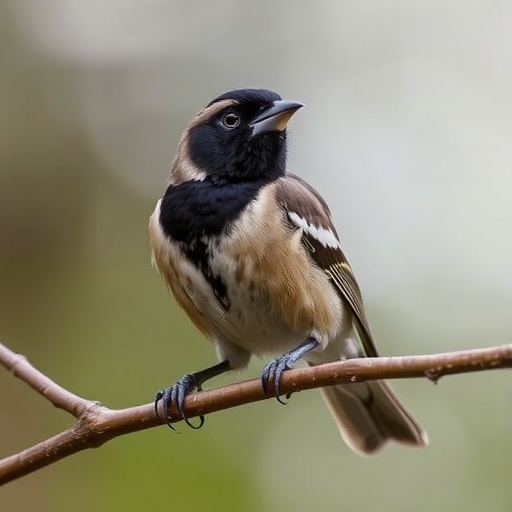
In the intricate world of wildlife biology, the gut microbiome has emerged as a vital frontier for understanding animal health beyond visible traits. Recent research conducted by Florida Atlantic University (FAU) sheds light on the dynamic interplay between stress, gut microbial communities, and physiological condition in wild songbirds, particularly the Northern cardinal (Cardinalis cardinalis). This new study dives deep into how routine environmental and social challenges can induce significant yet often invisible changes within an animal’s internal microbial ecosystem, offering profound insights into animal resilience and health.
The gut microbiome – a complex assembly of bacteria, fungi, viruses, and other microorganisms – functions as a critical mediator of digestive processes, immune regulation, and even behavioral responses to stress. In mammals and domestic birds, detailed studies have already mapped how chronic or repeated stressors disrupt microbiome composition, altering health outcomes. However, the investigation of these phenomena in wild avian species, especially free-living songbirds, has remained remarkably sparse until now. The FAU-led study addresses this gap by exploring how natural social interactions and disturbances impact the gut microbiota and associated physiological parameters in Northern cardinals.
Northern cardinals, noted for their distinctive rose-red plumage and territorial behaviors, served as ideal subjects for this investigation into microbiome-stress relationships under natural conditions. Researchers monitored the birds’ gut microbial communities over an eleven-day period, during which individual cardinals were subjected to one of three conditions: repeated simulated territorial challenges designed to mimic encounters with rival males, short captivity via holding after routine capture, or no intervention to serve as controls. Alongside microbial sampling, the team meticulously measured circulating corticosterone levels—the primary glucocorticoid hormone involved in avian stress responses—body condition metrics, and beak coloration, a carotenoid-mediated trait linked to diet and overall fitness.
The experimental data, published in Scientific Reports, reveal that even minor stressors can lead to pronounced shifts in the gut microbiome’s compositional structure without necessarily reducing overall diversity. Notably, birds exposed to brief captivity exhibited the most substantial and consistent alterations in their microbial communities compared to those experiencing social stress alone or no stress. This pattern highlights the biological sensitivity of the microbiome to acute environmental perturbations, indicating that even short-term disruptions distinct from natural behaviors can reverberate through an animal’s internal microbial landscape.
Crucially, these microbiome changes were closely aligned with visible signs of physiological health and stress. Individuals whose gut bacteria composition shifted the most also showed marked fluctuations in corticosterone levels, body mass, and beak coloration intensity. The latter is particularly telling—not merely a cosmetic feature, beak color in cardinals reflects carotenoid pigment uptake and deposition, which tightly correlates with nutritional status and immune competence. The correlation between microbial alterations and this visual fitness signal underscores how the microbiome acts as a finely tuned indicator of an organism’s integrated physiological state under duress.
Moreover, the study identified distinct microbial taxa whose abundance correlated with these measures of condition and stress. For instance, cardinals held briefly in captivity demonstrated an increased relative presence of bacterial groups associated with pathogenicity or heightened inflammatory potential, underscoring the toll of captivity-induced stress on microbial balance. Conversely, beneficial bacterial populations rose in individuals maintaining optimal physical condition, suggesting a protective role for certain microbes in mitigating stress impacts and supporting host health. The synchronous changes between corticosterone levels and microbiome profiles further emphasize the gut-brain axis’s role in mediating environmental responses at a microbiological level.
This pioneering research by FAU biologists illuminates a heretofore underexplored biological narrative: the gut microbiome functions as a living biological chronicle, chronicling the nuanced experiences and challenges an animal confronts in its natural environment. By harnessing advanced microbial sequencing techniques alongside classical ecophysiological measurements, the investigators pioneer a multidimensional approach to wildlife stress ecology. Such integration not only reveals how microbial communities and host physiology are entwined but also how this partnership informs broader ecological fitness and survival strategies.
Importantly, the findings advance our understanding of stress resilience in wild animals by highlighting individual variation in microbiome responses. Stress does not impact all birds uniformly; instead, the microbiome emerges as a sensitive bioindicator reflecting the heterogeneity of physiological coping mechanisms across individuals. This insight has broad implications for conservation biology, where monitoring gut microbial health may offer a novel, non-invasive metric to assess population wellbeing or the impact of anthropogenic disturbances like habitat fragmentation and urban encroachment.
In situ research on free-living songbirds, as conducted in this FAU study, proves indispensable for capturing the complexity of natural environmental pressures that shape gut microbial dynamics. Unlike captivity-based studies, field-based experimental designs encompass authentic behavioral contexts and ecological interactions that modulate physiological stress responses. The study’s integrative framework, combining hormone assays, visual signals, and microbiome analysis, sets a new standard for ecological physiology research, bridging molecular microbiology with organismal biology and evolutionary ecology.
Beyond fundamental science, the implications of this work extend into practical applications. The gut microbiome could serve as a sensitive biomarker for monitoring the effects of environmental stressors on wildlife health in real time. Such capability has transformative potential for conservation strategies, wildlife rehabilitation efforts, and designing interventions to bolster species facing climate-related or anthropogenic pressures. Understanding how microbial communities fluctuate with stress and health in wild animals empowers scientists and managers to anticipate vulnerability and tailor protective measures.
The research team, led by Dr. Rindy Anderson from FAU’s Department of Biological Sciences, alongside collaborators from Allegheny College and Cornell University, highlights the interdisciplinary nature of modern biological inquiry. By converging microbiology, endocrinology, ecology, and physiology, this study exemplifies the innovative approaches required to unravel the complex biological networks that govern animal life. As Dr. Morgan C. Slevin, first author of the study, articulates, this integrative perspective unveils “the hidden ways wild animals respond to the world around them,” opening an unprecedented window into the unseen biological realities of stress and adaptation.
The study was supported through multiple streams of funding, including graduate scholarships, the National Science Foundation, and the U.S. Department of Education, reflecting the collaborative investment in advancing ecological and physiological knowledge. As such research continues to evolve, it promises to revolutionize our conceptualization of animal health within the broader context of microbial symbiosis and environmental adaptation.
Overall, this FAU-led investigation offers a powerful demonstration of how gut microbiomes interact dynamically with host stress physiology and condition in free-living birds. It challenges researchers to look beyond overt behaviors and physical traits to the microscopic communities that underpin survival and fitness. As scientists delve deeper into this microbial frontier, our understanding of ecology, evolution, and conservation will undoubtedly be enriched by the tales told from within the guts of wild animals.
News Publication Date: 13-Mar-2026
Web References:
Cite Scienmag News
Morgan Morrow. (March 13, 2026). Microbial Insights Reveal Wild Songbirds’ Responses to Stress. Scienmag. https://scienmag.com/microbial-insights-reveal-wild-songbirds-responses-to-stress/
Morgan Morrow. "Microbial Insights Reveal Wild Songbirds’ Responses to Stress." Scienmag, 13 March 2026, https://scienmag.com/microbial-insights-reveal-wild-songbirds-responses-to-stress/. Accessed 4 September 2026.
Morgan Morrow. "Microbial Insights Reveal Wild Songbirds’ Responses to Stress." Scienmag. March 13, 2026. https://scienmag.com/microbial-insights-reveal-wild-songbirds-responses-to-stress/


