


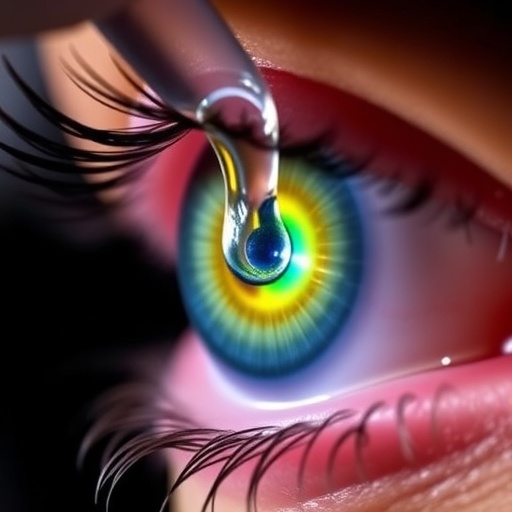
In a groundbreaking advancement at the intersection of microbiology and ophthalmology, scientists at the University of Pittsburgh School of Medicine have engineered a pioneering form of “living medicine” for the eye. This novel approach leverages a naturally occurring, harmless bacterium residing on the ocular surface to deliver continuous therapeutic support directly to injured corneal tissue. This experimental “living eye drop” concept reveals a transformative pathway in treating ocular surface diseases, potentially circumventing the limitations posed by conventional eye drop therapies.
The corneal surface of the eye is uniquely vulnerable due to its constant exposure and the natural tear film that incessantly washes away topical medications, necessitating frequent applications for efficacy. Current treatments for conditions such as corneal abrasions and dry eye disease rely heavily on multiple daily administrations, often hindering patient compliance and therapeutic effectiveness. Addressing this challenge, the research team focused on Corynebacterium mastitidis, a benign bacterial species that naturally colonizes the eye beneath the eyelid and maintains a symbiotic relationship with its host.
Scientists at Pitt harnessed genetic engineering techniques to modify C. mastitidis to continuously secrete interleukin-10 (IL-10), a potent anti-inflammatory cytokine known for its regulatory role in immune responses. IL-10’s function in downregulating trauma-induced inflammation presented an ideal therapeutic payload capable of enhancing tissue repair and reducing inflammatory-mediated damage. By transforming C. mastitidis into a microscopic drug delivery vehicle, the researchers envisaged a self-sustaining, localized method of cytokine administration that would remain active at the ocular surface without repeated dosing.
Experimental validation was performed using murine models, wherein researchers induced superficial corneal injuries and subsequently treated them with the genetically engineered bacteria. Results demonstrated a significant acceleration in corneal wound closure in mice treated with IL-10 secreting C. mastitidis compared to controls receiving either unmodified bacteria or saline solutions. Critically, blocking the IL-10 receptor negated this healing advantage, definitively linking the therapeutic benefit to the presence and action of IL-10.
In a parallel in vitro approach, the team generated a strain of C. mastitidis that secreted human IL-10 and applied it to cultured human corneal epithelial cells along with immune cell populations. These studies revealed enhanced epithelial repair processes and a marked reduction in inflammatory cytokine signaling, underscoring the translational potential of this living therapeutic for human ocular indications pending further development and safety validation.
The modular nature of the engineered microbial system offers promising flexibility; genes encoding different therapeutic proteins such as other cytokines, growth factors, or immunomodulatory molecules can be interchanged to customize treatments for a broad spectrum of ocular surface diseases. This versatile platform suggests a future where tailored “living eye drops” can be precisely matched to individual patient needs or specific pathological states.
Despite its exciting promise, the technology remains in an early stage of research. Key challenges must be addressed before clinical application is feasible, including the development of robust “off-switch” mechanisms to deactivate or remove engineered bacteria once healing has occurred, ensuring patient safety and preventing microbial persistence beyond therapeutic necessity. Regulatory frameworks for such live biotherapeutics will also require careful consideration due to their innovative nature.
Millions of individuals worldwide suffer annually from dry eye syndromes, traumatic corneal injuries, and chronic inflammatory ocular disorders—conditions burdened by insufficient and inconvenient treatment options. The groundwork laid by this study could ultimately revolutionize the ocular therapeutics landscape by providing longer-lasting, more efficacious interventions derived from naturally occurring biological partners in eye health.
The lead researcher, Anthony St. Leger, Ph.D., highlighted the significance of this research as the first successful demonstration that a naturally resident ocular surface microbe can be genetically programmed to deliver healing biologics in vivo. This paradigm shift from traditional pharmacology introduces an avenue whereby a single microbial application might confer ongoing protective and reparative function without repeated dosing, representing a major leap forward in vision care.
This innovation also cross-pollinates fields ranging from synthetic biology and immunology to regenerative medicine by merging genetically engineered microbes with targeted therapeutic delivery. The team’s successful demonstration of enhanced corneal repair via microbial cytokine secretion in animal models sets a compelling precedent for similar strategies targeting other organ systems or chronic inflammatory diseases.
In summary, the University of Pittsburgh’s pioneering research marks a vital step towards creating living, programmable medicines for the eye—therapies embedded within the ocular microbiome itself. As development continues, such therapeutic microbes may open novel possibilities for the treatment of complex vision disorders that currently challenge patient care and quality of life, offering hope for sustained relief through a single, elegant biological intervention.
News Publication Date:
March 5, 2026
Web References:
http://dx.doi.org/10.1016/j.celrep.2026.117064
Cite Scienmag News
Drew Townsend. (March 5, 2026). Pitt Scientists Develop “Living Eye Drop” to Enhance Corneal Healing. Scienmag. https://scienmag.com/pitt-scientists-develop-living-eye-drop-to-enhance-corneal-healing/
Drew Townsend. "Pitt Scientists Develop “Living Eye Drop” to Enhance Corneal Healing." Scienmag, 5 March 2026, https://scienmag.com/pitt-scientists-develop-living-eye-drop-to-enhance-corneal-healing/. Accessed 3 September 2026.
Drew Townsend. "Pitt Scientists Develop “Living Eye Drop” to Enhance Corneal Healing." Scienmag. March 5, 2026. https://scienmag.com/pitt-scientists-develop-living-eye-drop-to-enhance-corneal-healing/


