


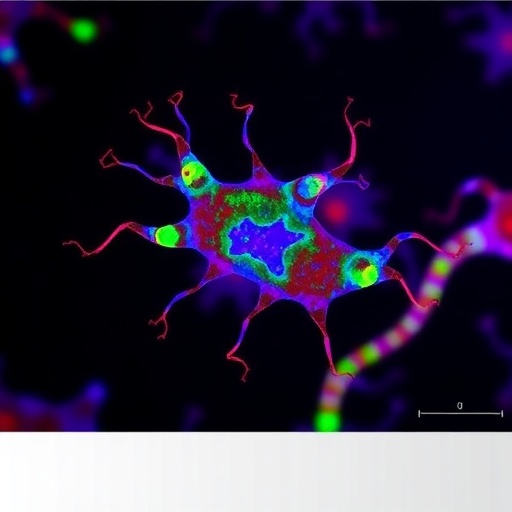
In a groundbreaking revelation that could reshape our understanding of liver immunity and cancer metastasis, recent research identifies the amino acid transporter SLC38A4 as a pivotal regulator of Kupffer cell function. Kupffer cells, the liver’s resident macrophages, are frontline defenders against pathogens and foreign particles filtering through hepatic circulation. The study, spearheaded by Li, J., Liu, YD., Wang, R., and colleagues and published in Experimental and Molecular Medicine, advances a compelling narrative: SLC38A4 does more than transport amino acids—it orchestrates macrophage phagocytosis and curtails tumor metastasis in the liver.
Liver metastasis remains a formidable challenge in oncology, with secondary tumors often heralding poor prognoses. Despite the vital surveillance role of Kupffer cells, the molecular mechanisms that optimize their phagocytic activity and tumoricidal capacity have remained elusive. The investigation into SLC38A4 reveals a transformative understanding, positioning this transporter not only as a cellular nutrient conveyor but also a critical immune modulator within the hepatic microenvironment.
At the heart of this discovery lies the intricate interplay between amino acid transport and immune cell function. SLC38A4 belongs to the solute carrier family responsible for the uptake and exchange of neutral amino acids, essential for cellular metabolism and signaling. The research delineates how SLC38A4 expression in Kupffer cells enhances their ability to engulf and degrade tumor cells and debris. This enhancement subsequently impairs the establishment and growth of metastatic tumors in the liver, revealing a potential biochemical axis exploitable for therapeutic interventions.
Extensive in vivo experimentation underpinned by genetically modified mouse models showcased that the ablation or downregulation of SLC38A4 in Kupffer cells substantially diminishes their phagocytic efficiency. Tumor cells circulating in hepatic vasculature evade clearance, seeding metastatic colonies with greater efficiency. Contrarily, upregulated SLC38A4 activity correlates with amplified phagocytosis and robust suppression of metastatic foci, underscoring the transporter’s dose-dependent immunological impact.
Beyond phagocytosis, SLC38A4’s influence extends to modulating intracellular metabolic pathways that sustain the energy-intensive process of tumor cell engulfment. Amino acid transport via SLC38A4 replenishes the metabolic substrates necessary for cytoskeletal remodeling and vesicular trafficking—processes integral to the engulfment and degradation capabilities of Kupffer cells. This metabolic tuning reveals a dual functional role for SLC38A4, merging bioenergetic support with immunological activation.
The study further postulates that SLC38A4-facilitated amino acid transport may influence the secretion profile of Kupffer cells, affecting cytokine and chemokine landscapes within the tumor microenvironment. Remodelled cytokine secretion patterns could enhance anti-tumor immunity, recruiting and activating other immune cells, thus orchestrating a coordinated immune assault on metastatic cells. This bi-directional communication between metabolism and immunity exemplifies a burgeoning paradigm in cancer immunology.
Utilizing sophisticated imaging techniques coupled with flow cytometric analyses, the research team tracked the fate of metastatic tumor cells in real-time, establishing a clear causal relationship between SLC38A4-mediated phagocytic activity and metastatic burden reduction. These visual and quantitative data vividly illustrate how metabolic regulation at the transporter level translates into systemic oncological outcomes.
SLC38A4’s relevance is not confined to murine models; preliminary assessments in human liver tissue samples demonstrate a comparable expression pattern in Kupffer cells, suggesting translational potential. More importantly, correlations between higher SLC38A4 levels and favorable clinical outcomes in patients with hepatic metastasis offer a tantalizing glimpse into possible prognostic markers or therapeutic targets.
This paradigm-shifting discovery invites a reconsideration of liver macrophage biology, placing transport proteins at the crux of tumor immunity. Therapeutically, augmenting SLC38A4 function or mimicking its downstream effects could forge innovative strategies to bolster hepatic defense mechanisms against metastatic invasion. Such interventions may be dual-purpose, enhancing innate immunity while starving tumor cells of necessary amino acids, a metabolic one-two punch.
Moreover, understanding SLC38A4’s regulatory network could open avenues for combination therapies. Immunotherapies aimed at harnessing adaptive immunity might be potentiated by simultaneously engaging innate immune enhancement via amino acid transporter modulation. This multi-modal approach embodies the cutting edge of precision oncology, leveraging molecular biology to tip the scales of cancer control.
However, translating these findings into clinical therapies entails overcoming formidable challenges. SLC38A4’s broad expression across multiple tissues necessitates the development of targeted delivery systems to avoid off-target effects. Nanotechnology-based approaches or liver-specific gene-editing techniques might offer plausible solutions, ensuring specificity while maximizing therapeutic benefit.
The implications of this research transcend oncology. Given Kupffer cells’ roles in clearing senescent cells and mediating immune tolerance, modulating SLC38A4 may influence a spectrum of liver diseases, including fibrosis and autoimmune pathologies. As such, SLC38A4 emerges as a versatile molecular node, orchestrating immune homeostasis and defense.
In essence, the delineation of SLC38A4 as a regulatory fulcrum in Kupffer cell-mediated phagocytosis and tumor metastasis suppression represents a monumental leap in hepatology and cancer biology. It epitomizes the interconnectedness of metabolism and immunity, showcasing how fundamental cellular processes govern complex pathological landscapes.
This landmark study not only elucidates the molecular underpinnings of liver immune surveillance but also charts a thrilling course for future cancer therapies. By harnessing the power of amino acid transporters, science inches closer to a new frontier where the metabolic rewiring of immune cells can decisively stifle cancer’s relentless spread.
As research continues to unravel the nuances of SLC38A4’s function, anticipation builds around its full therapeutic potential. Will the manipulation of such transporters redefine anti-metastatic strategies? The evidence laid bare by Li and colleagues propels this question to the forefront of contemporary biomedicine, promising innovative solutions grounded in molecular insight.
The intricate dance between a simple amino acid transporter and the fierce complexity of immune defense offers a poignant reminder: sometimes, breakthroughs emerge from the most fundamental aspects of biology. SLC38A4’s role in empowering Kupffer cells may well signify the dawn of a revolutionary era in liver cancer treatment and beyond.
Cite Scienmag News
Nathaniel Bowman. (May 1, 2026). SLC38A4 Boosts Kupffer Cells, Halts Liver Tumors. Scienmag. https://scienmag.com/slc38a4-boosts-kupffer-cells-halts-liver-tumors/
Nathaniel Bowman. "SLC38A4 Boosts Kupffer Cells, Halts Liver Tumors." Scienmag, 1 May 2026, https://scienmag.com/slc38a4-boosts-kupffer-cells-halts-liver-tumors/. Accessed 4 September 2026.
Nathaniel Bowman. "SLC38A4 Boosts Kupffer Cells, Halts Liver Tumors." Scienmag. May 1, 2026. https://scienmag.com/slc38a4-boosts-kupffer-cells-halts-liver-tumors/


