


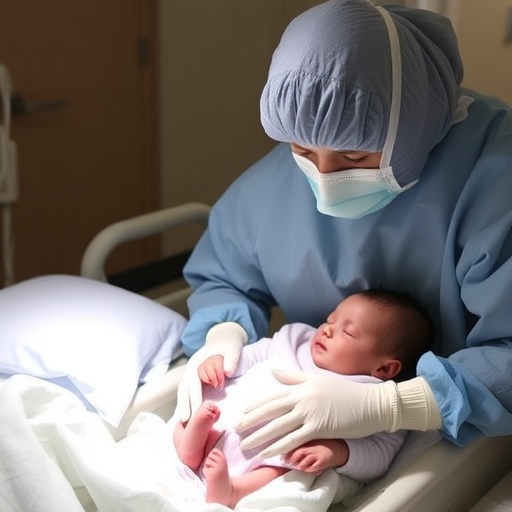
A groundbreaking clinical study from a premier single-center institution has brought forth compelling evidence that uterus transplantation can culminate in live births among women suffering from absolute uterine factor infertility (AUFI). This medical frontier opens a promising avenue for women historically denied the ability to conceive and bear children due to congenital or acquired absence of a functional uterus. The intricate procedures involved herald an integration of multidisciplinary expertise encompassing transplant surgery, reproductive medicine, and advanced maternal-fetal care.
Central to this study is the detailed orchestration of uterus transplantation in a highly specialized environment optimized for such complex medical endeavors. AUFI, a condition characterized by complete infertility due to uterine insufficiency, has traditionally been intractable, with limited options besides surrogacy or adoption. This research affirms that with meticulous surgical technique and comprehensive post-operative management, the transplanted uterus can not only sustain pregnancy but accomplish the ultimate triumph of a successful live birth.
Technically, the uterus transplant procedure entails extracting a donor uterus—either from a living or deceased individual—and implanting it into the recipient’s pelvic cavity. This surgical feat demands precision vascular anastomoses to ensure adequate perfusion and oxygenation of the graft, meticulous dissection to preserve surrounding pelvic structures, and immunological protocols to avert graft rejection. The integration of real-time patient monitoring and imaging modalities further supports graft viability during and after transplantation.
Following transplantation, recipients undergo assisted reproductive technologies (ART), primarily in vitro fertilization (IVF), to achieve pregnancy. Given the uterine milieu is restored only through the transplant, embryo implantation and gestation necessitate careful hormonal regulation and vigilant obstetrical surveillance. The multidisciplinary team’s collaboration spans immunologists, reproductive endocrinologists, transplant surgeons, and maternal-fetal specialists, underscoring the complexity and novelty of this holistic care model.
The reported outcomes from this study serve as pivotal proof-of-concept evidence reinforcing the practicality and safety of uterus transplant. Live birth, the most definitive endpoint signaling reproductive restoration, confirms the functional integration of the grafted uterus and successful embryo gestation. These findings embolden the medical community to further refine patient selection criteria, optimize immunosuppressive regimens, and develop protocols minimizing surgical complications.
Moreover, this study highlights the indispensable nature of comprehensive data sharing among specialized centers pioneering uterus transplant. Ongoing accumulation and analysis of clinical outcomes will sharpen risk stratification models, enhance informed consent discussions, and illuminate long-term graft durability and offspring health parameters. This iterative process is essential as uterus transplantation transitions from experimental intervention to a standardized therapeutic option.
Ethical considerations abound in uterus transplantation, encompassing donor safety, complex immunosuppressive exposure implications, and psychological impacts on recipients. The study underscores a paradigm requiring robust ethical frameworks and patient-centered counseling, ensuring that this advanced medical option aligns with patients’ values and societal norms about reproductive autonomy and health equity.
Technological advancements, including minimally invasive surgical approaches and novel immunomodulatory agents, are anticipated to further elevate the safety profile and accessibility of uterus transplant. Moreover, integration of AI-driven analytics for patient monitoring and outcome prediction may revolutionize postoperative management and personalized care pathways in this domain.
In epidemiological terms, uterus transplantation has the potential to alter birth rates among women afflicted by AUFI, influencing demographic patterns and expanding reproductive options in population health contexts. This intersection of surgical innovation and reproductive medicine exemplifies translational research yielding direct societal impact.
Beyond the clinical and technical triumphs, the psychosocial benefits of restoring the gestational experience to women unable to conceive historically cannot be overstated. The ability to experience pregnancy and childbirth carries profound emotional and identity dimensions, positioning uterus transplantation as not merely a medical intervention but a life-changing restoration of reproductive agency.
While promising, the field remains nascent, necessitating cautious optimism. Longitudinal studies tracking maternal health, graft longevity, and child development remain critical to comprehensively assess the technology’s full impact.Continued interdisciplinary collaboration and global knowledge exchange will be pivotal as this transformative procedure matures and expands into wider clinical practice.
In summary, this landmark study affirms that uterus transplantation can be a viable, life-affirming solution for women facing absolute uterine factor infertility. Supported by sophisticated surgical innovation, reproductive technologies, and vigilant maternal-fetal care, this therapeutic breakthrough charts a new course in reproductive medicine, holding the promise of parenthood for many previously without hope.
Cite Scienmag News
Drew Townsend. (May 1, 2026). Successful Birth Following Uterus Transplant Marks Medical Breakthrough. Scienmag. https://scienmag.com/successful-birth-following-uterus-transplant-marks-medical-breakthrough/
Drew Townsend. "Successful Birth Following Uterus Transplant Marks Medical Breakthrough." Scienmag, 1 May 2026, https://scienmag.com/successful-birth-following-uterus-transplant-marks-medical-breakthrough/. Accessed 4 September 2026.
Drew Townsend. "Successful Birth Following Uterus Transplant Marks Medical Breakthrough." Scienmag. May 1, 2026. https://scienmag.com/successful-birth-following-uterus-transplant-marks-medical-breakthrough/


