


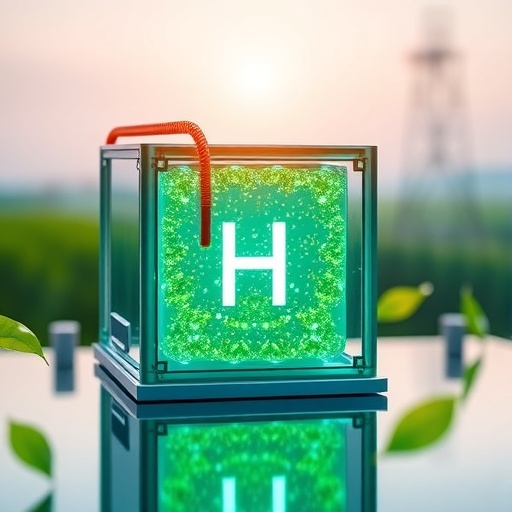
Green hydrogen has emerged as a cornerstone for the future of clean energy, promising a carbon-neutral alternative to fossil fuels. However, despite its potential, the commercial viability of green hydrogen remains constrained by substantial economic and environmental challenges. Among the most promising methods for producing green hydrogen is proton exchange membrane (PEM) electrolysis. This technology is especially adept at managing fluctuating electricity inputs from renewable sources such as wind and solar power. Nevertheless, the prohibitive costs and environmental concerns linked to PEM electrolysis, particularly the reliance on so-called “forever chemicals” like PFAS (per- and polyfluoroalkyl substances), hinder widespread adoption. The European Union is moving toward banning PFAS due to their persistence and ecological hazards, adding urgency to addressing these issues within the hydrogen production sector.
In response to these challenges, the EU-funded project SUPREME represents a vital leap forward. Coordinated by the University of Southern Denmark with key participation from Graz University of Technology (TU Graz), this international collaboration aims to innovate a next-generation electrolysis technology free from PFAS. The SUPREME initiative is distinguished not only by its commitment to eliminating harmful substances but also by its goal to drastically reduce the dependency on critical and expensive raw materials such as iridium. By achieving these improvements, the project strives to create a PEM electrolysis process that is both cost-effective and environmentally sustainable, thereby accelerating the green hydrogen economy.
A crucial aspect of SUPREME’s research involves assessing alternative, commercially available PFAS-free materials for membrane synthesis and other electrolysis components. Merit Bodner and her team at TU Graz are focused on extensive material evaluation. This includes rigorous testing to ensure that these safer and more sustainable materials can match the durability and operational efficiency of current industry standards when deployed in continuous industrial settings. This line of inquiry addresses a fundamental obstacle: the need for materials that not only minimize environmental impact but also maintain the stringent performance requirements of commercial hydrogen production.
Complementing this effort, TÜBITAK—the Scientific and Technological Research Council of Turkey—is spearheading the development of new PFAS-free microporous membranes designed for improved sustainability. These advanced membranes are intended to enhance the electrochemical processes within PEM electrolyzers, thereby offering a pathway to both higher efficiency and ecological compatibility. The coordinated research across these institutions reflects a strategic, multifaceted approach to remaking PEM electrolysis from the ground up.
Another critical dimension of the SUPREME project is the reduction and recycling of iridium, a platinum-group metal integral to current PEM electrolysis catalysts but characterized by high cost and limited availability. Researchers at the University of Southern Denmark, in collaboration with the British catalyst firm Ceimig, are pioneering ways to slash iridium usage by up to 75%, a transformation that could immensely reduce the capital expenditure of electrolyzer systems. Beyond mere reduction, they aim to establish sophisticated recycling processes that can reclaim approximately 90% of iridium in use, thus addressing raw material scarcity and improving the sustainability profile of green hydrogen production technologies.
The German Fraunhofer Institute for Solar Energy Systems (Fraunhofer ISE) contributes to SUPREME by manufacturing the membrane electrode assemblies (MEAs), which integrate catalysts with membranes to facilitate efficient electrochemical reactions. Their expert fabrication capabilities ensure that the newly developed components meet industrial quality requirements, bridging laboratory innovations with scalable production methods. Meanwhile, Norway’s Element One Energy AS is innovating in system design by developing a novel rotating electrolyser, which promises to enhance hydrogen production efficiency through improved mass transport and catalyst utilization dynamics.
SUPREME’s impact extends beyond technological advancements, as it embodies a model of European scientific collaboration backed by the Clean Energy Transition Partnership (CETPartnership) and co-funded by the European Commission. This multidisciplinary and cross-national approach not only harnesses diverse expertise but also aligns with Europe’s broader strategy for energy transition and climate resilience. By focusing on sustainability, affordability, and supply chain security, SUPREME sets the stage for green hydrogen to become a truly competitive alternative to fossil-based hydrogen.
The implications of making green hydrogen economically viable and environmentally benign are profound. Hydrogen currently serves as a fundamental feedstock for industrial sectors demanding substantial volumes, including ammonia synthesis, methanol production, and steel manufacturing. Advancements realized through SUPREME could substantially decarbonize these sectors by providing cleaner hydrogen to replace carbon-intensive alternatives. Moreover, cost reductions and material innovations could unlock new applications such as long-term energy storage, making grid stabilization via renewable energy integration more feasible during periods of surplus generation.
A particularly promising outcome of SUPREME would be the democratization of hydrogen technology. Currently, the expense and environmental concerns linked with PEM electrolysis limit accessibility, especially in emerging economies. By developing electrocatalysts and membranes that forgo PFAS and minimize critical metals, the project can help scale up production and reduce barriers for widespread global use. This democratization is crucial for achieving the Paris Agreement goals and ensuring equitable participation in the green energy transition.
While the project’s timeline extends over three years, the anticipated breakthroughs could trigger a paradigm shift in hydrogen production technology. Continuous validation of PFAS-free alternatives for durability and performance under real-world conditions will provide the empirical foundation necessary for industrial uptake. Concurrently, innovations in catalyst technology and component recycling will help secure supply chains prone to geopolitical instability, thus enhancing energy security.
In summary, the SUPREME project embodies a critical, multidimensional effort to overcome some of the most entrenched barriers in green hydrogen technology. By eliminating toxic substances, slashing the usage of rare materials, and fostering efficient recycling methods, it advances a sustainable, cost-competitive hydrogen economy. This research not only holds the promise of transforming industrial hydrogen production but also strengthens the entire renewable energy ecosystem by enabling more flexible, affordable, and sustainable clean energy storage and usage.
Keywords
green hydrogen, PEM electrolysis, SUPREME project, proton exchange membrane, PFAS-free materials, iridium reduction, catalyst recycling, renewable energy storage, green energy transition, membrane electrode assemblies, clean energy technology, sustainable hydrogen production
Cite Scienmag News
Edwin F. (February 26, 2026). Green Hydrogen Breakthrough: Sustainable Production Without Harmful Chemicals or Iridium. Scienmag. https://scienmag.com/green-hydrogen-breakthrough-sustainable-production-without-harmful-chemicals-or-iridium/
Edwin F. "Green Hydrogen Breakthrough: Sustainable Production Without Harmful Chemicals or Iridium." Scienmag, 26 February 2026, https://scienmag.com/green-hydrogen-breakthrough-sustainable-production-without-harmful-chemicals-or-iridium/. Accessed 28 August 2026.
Edwin F. "Green Hydrogen Breakthrough: Sustainable Production Without Harmful Chemicals or Iridium." Scienmag. February 26, 2026. https://scienmag.com/green-hydrogen-breakthrough-sustainable-production-without-harmful-chemicals-or-iridium/


