

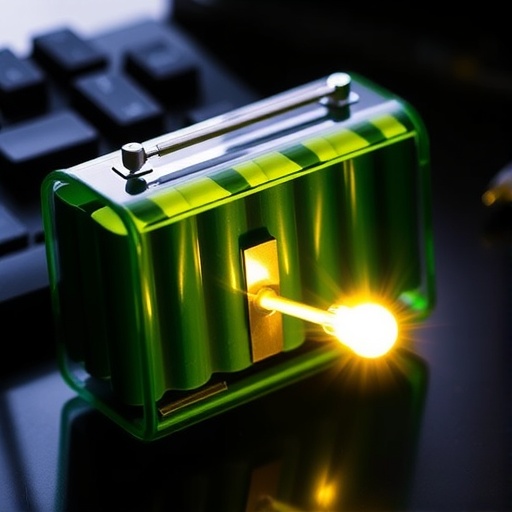
In the dawn of the 20th century, the electric vehicle reigned supreme on American roads, outnumbering gasoline-powered counterparts. Yet, despite their early promise, the limitations of battery technologies at the time impeded widespread adoption. Thomas Edison’s lead-acid batteries were costly and provided limited range, which prompted him to champion the nickel-iron battery. This technology promised significant improvements, including a range stretching to 100 miles, durability, and a recharge time that was remarkable for its era—around seven hours. However, these potentials were never fully actualized, as forces favoring internal combustion technology inevitably overshadowed early electric innovations.
Fast forward more than a century, a novel reinvention of nickel-iron battery technology is emerging from a dynamic international research collaboration spearheaded by UCLA. This modern iteration draws lessons from nature’s own construction mechanisms, harnessing biological templates to engineer subnanometric clusters of nickel and iron, embedded within ultrathin two-dimensional matrices. Remarkably, the prototype developed by this team achieves recharge times measured in seconds and endures over 12,000 charge-discharge cycles—equivalent to more than three decades of daily use. Such longevity and rapid recharge represent a paradigm shift in energy storage technology.
The breakthrough rests on mimicking the natural processes used by animals to build robust yet flexible structures such as bones or exoskeletons. Proteins act as morphogenetic scaffolds in nature, precisely guiding the deposition of calcium-based minerals to form complex architectures. Researchers emulated this principle by employing proteins sourced as byproducts of beef production to serve as templates for metallic nanoclusters. These proteins’ folded structures impose strict size constraints, limiting the metal clusters—comprising nickel for the cathode and iron for the anode—to less than five nanometers in diameter. The scale is astonishing; around 10,000 to 20,000 such clusters fit within the width of a single human hair.
The proteins adorn and intertwine with sheets of graphene oxide, a two-dimensional carbon allotrope a mere atom thick, decorated with oxygen-containing functional groups. While oxygen atoms generally impede conductivity by acting as electron insulators, a controlled high-temperature treatment alters this landscape. Heating in aqueous environments followed by baking converts the organic proteins into a carbonaceous matrix, simultaneously reducing oxygen content in the graphene oxide. The result is a graphene aerogel, a porous scaffold with an astounding 99% air by volume, which houses and stabilizes the tiny metallic clusters. This aerogel provides enormous surface area while maintaining excellent electrical conductivity.
Surface area emerges as a vital asset in this design, capitalizing on fundamental nano-scale physics: as particle sizes diminish, the ratio of surface atoms relative to the volume escalates dramatically. This geometric phenomenon means that these ultrafine clusters expose more reactive sites, allowing nearly every atom to participate in the electrochemical reactions essential for battery functionality. This high reactive surface density leads to rapid charge and discharge dynamics and enhances the battery’s overall energy throughput and efficiency.
Despite these compelling merits, the current iteration of this nickel-iron system does not rival the energy density offered by contemporary lithium-ion batteries. Nevertheless, its strengths in rapid recharge rates and outstanding cycle life delineate a distinct niche. Notably, the system is well suited for grid-scale energy storage, capable of absorbing surplus electricity from intermittent renewable sources such as solar farms during daylight, then releasing that energy efficiently after sunset. Its robust endurance also positions it as an ideal backup solution for critical infrastructure like data centers, which require uncompromising power reliability.
The simplicity of the fabrication approach holds promise for scalable and cost-effective manufacturing. Contrary to assumptions about complex nanotechnologies, the method utilizes readily available raw materials and straightforward procedures such as gentle heating and template-driven metal deposition. This accessibility could reduce the technological barriers often associated with high-performance batteries, enabling widespread practical adoption.
The research team is not resting on these laurels but actively exploring extensions to their technique. Potential avenues include fabricating nanoclusters with alternative metals that may offer enhanced electrochemical properties. Parallel investigations seek more abundant and sustainable protein templates beyond bovine-derived molecules, possibly leveraging naturally occurring polymers which could further lower costs and simplify production at industrial scales.
This study was published in the journal Small and was distinguished by its feature on the publication’s back cover. The research unites a broad international consortium, with contributors spanning institutions in Iran, Egypt, China, Belgium, and the United States, reflecting a truly global effort to revitalize nickel-iron battery technology through bioinspired design.
By innovating at the intersection of biology, chemistry, and materials science, this work rekindles Edison’s vision with 21st-century tools and understanding. It manifests how lessons from nature’s engineering—marrying proteins and nanomaterials—can spearhead technologies critical for the sustainable energy futures of tomorrow. As global energy systems pivot towards renewables and decarbonization, such durable, fast-recharging, and environmentally friendly batteries are poised to play transformative roles far beyond traditional transportation, into grid-wide storage and beyond.
Subject of Research: Advanced nickel-iron battery technology utilizing protein-templated metal nanoclusters for energy storage applications.
Article Title: Protein-Templated Fe and Ni Subnanoclusters for Advanced Energy Storage and Electrocatalysis
News Publication Date: 30-Aug-2025
Web References:
https://onlinelibrary.wiley.com/doi/abs/10.1002/smll.202507934
Image Credits: Maher El-Kady/UCLA
Keywords
Renewable energy, Electrodes, Batteries


