


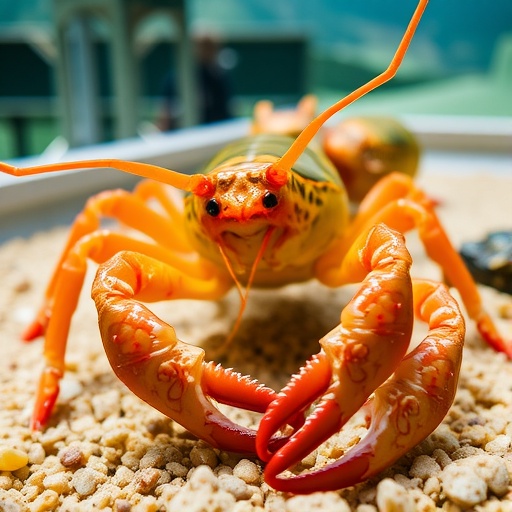
In a groundbreaking study published recently in Nature Communications, Liu, Waters, Huang, and their colleagues have unveiled the extraordinary genomic adaptations of rafting crustaceans that enable survival amid rapidly changing tropical ocean climates. These diminutive yet resilient organisms, often overlooked in marine ecosystems, have demonstrated a remarkable ability to adjust at the molecular level to withstand environmental extremes brought on by climate change. By harnessing cutting-edge genomic technologies, the team has illuminated the complex evolutionary pathways that empower these crustaceans to not only survive but thrive where many species struggle.
Tropical oceans are facing unprecedented transformations due to rising temperatures, altered salinity patterns, and increased frequency of severe weather events. Such changes pose severe threats to marine biodiversity, affecting food webs and ecosystem services. Rafting crustaceans, which drift on floating debris across vast ocean expanses, encounter a constantly shifting array of environmental stressors. Understanding how these organisms can persist in such conditions offers critical insights into resilience mechanisms within marine ecosystems and may inform broader ecological models and conservation strategies.
The researchers focused on several species of crustaceans that inhabit floating materials such as pumice and vegetation mats, traveling long distances across the tropical oceans. The promiscuity of their habitats exposes them to highly variable temperature, UV radiation dosage, and salinity fluctuations compared to benthic or reef-associated species. By sequencing whole genomes and analyzing gene expression patterns under simulated climate stress conditions, the team sought to identify genetic elements underpinning their adaptability.
One of the most striking findings was the identification of enhanced genomic regions related to DNA repair and antioxidant defenses. The crustaceans exhibited elevated copy numbers of genes encoding for enzymes that protect against oxidative damage and DNA mutations, which are critical under high UV and heat stress scenarios. This genomic fortification likely acts as a molecular shield that preserves cellular integrity during prolonged exposure to harsh tropical sun and temperature spikes.
Furthermore, genes involved in osmoregulation showed significant positive selection signals, reflecting adaptations to cope with rapid changes in salinity often experienced on the floating rafts. Given that these crustaceans frequently traverse from freshwater river mouths to open salty sea environments, fine-tuning ion transport and cellular water balance is imperative for survival. This highlights the intricate genetic strategies enabling physiological plasticity, allowing these crustaceans to maintain homeostasis despite external volatility.
The study also uncovered shifts in metabolic gene networks favoring enhanced energy efficiency and stress tolerance. Upregulation of pathways related to lipid metabolism and mitochondrial function suggested an adaptive response aimed at optimizing energy use during stressful episodes. Such metabolic remodeling could sustain vital cellular processes without incurring excessive oxidative stress, thereby prolonging survival on nutrient-poor rafts.
Beyond individual gene analyses, the team employed comparative genomics to trace evolutionary histories of these crustaceans, revealing multiple gene duplication events and accelerated evolution in stress-related gene families. These genomic patterns indicate that climate-driven selection pressures over recent millennia have sculpted their genomes, equipping them with a robust genetic toolkit to face future climate scenarios.
The researchers also examined epigenetic modifications and discovered dynamic methylation changes associated with temperature and salinity stress. These reversible chemical tags on DNA can modulate gene expression without altering the underlying sequence, providing an additional layer of phenotypic plasticity. Such epigenetic flexibility may allow rapid acclimation to fluctuating environments, a critical advantage in the face of rapid climatic shifts.
Intriguingly, the study highlights the importance of microbiome interactions in crustacean adaptation. Microbial communities residing on the crustaceans’ exoskeleton and within their guts include bacteria capable of degrading pollutants and synthesizing essential nutrients. Genomic evidence points to co-evolution between the crustaceans and their microbiota, which may bolster host resilience by detoxifying harmful substances and enhancing nutritional uptake under stress.
The implications of this research extend far beyond crustacean biology. By elucidating molecular mechanisms of climate adaptation, the findings contribute valuable knowledge to the field of evolutionary ecology, emphasizing the role of genomic plasticity and symbiotic relationships in shaping organismal responses to global change. Furthermore, these insights may aid the development of biomimetic technologies and conservation policies aimed at enhancing ecosystem resilience.
From a methodological standpoint, this study exemplifies the power of integrative genomics, combining high-throughput sequencing, transcriptomics, and epigenomics to fully capture the multilayered nature of adaptation. Such comprehensive approaches are crucial to dissect the complexity of natural responses to environmental perturbations, paving the way for predictive models of biodiversity dynamics under climate change.
In conclusion, the discovery of sophisticated genomic strategies employed by rafting crustaceans to navigate climate-induced stresses underscores the dynamic interplay between genetic architecture and environmental pressures. These tiny oceanic voyagers demonstrate that evolutionary innovation continues to be a critical survival asset, even in the most challenging habitats. As tropical oceans face escalating climate threats, understanding and preserving these adaptive mechanisms will be essential for safeguarding marine biodiversity and ecosystem functionality.
This pioneering research not only enriches our comprehension of marine adaptation but also inspires new avenues of inquiry into how genomes can be harnessed to forecast and mitigate the impacts of climate change. The knowledge gleaned from these resilient crustaceans symbolizes a beacon of hope, revealing nature’s ingenious capacity for persistence and renewal in an era of global uncertainty.
Cite Scienmag News
Gavin Prescott. (February 6, 2026). Rafting Crustaceans’ Genomes Reveal Climate Adaptation. Scienmag. https://scienmag.com/rafting-crustaceans-genomes-reveal-climate-adaptation/
Gavin Prescott. "Rafting Crustaceans’ Genomes Reveal Climate Adaptation." Scienmag, 6 February 2026, https://scienmag.com/rafting-crustaceans-genomes-reveal-climate-adaptation/. Accessed 3 September 2026.
Gavin Prescott. "Rafting Crustaceans’ Genomes Reveal Climate Adaptation." Scienmag. February 6, 2026. https://scienmag.com/rafting-crustaceans-genomes-reveal-climate-adaptation/


