


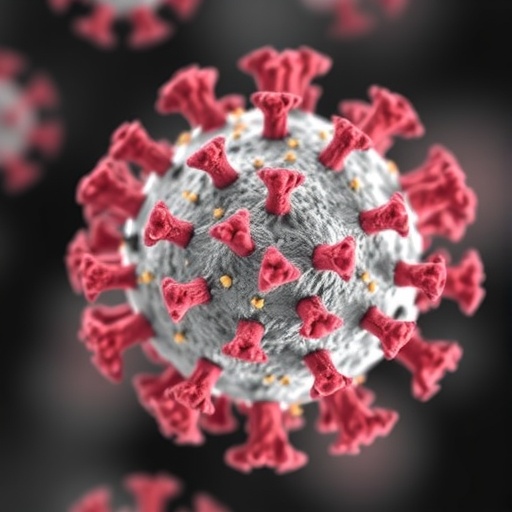
In a groundbreaking advancement in the global fight against coronaviruses, a team of researchers has unveiled a highly promising vaccine candidate targeting Middle East Respiratory Syndrome coronavirus (MERS-CoV). The vaccine employs a novel design strategy by stabilizing the MERS-CoV spike protein and presenting it on a ferritin nanoparticle scaffold, resulting in a potent immunogen capable of eliciting robust and protective neutralizing antibody responses. This innovative approach not only enhances the vaccine’s stability but also its ability to provoke a strong and durable immune defense, marking a significant leap forward in coronavirus vaccine technology.
MERS-CoV, a zoonotic virus originating from camels and transmitted to humans, has posed a persistent threat since its identification in 2012. Despite causing severe respiratory illness with high fatality rates, vaccine development efforts have lagged, partly due to the virus’s sporadic outbreak nature and complex immune evasion mechanisms. The spike (S) glycoprotein is the principal viral surface protein responsible for host cell entry and is the prime target for neutralizing antibodies. However, the spike’s inherent instability and propensity to adopt multiple conformations have historically posed challenges in creating efficacious vaccines that reliably mimic the native viral structure.
The study, conducted by Powell, Caruso, Park, and their colleagues, tactically addresses these hurdles by engineering a stabilized form of the MERS-CoV spike protein. Using structure-guided design, they modified the spike protein to lock it into a prefusion conformation, which is the form expressed on the live virus surface prior to fusion with host cells. Achieving this stabilized prefusion state is critical because it preserves neutralizing epitopes—regions that antibodies recognize and bind to effectively. By stabilizing the spike, the antigen presented to the immune system more closely mirrors the infectious virus, thereby eliciting a more relevant and potent antibody response.
Beyond stabilization, the researchers innovatively conjugated these spike trimers to a ferritin nanoparticle, a spherical protein complex naturally found in many organisms. Ferritin’s self-assembling architecture provides an ideal multivalent platform for dense and repetitive antigen display. The multivalent presentation is hypothesized to significantly amplify immune recognition by cross-linking B-cell receptors, boosting the magnitude and breadth of the antibody response. This nanoparticle scaffold effectively mimics the spatial orientation and array of viral spikes as they appear on the virus surface, a factor known to enhance immunogenicity dramatically.
Preclinical evaluations in animal models demonstrated that immunization with this stabilized spike-ferritin nanoparticle vaccine prompted exceptionally high titers of neutralizing antibodies. These antibodies were not only potent in neutralizing the canonical MERS-CoV strains but also exhibited cross-neutralizing activity against diverse MERS-CoV variants, underscoring the vaccine’s potential to provide broad protection. Remarkably, vaccinated subjects were protected from severe lung pathology and viral replication upon challenge with live virus, highlighting the functional efficacy of the elicited immune response.
One of the key merits of this vaccine candidate lies in its stability and manufacturability. The ferritin nanoparticle scaffold enhances the thermal stability of the spike antigen, addressing common logistical challenges associated with vaccine storage and distribution, particularly in resource-limited settings. Additionally, the protein-based nature of the vaccine circumvents some of the limitations encountered by nucleic acid or viral vector platforms, including complex cold chain requirements and potential vector immunity.
The researchers conducted detailed immunological investigations to profile the quality of the antibody responses. Analysis revealed that the vaccine induced a diverse and polyclonal antibody repertoire targeting multiple neutralizing epitopes on the spike protein. Such diversity is crucial to counteract viral escape mutants and ensures a durable immune shield. Furthermore, T-cell responses, which are vital for long-term immunological memory and viral clearance, were detected at significant levels post-vaccination, suggesting a comprehensive activation of adaptive immunity.
The application of ferritin nanoparticles as a vaccine platform transcends MERS-CoV alone. This study establishes a versatile framework that could be extended to other coronaviruses, including SARS-CoV-2, and potentially new emerging variants. The modular nature of ferritin scaffolds allows rapid antigen insertion and scalable manufacturing, which positions this technology as a front-runner for next-generation pan-coronavirus vaccines and rapid outbreak response tools.
Structurally, the team leveraged advanced cryo-electron microscopy to resolve the conformation of the spike-ferritin nanoparticle complex at atomic resolution. These structural insights validated the successful stabilization and ordered display of the prefusion spike trimers on the nanoparticle surface. This high-fidelity presentation likely accounts for the enhanced immunogenicity observed in vivo, reinforcing the critical role of antigen structure in vaccine design.
The development of this vaccine candidate arrives amid a landscape where coronaviruses continue to threaten global health security. While SARS-CoV-2 has dominated recent headlines, MERS-CoV remains a lethal virus with pandemic potential, particularly given its high mortality rate. This research underscores the importance of proactive vaccine development targeting diverse coronavirus threats, aiming to establish immunological barriers before widespread outbreaks occur.
Moreover, the study highlights the benefits of structure-based antigen design and nanoparticle technology in vaccine innovation. By marrying these approaches, the researchers have fashioned an immunogen that is not only biochemically and structurally optimized but also functionally superior in provoking immunity. This convergence of structural biology, protein engineering, and immunology represents a paradigm shift in rational vaccine design methodologies.
Future clinical translation will require thorough evaluation of safety, dosing regimens, and long-term immunity in humans. However, the compelling preclinical data establish a solid foundation warranting accelerated development and trials. In light of the continuing threat posed by MERS-CoV and related betacoronaviruses, this ferritin nanoparticle vaccine candidate represents a beacon of hope for effective prevention.
Vaccine technology evolution continues to show that by understanding viral architecture and immune mechanics at a granular level, scientists can outpace viral evolution. The success of this stabilized MERS-CoV spike ferritin nanoparticle vaccine exemplifies the transformative power of targeted molecular design combined with innovative antigen display platforms.
Ultimately, this advancement fuels optimism for future pandemic preparedness. As viruses evolve and new zoonotic threats emerge, harnessing sophisticated vaccine platforms capable of eliciting broad, robust, and durable immunity will be critical. The highly immunogenic ferritin nanoparticle vaccine described here not only fortifies the scientific arsenal against MERS-CoV but also sets a new benchmark for coronavirus vaccine development globally.
Cite Scienmag News
Kristina Jarvis. (February 6, 2026). Stabilized MERS-CoV Spike Nanoparticle Vaccine Shows Promise. Scienmag. https://scienmag.com/stabilized-mers-cov-spike-nanoparticle-vaccine-shows-promise/
Kristina Jarvis. "Stabilized MERS-CoV Spike Nanoparticle Vaccine Shows Promise." Scienmag, 6 February 2026, https://scienmag.com/stabilized-mers-cov-spike-nanoparticle-vaccine-shows-promise/. Accessed 4 September 2026.
Kristina Jarvis. "Stabilized MERS-CoV Spike Nanoparticle Vaccine Shows Promise." Scienmag. February 6, 2026. https://scienmag.com/stabilized-mers-cov-spike-nanoparticle-vaccine-shows-promise/


