


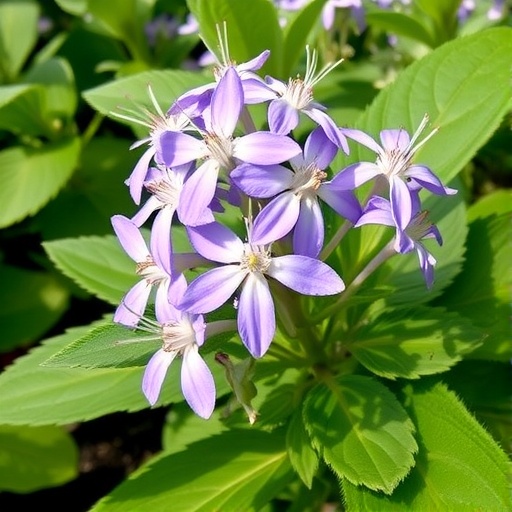
In a striking advancement for the field of botany and pharmacognosy, researchers have unveiled the complete plastome of Strobilanthes cusia, a plant renowned not only for its medicinal properties but also for its historical use as a dye source. This significant new research opens a window into the genetic diversity and cultivation methods tied to this vital species, challenging prior assumptions and shedding light on the evolutionary trajectory of Strobilanthes cusia. An understanding of the genetic makeup lays the groundwork for enhancing production techniques and conserving this invaluable resource.
Plastomes, the DNA containing organelles found in plants, serve as a treasure trove of information regarding genetic diversity and species evolution. In the case of Strobilanthes cusia, the researchers undertook the ambitious endeavor of sequencing the entire plastome, aiming to decipher the complexities harbored within its genome. By assembling this genetic puzzle, they aimed to contribute not only to the scientific community’s understanding of this species but also to inspire further applications in agricultural and medicinal practices.
By employing advanced sequencing technologies coupled with bioinformatics analyses, the research team successfully reconstructed the plastome of Strobilanthes cusia. What became evident through their analysis was the remarkable genetic resilience and diversity contained within the plastome, which holds critical implications for breeding programs. The presence of various genetic markers suggests that the plant has adapted and survived across diverse ecological niches and cultivation practices.
Furthermore, the research clearly illustrates the plant’s potential to serve as a sustainable source for natural dyes and medicinal compounds. With a growing global trend towards sustainability, the implications of cultivating Strobilanthes cusia extend beyond traditional practices. The findings may inspire innovative cultivation techniques that could enhance yields while preserving the natural integrity of the plant. By fully understanding its genetic makeup, cultivators could select for desirable traits, enhancing both the dye yield and medicinal efficacy.
The historic significance of Strobilanthes cusia cannot be overstated; often referred to as the “traditional blue dye,” this plant has been integral to various cultures that rely on natural resources for dye extraction. As this research elucidates the genetic framework guiding the development of this plant, it may also contribute revitalization efforts aimed at traditional sustainable practices threatened by industrialization and modern methods.
One striking feature of the research findings was the discovery of unique genomic adaptations that likely responded to numerous environmental factors over millennia. These adaptations exemplify how Strobilanthes cusia has navigated its survival against the backdrop of changing habitats, climate variations, and anthropogenic pressures. Such resilience suggests a promising avenue for future research focused on climate change adaptability among medicinal plants.
Moreover, the consortium of researchers delineates a path for further studies aimed at elucidating the phylogenetic relationships among related species within the Strobilanthes genus. Understanding these relationships is essential not just for taxonomy but for breeding programs aiming to develop improved strains that harness the benefits of enhanced genetic diversity while retaining desirable traits.
This significant research, while academic in its delivery, holds practical applications that could resonate with a broader audience, particularly in the realms of medicinal plant conservation and sustainable agriculture. The emphasis on genetic mapping could inspire a revival of interest in Strobilanthes cusia, potentially leading to greater cultivation of the plant in regions historically linked to its use, thus reinvigorating local economies.
As discussions around biodiversity and conservation become increasingly vital, findings such as these serve as a reminder of the interconnectedness of human cultural practices and biodiversity. Celebrating the natural world through sustainable practices supports not only the plant’s survival but also enriches the cultural heritage tied to its historical uses. Such an approach encourages a shift in how society views natural resources, fostering respect for both the environment and the cultural narratives woven through our agricultural practices.
Finally, as we forge ahead, it is paramount that scientists, farmers, and policymakers work collaboratively to promote the sustainable cultivation of Strobilanthes cusia. The research underscores the importance of genetic diversity not just as a scientific curiosity but as a cornerstone of agricultural resilience. By prioritizing the conservation of this notable species, we are not merely saving a plant; we are preserving the threads of cultural identity and ecological knowledge that span generations.
The full impact of discovering the pan-plastome of Strobilanthes cusia is yet to unfold; however, it stands as a beacon of hope for those engaged in the intricate relationship between biodiversity and human civilization. Therein lies the promise of smarter cultivation strategies, greater economic viability for growers, and a more sustainable approach to our natural resources, indicating a hopeful future that honors the lessons of the past while embracing the innovations of tomorrow.
Lin, Z., Chen, Y., Xu, F. et al. The pan-plastome of Strobilanthes cusia provided new information about the genetic diversity and cultivation history of an important medicinal and natural dye plant.
BMC Genomics (2026). https://doi.org/10.1186/s12864-026-12543-y
Cite Scienmag News
Juliet Wilcox. (January 16, 2026). New Genetic Insights into Strobilanthes cusia Cultivation. Scienmag. https://scienmag.com/new-genetic-insights-into-strobilanthes-cusia-cultivation/
Juliet Wilcox. "New Genetic Insights into Strobilanthes cusia Cultivation." Scienmag, 16 January 2026, https://scienmag.com/new-genetic-insights-into-strobilanthes-cusia-cultivation/. Accessed 3 September 2026.
Juliet Wilcox. "New Genetic Insights into Strobilanthes cusia Cultivation." Scienmag. January 16, 2026. https://scienmag.com/new-genetic-insights-into-strobilanthes-cusia-cultivation/


