


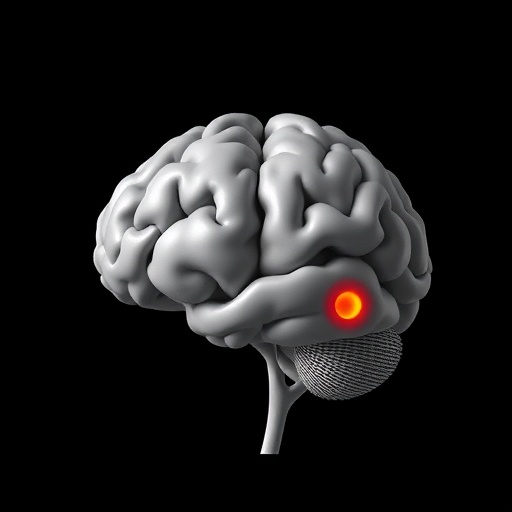
In the realm of cognitive neuroscience, the intricate processes by which the human brain perceives and interacts with objects are a subject of intense investigation. A groundbreaking study led by Valério, Peres, and Almeida, published in 2026 in Communications Psychology, has illuminated the nuanced neural and behavioral mechanisms that underlie the processing of manipulable objects. This research demarcates the distinct pathways and representations linked to the visual, functional, and manipulation attributes of objects, offering revolutionary insights into how our minds integrate sensory input, knowledge, and motor planning during object interaction.
At the core of this study lies the challenge of disentangling how the brain comprehends various properties of manipulable objects, those items we can grasp and use in daily life—ranging from tools like hammers to simple household utensils. Previous studies predominantly explored the visual and functional aspects, typically examining how objects are recognized by shape or by their intended purpose. However, the current investigation pushes the envelope by rigorously distinguishing how the brain encodes manipulation properties—the motor actions pertinent to using an object—from the visual form and its functional significance.
Using a multifaceted experimental design, the researchers employed functional magnetic resonance imaging (fMRI) alongside detailed behavioral tasks to map out the cerebral regions specialized in processing these object attributes. Participants were exposed to images of various everyday objects while being asked to perform tasks that required them to focus selectively on the object’s appearance, intended function, or how it might be manipulated. This task-specific engagement allowed the team to isolate neural activation patterns correlating to each property distinctly.
The imaging results revealed that the ventral visual stream, historically associated with object identification and visual processing, exhibited activation patterns predominantly linked to the objects’ visual features. This corroborates the classical understanding of the ventral stream as the “what” pathway, encoding object form and identity. Conversely, the dorsal stream—often regarded as the “how” or “where” pathway—showed heightened activity when participants contemplated functional or manipulation attributes, reflecting its crucial role in guiding actions and spatial processing.
Intriguingly, the study uncovered that functional properties and manipulation properties of objects engage neural circuits that, while overlapping, are neuroanatomically and functionally separable. Functional properties—such as knowing that a knife is used for cutting—elicited activations primarily in medial temporal and lateral temporal regions, areas implicated in semantic memory and conceptual knowledge. In comparison, manipulation properties, which involve motor planning and execution details like the specific hand movements required to use the knife, activated premotor and parietal regions intimately linked to action planning and sensorimotor integration.
Behavioral data further complemented the neuroimaging findings, highlighting distinctive response patterns when participants made decisions based on these different properties. Reaction times and accuracy revealed that tasks centered on manipulation properties demanded more complex cognitive processing, likely because these assessments require integrating perceptual information with motor schemas. This behavioral complexity aligns with the neuroanatomical evidence of dorsal stream involvement, underscoring the multifaceted nature of manipulable object cognition.
One of the most striking revelations from this study is that the brain does not treat manipulable object properties as a monolithic concept but processes each attribute via specialized, parallel pathways. This finding challenges prior models that posited a more unified representation of object knowledge and offers a refined framework in which visual form, conceptual function, and actionable manipulation are distinct yet interrelated constructs.
The implications of these results are profound, extending beyond basic science into applied domains such as neurorehabilitation and artificial intelligence. For instance, understanding the segregated neural underpinnings of manipulation properties can inform the development of targeted therapies for patients with apraxia—who suffer from deficits in object use despite intact motor and sensory functions. Tailoring rehabilitative approaches to address specific neural circuits associated with manipulation may enhance recovery outcomes.
Moreover, this research sets the stage for improving the design of brain-computer interfaces (BCIs) and robotic systems by incorporating differentiated object representation schemas. Machines endowed with the ability to replicate human-like distinctions in processing object properties could achieve more fluid and accurate interactions with their environments, advancing the field of embodied artificial intelligence.
The study also sparks intriguing questions about the developmental trajectory of these distinct neural systems. Future research can investigate how infants and children acquire and differentiate the visual, functional, and manipulation knowledge of objects, and how experience and learning modulate the underlying circuitry. Such developmental insights could reveal the extent to which these pathways are innate versus shaped by environmental interactions.
Additionally, cross-cultural investigations could unravel how variation in tool use and object familiarity influences the neural organization of manipulable object processing. As societies differ in the tools and technologies they prioritize, the representational emphasis on visual, functional, or manipulation properties may differ, reflecting a dynamic interplay between culture and neurobiology.
Technologically, the methodological approach of combining high-resolution fMRI with behaviorally-defined task paradigms exemplifies the cutting edge of cognitive neuroscience research. The precise mapping and dissociation of object property processing underscore the importance of multifaceted experimental designs to unravel the complexities of brain function.
In essence, Valério, Peres, and Almeida’s work not only deepens our comprehension of how the brain represents objects but also highlights the elegant architecture that allows humans to seamlessly interact with the physical world. Their research illuminates that cognitive processing of everyday items is intricately layered, supporting both perception and purposeful action through specialized and interconnected neural substrates.
As we continue to decode the brain’s language of objects, such studies pave the way for enhancing artificial cognition, refining neuropsychological interventions, and fostering a richer understanding of the embodied mind. The intricate dance between seeing, understanding, and manipulating objects underscores our capacity not just to perceive reality but to actively shape it through skillful interaction.
This landmark study stands as a testament to the sophisticated neural choreography that underpins what often seems like simple, routine behavior—using an object. By peeling back the layers of object representation, the researchers have advanced our understanding of the neural and behavioral tapestry that enables humans to transform objects from mere shapes into meaningful tools of function and action.
Cite Scienmag News
Cassandra Pierce. (January 14, 2026). Distinct Brain Responses to Visual and Functional Object Traits. Scienmag. https://scienmag.com/distinct-brain-responses-to-visual-and-functional-object-traits/
Cassandra Pierce. "Distinct Brain Responses to Visual and Functional Object Traits." Scienmag, 14 January 2026, https://scienmag.com/distinct-brain-responses-to-visual-and-functional-object-traits/. Accessed 31 August 2026.
Cassandra Pierce. "Distinct Brain Responses to Visual and Functional Object Traits." Scienmag. January 14, 2026. https://scienmag.com/distinct-brain-responses-to-visual-and-functional-object-traits/


