


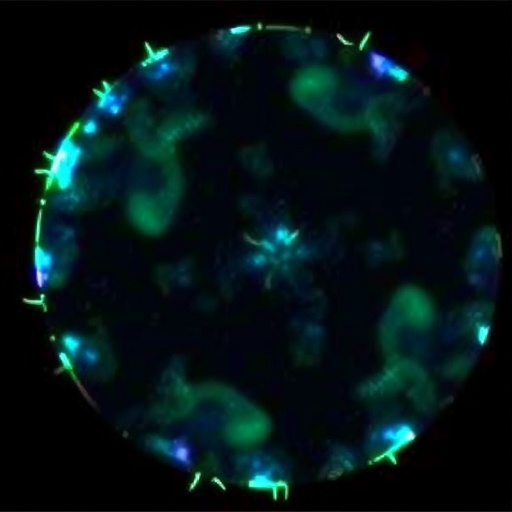
In a groundbreaking study set to redefine the diagnostics of parasitic infections in livestock, researchers Yavuz, İ., Karakavuk, M., Kandemir, Ç., and their team have unveiled a novel enzyme-linked immunosorbent assay (ELISA) that exploits a GRA6-derived peptide from Toxoplasma gondii as the antigenic substrate. Published in the renowned journal Acta Parasitologica in 2026, this innovation offers a highly sensitive and specific method for detecting ovine toxoplasmosis, a disease that imposes significant economic and health burdens on the global sheep industry.
Ovine toxoplasmosis, caused by the intracellular protozoan parasite Toxoplasma gondii, often remains underdiagnosed due to limitations in existing serological diagnostic tools. These traditional methods typically suffer from inadequate sensitivity or cross-reactivity, which hinders early detection and management. The current study addresses these diagnostic hurdles by focusing on a peptide derived from GRA6, a dense granule protein specialized in the parasite’s intracellular survival and host immune modulation.
Dense granule proteins like GRA6 are known to be secreted into the parasitophorous vacuole and are pivotal for the establishment of chronic infection. The researchers tapped into the immunogenic potential of a specific GRA6-derived peptide sequence, hypothesizing that it could serve as an ideal antigenic target for antibody detection in infected sheep. This molecular strategy exploits the host’s antibody response, which is tailored against parasite proteins released during infection, ensuring heightened specificity.
The method designed is an ELISA format, a staple in diagnostic immunology, which quantifies antigen-antibody interactions via enzymatic colorimetric reactions. By immobilizing the synthesized GRA6 peptide onto ELISA plates, the assay reliably captured specific anti-T. gondii antibodies from ovine serum samples. The assay’s parameters were meticulously optimized to achieve maximum binding efficiency and to minimize nonspecific background noise, critical factors for clinical applicability.
Rigorous validation of this innovative ELISA involved testing on a substantial cohort of ovine sera, comprising both experimentally infected and naturally exposed animals. The new assay’s performance metrics surpassed many existing assays, demonstrating remarkable sensitivity—detecting low-level infections—and specificity by effectively discriminating T. gondii antibodies from those elicited by other parasitic infections common in sheep.
The implications of this enhanced diagnostic tool extend beyond mere infection detection. Accurate serodiagnosis is integral to epidemiological surveillance, informing vaccination campaigns, and guiding the implementation of biosecurity measures to prevent parasite transmission. Notably, identification of infected sheep herds at early stages can drastically reduce the risk of fetal death and reproductive failures attributed to toxoplasmosis, thereby bolstering animal welfare and economic resilience.
Moreover, this peptide-based ELISA advances the field toward more standardized diagnostic approaches. Unlike whole-cell lysate antigens, peptide antigens are reproducible, chemically defined, and free from confounding proteins that often cause cross-reactivity. This attribute eases quality control and manufacturing scalability, critical for widespread diagnostic deployment in veterinary practice.
The study also underscored the potential for this assay format to be adapted for multiple hosts, as T. gondii infects a broad spectrum of warm-blooded animals including humans. Given the zoonotic risks associated with toxoplasmosis, improved diagnostic technologies in livestock resonate with public health imperatives — particularly as sheep products are part of human diets globally.
Interestingly, this research draws attention to the intricate host-pathogen interplay during T. gondii infection. The chosen GRA6 peptide represents a fraction of the parasite’s secretome, yet its immunogenicity reveals the host’s targeted immune response. Such discoveries enhance the understanding of parasitic biology and immune evasion tactics, potentially guiding future vaccine design aimed at protective immunity against toxoplasmosis.
The technological innovation detailed in this work also highlights the growing trend of precision diagnostics in veterinary parasitology. By leveraging molecular parasite components, diagnostics can now transcend conventional serology, venturing into highly specific and quantifiable assays that promise improved disease control at the herd and regional levels.
Furthermore, the successful demonstration by Yavuz and colleagues sets a precedent for designing peptide-based ELISAs for other protozoan infections in livestock. Their approach could inspire diagnostic breakthroughs across diseases that challenge global food security, such as neosporosis and babesiosis, fostering better animal health monitoring infrastructures.
In conclusion, the team’s pioneering ELISA harnesses the immunological signature of T. gondii GRA6-derived peptides to reliably detect ovine toxoplasmosis, combining scientific ingenuity with practical impact. This assay exemplifies the power of targeted molecular diagnostics to revolutionize parasitic disease management strategies, with anticipated benefits spanning farm productivity, animal welfare, and zoonotic disease prevention worldwide.
Cite Scienmag News
William Thompson. (January 13, 2026). ELISA with T. gondii Peptide Detects Sheep Toxoplasmosis. Scienmag. https://scienmag.com/elisa-with-t-gondii-peptide-detects-sheep-toxoplasmosis/
William Thompson. "ELISA with T. gondii Peptide Detects Sheep Toxoplasmosis." Scienmag, 13 January 2026, https://scienmag.com/elisa-with-t-gondii-peptide-detects-sheep-toxoplasmosis/. Accessed 5 September 2026.
William Thompson. "ELISA with T. gondii Peptide Detects Sheep Toxoplasmosis." Scienmag. January 13, 2026. https://scienmag.com/elisa-with-t-gondii-peptide-detects-sheep-toxoplasmosis/


