


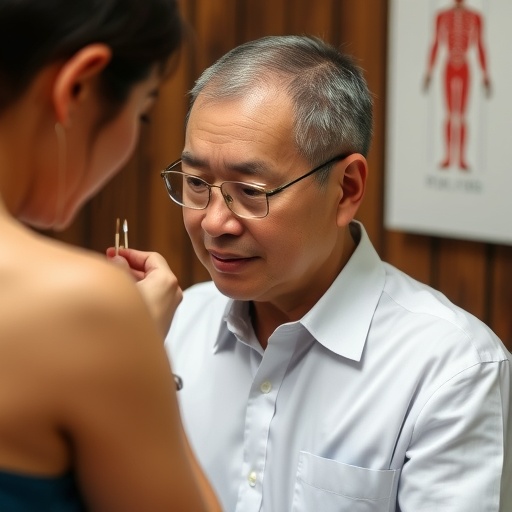
Acupuncture has long been heralded in traditional healing practices, especially within the Asian context, yet its application and effectiveness, particularly in Western paradigms, remain subjects of intense scrutiny. Recent empirical research on the real-world application of acupuncture underlines its potential benefits, specifically for inpatients suffering from ischemic stroke. A recent study conducted in Southern Taiwan, led by authors Zheng, Wang, and Yin, embarks on exploring the tangible impacts of acupuncture on stroke recovery, fostering a critical dialogue around the integration of traditional practices within modern medicine.
In the context of stroke management, the urgency is profound. Ischemic strokes occur when the blood supply to the brain is obstructed, often leading to significant neurological impairments and mortality risks. Conventional treatments primarily involve pharmacological interventions aiming at restoring blood flow, yet there is a growing recognition of complementary therapies, such as acupuncture, that could bolster rehabilitation outcomes. This study in Southern Taiwan adds valuable data to the mosaic of medical literature, drawing attention to an integrative approach to healing.
The research captures a diverse population of inpatients, providing them with acupuncture therapy as part of their treatment regimen. By critically analyzing the results, the study paves the way for understanding not only the efficacy of acupuncture but also its role as an adjunctive treatment. Patients receive acupuncture in tandem with standard therapeutic interventions, thus allowing researchers to assess improvements in functional independence and quality of life. This synergy is essential in the plausible expansion of acupuncture’s role within stroke rehabilitation programs.
What distinguishes this research is its grounding in real-world data. Real-world evidence is vital for understanding the practical implications of treatments outside controlled clinical environments. The study engaged numerous participants, enabling a broad spectrum of demographic backgrounds and varying severities of stroke. This diversity enhances the robustness of the findings, offering insights that could elevate the standards of care across various healthcare settings, particularly in underserved regions.
Moreover, the methodology utilized in the study juxtaposes qualitative assessments of patient experiences with quantitative measurements of clinical outcomes. This dual approach delivers a comprehensive picture of acupuncture’s impacts. Observing how patients subjectively describe their recovery journeys—marked by improvements in mobility, pain reduction, and emotional wellbeing—provides an enriching narrative that complements numerical data. Researchers meticulously document these experiences, weaving together a poignant story of recovery.
As patients receive acupuncture, the qualitative aspects reveal transformative narratives often untold in clinical trials. Many participants reported feeling empowered and more in control of their recovery, stemming from the active role they played in their treatment process. This aspect, integral to healing, often goes unnoticed yet is crucial in fostering a sense of agency among patients. The acknowledgment of such psychological benefits is paramount in modern therapeutics, where patient-centered care is increasingly emphasized.
The implications of the study extend into the realm of healthcare policy and practice. By presenting compelling real-world evidence, researchers advocate for a paradigm shift that embraces integrative healthcare models. The data may encourage policymakers to expand coverage for acupuncture services within stroke rehabilitation frameworks, particularly in regions with a rich tapestry of traditional medical practices like Southern Taiwan. Such advancements could significantly enhance patient outcomes, especially in areas where access to comprehensive stroke care remains limited.
Another notable aspect of the study is its focus on safety and adverse effects associated with acupuncture. Some skeptics of alternative therapies often cite safety concerns as a primary deterrent. However, this research meticulously tracks and reports any adverse events related to acupuncture treatments, addressing these concerns head-on. By presenting a profile of side effects—largely minimal and manageable—the research contributes to the broader discourse on the safety of complementary therapies.
Additionally, the study opens avenues for further research into the specific mechanisms by which acupuncture exerts its benefits. While traditional beliefs about energy flow and meridians offer a foundational understanding, contemporary scientific inquiries delve into neurobiological and physiological processes underpinning acupuncture’s effectiveness. Explorations into how acupuncture influences neuroplasticity, promotes blood flow, and modulates neuroinflammatory responses are critical for bridging the gap between ancient wisdom and modern science.
As acupuncture gains traction within rehabilitation frameworks, it is essential to cultivate a culture of collaboration between practitioners of traditional and modern medicine. Such collaborations can yield comprehensive treatment plans tailored to individual patient needs, fostering adherence to therapies and improving overall health outcomes. The study illustrates that when medical professionals extend their familiarity with complementary practices, patient care benefits holistically.
Looking ahead, the findings from the Southern Taiwan cohort may spur interest in larger multicentric trials that replicate these techniques across diverse healthcare systems. The ambition to unify traditional and modern medical practices creates opportunities for shared knowledge and power in patient recovery narratives. By pooling insights from varied geographical and cultural contexts, researchers can enhance the validity of acupuncture as a viable addition to stroke recovery programs worldwide.
The discourse surrounding acupuncture remains dynamic, continuously evolving with each new study that contributes to this complex tapestry. Although skepticism remains prevalent in some domains, the intertwining of anecdotal experiences with empirical data forms a robust foundation for advocating acupuncture within stroke rehabilitation. The Southern Taiwan study epitomizes this integration of perspectives, offering hope for future patients navigating the stormy seas of recovery.
Ultimately, as healthcare progresses, the pursuit of holistic approaches to treatment will be indispensable. Embracing the tenets of both traditional and modern medicine fosters a healthcare landscape that can better meet the diverse needs of patients. The ongoing dialogue shaped by such research underscores the importance of inclusivity in treatment modalities, heralding a future where patients can benefit from the full spectrum of healing practices available.
In conclusion, the exploration of acupuncture for inpatients with ischemic stroke adds a vital layer to contemporary discussions on integrative medicine. The Southern Taiwan study serves as a beacon of understanding, signaling a shift toward collaborative practices. With its rich historical context and promising results, acupuncture could soon be recognized not merely as an adjunct but rather as a staple in effective stroke rehabilitation strategies, ultimately guiding countless individuals toward recovery and resilience.
Zheng, LC., Wang, YF., Yin, CH. et al. Acupuncture for inpatients with ischemic stroke in Southern Taiwan: real-world data.
BMC Complement Med Ther (2026). https://doi.org/10.1186/s12906-025-05239-5
Cite Scienmag News
Cassandra Pierce. (January 7, 2026). Acupuncture Benefits for Ischemic Stroke Patients in Taiwan. Scienmag. https://scienmag.com/acupuncture-benefits-for-ischemic-stroke-patients-in-taiwan/
Cassandra Pierce. "Acupuncture Benefits for Ischemic Stroke Patients in Taiwan." Scienmag, 7 January 2026, https://scienmag.com/acupuncture-benefits-for-ischemic-stroke-patients-in-taiwan/. Accessed 3 September 2026.
Cassandra Pierce. "Acupuncture Benefits for Ischemic Stroke Patients in Taiwan." Scienmag. January 7, 2026. https://scienmag.com/acupuncture-benefits-for-ischemic-stroke-patients-in-taiwan/


