


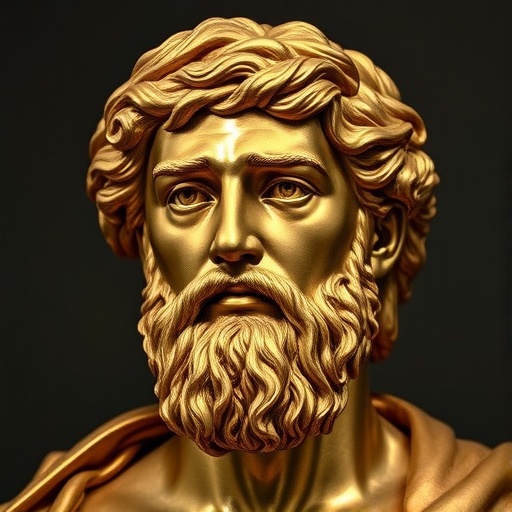
The gilding of ancient sculptures has long fascinated historians and archaeologists alike, and the equestrian statue of Marcus Aurelius is no exception. This iconic representation of one of Rome’s most celebrated emperors has not only stood the test of time but has also lent itself to intense scrutiny regarding its materials and techniques. Recent research conducted by Mello, Meda, and Salvalaggio delves deep into the gilding of this monumental sculpture, dissecting its surface characteristics and exploring the implications of its craftsmanship through advanced analytical techniques.
The research team utilized state-of-the-art surface analysis methods to unravel the intricate details of the statue’s gilded surface. By employing techniques such as scanning electron microscopy (SEM) and energy-dispersive X-ray spectroscopy (EDX), they were able to examine the elemental composition and microstructural features of the gilding layer. This meticulous examination revealed insights into the techniques employed by ancient artisans, highlighting aspects that have previously remained enigmatic to scholars.
One key finding from the study was the confirmation of the gilding agent used on the statue. The presence of gold particles within the gilding layer suggests that the ancient craftsmen utilized a high-quality gold leaf application compatible with the statue’s bronze substrate. This not only supports the notion of the Romans’ advanced metalworking skills but also raises questions regarding the sourcing and value of gold in antiquity. The researchers posited that such high-grade gold would have been a treasured commodity, indicating the significance of Marcus Aurelius in Roman society and the value attributed to his representation.
The context in which the statue was created plays a crucial role in understanding its gilding. The Roman Empire was a melting pot of influences, and the artistic choices reflected in the gilding method can be traced back to specific cultural and ideological narratives of the time. The research highlights that gilding was not merely a decorative choice; it was a deliberate statement of power and prestige. By adorning the statue with this opulent finish, the creators positioned Marcus Aurelius not just as an emperor but as a divine figure, bridging the earthly realm with the heavenly.
Moreover, the study addresses the deterioration processes that the gilding has undergone over centuries. Environmental factors, including atmospheric pollution and microclimatic conditions, have contributed to the degradation of the gilding layer, making the research pertinent not only for historical interpretation but also for conservation efforts. Understanding the materials used can directly inform restoration methodologies, ensuring that any interventions adhere to the original metallurgical techniques employed by Roman artisans.
The research also emphasizes the importance of interdisciplinary collaboration in the field of heritage science. By bringing together archaeologists, art historians, and materials scientists, the project exemplifies a holistic approach that can lead to more meaningful interpretations of historical artifacts. Such collaborations are essential in elevating the understanding of not only the technical aspects of ancient art but also the broader cultural implications tied to it.
It is interesting to note that this intricate gilding technique is not unique to the statue of Marcus Aurelius. The study draws parallels with other famous gilded sculptures and artifacts from the Roman period, showcasing a continuum of craftsmanship and stylistic preferences. This allows for a broader understanding of Roman artistic practices, which were characterized by both innovation and tradition, revealing a legacy that has persisted through the ages.
The implications of this research extend beyond the statue itself, touching on the broader themes of heritage preservation in our contemporary society. As modern technologies continue to advance, the ability to analyze and preserve artifacts such as the Marcus Aurelius equestrian statue becomes increasingly attainable. The conversation surrounding conservation strategies is vital, ensuring that future generations can also engage with these historical treasures and appreciate their enduring beauty.
Through their profound investigation, Mello, Meda, and Salvalaggio have opened new avenues for exploring the intersections of art, technology, and history. Their work serves as a testament to the enduring legacy of Marcus Aurelius and invites a reexamination of how we perceive ancient art forms in the light of modern analysis. The combination of rigorous scientific methodology with an appreciation for historical narrative exemplifies the rich tapestry of knowledge that can emerge from academia.
As historians and scientists celebrate this advancement in understanding the gilding of the Marcus Aurelius statue, it is clear that such research does more than illuminate the past; it enriches our understanding of human creativity and ingenuity. It challenges us to consider how we can preserve our own cultural heritage and what values we attach to such artefacts as we move into an increasingly globalized future, where the historical narratives we choose to uphold will shape our societies for decades to come.
In conclusion, the surface analysis and considerations offered by the recent study on the gilded equestrian statue of Marcus Aurelius not only enhance our understanding of Roman artistry but also the socioeconomic implications of such grand representations. It serves as a call to action for the preservation of our cultural heritage and a reminder of the artistry that transcended the boundaries of time.
Cite Scienmag News
Courtney Benton. (January 6, 2026). Insights into Marcus Aurelius Statue’s Gilding Techniques. Scienmag. https://scienmag.com/insights-into-marcus-aurelius-statues-gilding-techniques/
Courtney Benton. "Insights into Marcus Aurelius Statue’s Gilding Techniques." Scienmag, 6 January 2026, https://scienmag.com/insights-into-marcus-aurelius-statues-gilding-techniques/. Accessed 4 September 2026.
Courtney Benton. "Insights into Marcus Aurelius Statue’s Gilding Techniques." Scienmag. January 6, 2026. https://scienmag.com/insights-into-marcus-aurelius-statues-gilding-techniques/


