


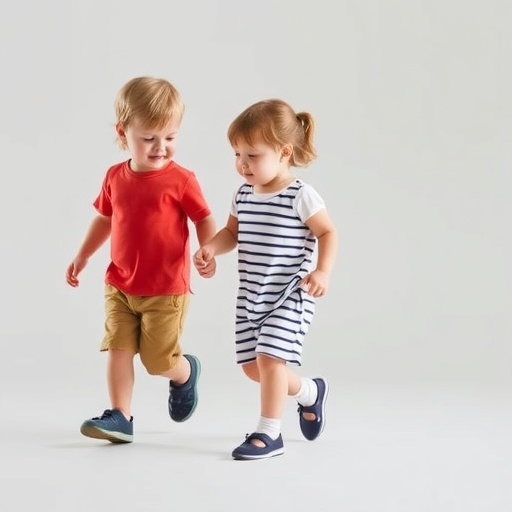
In a groundbreaking pilot study published in the Journal of Autism and Developmental Disorders, researchers have uncovered compelling evidence indicating that autistic toddlers exhibit higher intraindividual gait variability compared to their neurotypical peers. This investigation was spearheaded by a team including J.M.A. Osório, B. Ulrich-Ischer, and L.F. Mendes, who sought to explore the nuanced ways in which motor skills development varies in children diagnosed with autism spectrum disorder (ASD). This significant finding sheds light on the complex interplay between gait and neurological developmental processes early in life.
Gait, the manner in which individuals walk, is a critical component of locomotion and physical development, closely tied to neurological functioning and overall well-being. In typically developing children, gait patterns tend to be relatively stable; however, this new research raises the question of whether those patterns can serve as indicators of developmental challenges in autistic toddlers. The authors meticulously analyzed gait variability, focusing specifically on how children move at different times, in various settings, and under specific conditions to quantify differences between the two groups.
The study’s methodology involved detailed observational and measurement techniques aimed at capturing the gait patterns of toddlers diagnosed with ASD. By employing advanced motion capture technology, researchers could track multiple gait cycles, providing a nuanced understanding of each individual’s walking characteristics. They paid special attention to the consistency and variability of the steps taken, which can often reveal underlying issues related to motor control and coordination that might not be immediately apparent.
What sets this research apart is its emphasis on intraindividual variability rather than mere comparisons between groups. This perspective allows for a detailed exploration of each toddler’s unique gait patterns, showing that even within a population, there exists significant diversity. Such findings suggest that assessments focused solely on average gait metrics may obscure critical insights into the individual motor patterns that characterize each child’s development.
Another crucial component of this pilot study is its exploration of the potential implications of increased gait variability. Higher variability in walking patterns could signal challenges in motor control, potentially affecting the child’s ability to navigate their environment safely and interact with peers. This study opens the door to considering how such motor skills may impact social interactions and overall developmental trajectories in the early years of life.
The findings of this pilot study also raise questions about intervention strategies for autistic toddlers. If gait variability is linked to broader developmental challenges, clinicians and therapists might prioritize motor skills training as part of early intervention programs. This could provide a framework for enhancing mobility and potentially improving social engagement as children learn to navigate spaces more confidently.
Combining these insights with the broader context of existing literature offers an exciting pathway for future research. Previous studies have indicated that motor skills development is significantly delayed in children with autism compared to their neurotypical peers. Understanding how unique gait characteristics can serve as markers for these delays presents an opportunity for tailored interventions targeting the specific needs of autistic children.
As the dialogue around autism continues to evolve, this research emphasizes the importance of a multidisciplinary approach that includes movement analysis alongside traditional developmental assessments. By considering physical indicators such as gait, healthcare professionals may better identify the needs of autistic children, leading to earlier and more informed interventions that can make a real difference.
Moreover, the implications extend beyond clinical application; they also touch on the educational sector. Incorporating knowledge about gait variability during early childhood education can lead to better classroom dynamics and physical activity programs geared towards inclusivity. Encouraging all children to participate in movement-based activities can foster a supportive community where children learn from one another.
As researchers continue to explore the intricacies of autism spectrum disorder, studies like this one will be crucial in illuminating the unique developmental pathways that autistic children navigate. Understanding gait variability not only enriches our knowledge of motor skills but also reflects the broader complexities of neurological development.
In conclusion, the study by Osório et al. advances our understanding of autism in significant ways. By bringing attention to how gait variability presents in toddlers with ASD, the research encourages a shift in how we approach early diagnosis and intervention strategies. Future research should build upon these findings, potentially looking at longitudinal studies to track how gait patterns evolve and impact the lives of autistic individuals as they grow.
Understanding these multifaceted dimensions of autism, particularly in terms of physical skills, could open new avenues for research and therapeutic interventions that directly address the unique needs of autistic individuals, promoting their development and integration into all aspects of life.
Osório, J.M.A., Ulrich-Ischer, B., Mendes, L.F. et al. Higher Intraindividual Gait Variability in Autistic Toddlers: A Pilot Study. J Autism Dev Disord (2025). https://doi.org/10.1007/s10803-025-07173-4
Cite Scienmag News
Ophelia Keating. (December 13, 2025). Autistic Toddlers Display Greater Gait Variability. Scienmag. https://scienmag.com/autistic-toddlers-display-greater-gait-variability/
Ophelia Keating. "Autistic Toddlers Display Greater Gait Variability." Scienmag, 13 December 2025, https://scienmag.com/autistic-toddlers-display-greater-gait-variability/. Accessed 3 September 2026.
Ophelia Keating. "Autistic Toddlers Display Greater Gait Variability." Scienmag. December 13, 2025. https://scienmag.com/autistic-toddlers-display-greater-gait-variability/


