


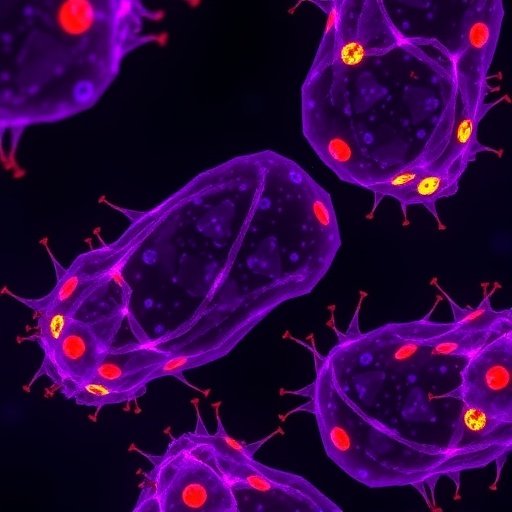
Recent research conducted by Meng, Nian, Feng, and colleagues has unveiled significant insights into the interaction between macrophages and natural killer (NK) cells in the context of hepatocellular carcinoma (HCC). Their study, titled “SGMS2+ macrophages enhance NR4A3hi NK cell infiltration to improve prognosis and PD-1 treatment efficacy in hepatocellular carcinoma,” published in the Journal of Translational Medicine, delves into the mechanisms that could improve therapeutic outcomes in patients suffering from this aggressive form of liver cancer.
HCC, a prevalent malignancy with increasing incidence worldwide, is notorious for its poor prognosis and resistance to conventional therapies. Traditional treatment regimens often fail to achieve long-term, sustained remission. However, the advent of immunotherapy, particularly therapies targeting the PD-1/PD-L1 pathway, has reshaped the treatment landscape. Despite these advances, the response rates for these therapies remain suboptimal, leading researchers to explore the tumor microenvironment’s intricacies in greater detail.
One of the critical components of the tumor microenvironment is the macrophage population. These cells play dual roles—some can promote tumor progression, while others can enhance anti-tumor immunity. The study by Meng et al. focuses particularly on SGMS2+ macrophages, a subset that has garnered attention due to its potential to stimulate immune responses. The researchers explored how these macrophages influence the infiltration of NK cells, specifically those expressing a high level of NR4A3, a transcription factor known to be crucial for NK cell function and anti-tumor activity.
Using advanced imaging and flow cytometry techniques, the study meticulously mapped the interactions between SGMS2+ macrophages and NR4A3hi NK cells within the HCC tumor microenvironment. The findings indicate that SGMS2+ macrophages secrete specific signaling molecules that not only enhance the recruitment of NR4A3hi NK cells but also improve their cytotoxic activity against tumor cells. This mechanism appears to be a promising avenue for enhancing the efficacy of PD-1 inhibitors, providing a deeper understanding of how to manipulate the immune landscape for better therapeutic outcomes.
Beyond the mechanistic insights, the researchers highlighted the potential clinical implications of their findings. By elucidating the role of SGMS2+ macrophages in NK cell infiltration, they set the stage for therapeutic strategies aimed at modulating these immune cells within the tumor. The potential to boost NK cell responses through targeted therapies could pave the way for more effective treatment methodologies that not only enhance patient prognosis but also improve the overall efficacy of existing immunotherapies.
The implications of their research stretch beyond the realm of HCC; the principles of macrophage and NK cell interaction could have broader applications across various malignancies. As cancer immunotherapy continues to evolve rapidly, understanding the immune microenvironment in a nuanced manner will be essential for developing next-generation therapeutic strategies. This study encourages researchers to consider not merely the tumor cells themselves but the multitude of interacting cells that shape the immune response and drive tumor progression.
Although the engaging aspects of macrophage biology are well acknowledged, the functionality of specific macrophage subsets, including SGMS2+ cells, remains a critical area for further exploration. The unanswered questions remain, such as the precise molecular pathways through which these macrophages exert their effects and how they might be modulated for therapeutic benefit. This research opens avenues for testing various compounds and treatments that can influence SGMS2+ macrophage activity, paving the way for innovative cancer therapies.
Furthermore, the work of Meng et al. emphasizes the need for personalized medicine in oncology. The heterogeneity observed in tumor microenvironments necessitates tailored therapeutic options based on individual patient profiles. By identifying specific macrophage activities associated with favorable NK cell recruitment and function, oncologists may one day leverage this information to select the most promising treatment regimens for patients with HCC.
As the landscape of cancer treatment continues to evolve, continued collaboration between basic researchers and clinical oncologists will be crucial to translating these findings into practice. By moving swiftly from bench to bedside, the insights gained from such studies can lead to practical applications that significantly alter the course of treatment for patients battling hepatocellular carcinoma. The call to focus on immune dynamics represents a paradigm shift in cancer therapy, urging researchers and healthcare professionals to consider innovative strategies that target immune modulatory pathways.
Finally, the study lays down a critical framework for future clinical trials focusing on SGMS2+ macrophage-targeting therapies in combination with existing PD-1 inhibitors. With a deeper knowledge of how to effectively mobilize the immune system against HCC, the potential for improved patient outcomes becomes increasingly tangible. It is evident that studies such as this play an instrumental role in the ongoing quest to overcome the formidable challenges posed by cancer treatment.
In conclusion, the imperative of developing novel cancer therapeutics is underscored by findings from Meng, Nian, Feng, and colleagues. Their exploration into SGMS2+ macrophages and their capacity to enhance NR4A3hi NK cell responses not only provides hope for significantly improving hepatocellular carcinoma prognosis but shines light on broader immunological principles that can be harnessed across multiple tumors. Thus, the journey towards better cancer therapies is one of collective inquiry and interdisciplinary collaboration—critical elements that will ultimately drive innovation and improve the lives of countless patients faced with the challenges of cancer.
Meng, F., Nian, F., Feng, H. et al. SGMS2+ macrophages enhance NR4A3hi NK cell infiltration to improve prognosis and PD-1 treatment efficacy in hepatocellular carcinoma. J Transl Med (2025). https://doi.org/10.1186/s12967-025-07040-x
Cite Scienmag News
Nathaniel Bowman. (December 1, 2025). SGMS2+ Macrophages Boost NK Cell Infiltration in Cancer. Scienmag. https://scienmag.com/sgms2-macrophages-boost-nk-cell-infiltration-in-cancer/
Nathaniel Bowman. "SGMS2+ Macrophages Boost NK Cell Infiltration in Cancer." Scienmag, 1 December 2025, https://scienmag.com/sgms2-macrophages-boost-nk-cell-infiltration-in-cancer/. Accessed 4 September 2026.
Nathaniel Bowman. "SGMS2+ Macrophages Boost NK Cell Infiltration in Cancer." Scienmag. December 1, 2025. https://scienmag.com/sgms2-macrophages-boost-nk-cell-infiltration-in-cancer/


