


The Terasaki Institute for Biomedical Innovation (TIBI) and the California Institute of Technology (Caltech) have joined forces in a groundbreaking research initiative, recently awarded a $2.8 million Discovery Stage Research grant by the California Institute for Regenerative Medicine (CIRM). This significant funding marks a pivotal advancement in the exploration of early human embryo development through stem cell-based models, signaling a potential leap forward in developmental biology and regenerative medicine.
This transformative project, titled “High-Throughput Discovery of Embryo Formation Factors Using Stem Cell-Based Human Embryo Models,” is designed to untangle the complex biological and molecular orchestration guiding the earliest stages of human development. By replicating embryo formation processes in vitro through sophisticated stem cell-derived embryo models, the researchers aim to pinpoint critical factors that influence embryo viability and morphogenesis. Understanding these mechanisms promises to shed light on underlying causes of infertility, recurrent pregnancy loss, and a range of developmental abnormalities, thereby providing unprecedented insight into early human embryogenesis.
At the helm of this innovative collaboration is Dr. Magdalena Zernicka-Goetz, a distinguished Professor of Biology and Biological Engineering at Caltech, whose expertise in embryology has been internationally recognized. She partners with Dr. Zhaohui Wang, Director of Precision Medicine and Assistant Professor at the Terasaki Institute, and Dr. Changhuei Yang, Executive Officer for Electrical Engineering and Professor at Caltech with joint appointments spanning electrical engineering, bioengineering, and medical engineering. Together, their multidisciplinary teams bring a potent combination of developmental biology, advanced imaging techniques, and artificial intelligence/machine learning analytics, harmoniously integrated with the Terasaki Institute’s capabilities in organoid engineering, biomaterials science, and high-throughput screening technologies.
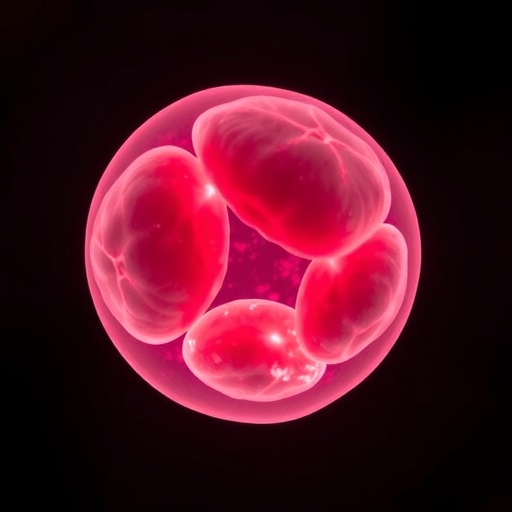
The scientific strategy focuses on employing high-throughput screening of stem cell-derived human embryo models, sometimes referred to as blastoids, which replicate critical aspects of natural embryo development. These models enable meticulous examination of the cellular and molecular interactions during the crucial window of embryo formation. The use of blastoids introduces not only an ethical advantage by reducing reliance on human embryos but also a practical platform for rapid hypothesis testing and experimental manipulation. By leveraging AI-driven analytics, the research teams can extract complex data patterns from imaging outputs, thus accelerating the identification of novel regulatory factors and pathways critical for embryogenesis.
Central to the collaboration is the transfer from conceptual modeling to a practical, scalable platform that could revolutionize both fundamental research and translational applications. Dr. Wang articulated the vision succinctly: by combining advanced understanding of stem cell biology with engineering principles, the project aims to establish blastoids as a high-impact platform. This platform will allow scientists to better understand not only typical embryo development but also how disruptions at the molecular level may lead to pathological outcomes. Such advances carry profound implications for reproductive medicine, including new therapeutic strategies for infertility and early miscarriage prevention.
The Terasaki Institute’s role, underpinned by its mission to bridge scientific discovery with translational innovation, plays a crucial part in this endeavor. Their expertise in organoid engineering—wherein miniature, simplified versions of organs are grown in vitro—enables the study of complex biological processes in highly controlled environments. Coupled with biomaterial development and microfluidic systems for high-throughput screening, the institute contributes essential technological components facilitating large-scale, precise experimentation within this project.
From Caltech’s perspective, the collaboration draws on decades of excellence in developmental biology research, along with pioneering imaging modalities and computational modeling. The integration of bioengineering and electrical engineering disciplines further allows innovative instrumentation and analytics, enhancing the resolution and interpretability of developmental phenomena. Dr. Changhuei Yang’s involvement notably underscores the intersection of cutting-edge engineering with biological research, promising novel insights enabled by interdisciplinary synergy.
The CIRM Discovery (DISC0) program’s funding of this project underscores California’s commitment to nurturing high-risk, high-reward research projects that propel regenerative medicine toward clinical translation. By supporting early-stage investigations, CIRM catalyzes the emergence of transformative scientific breakthroughs with the potential to address some of the most complex medical challenges. This collaborative project exemplifies that vision, embodying a convergence of foundational science and translational promise.
Among the anticipated early milestones is the characterization of key molecular signals and environmental cues that regulate blastoid formation and subsequent developmental transitions. Using stem cell lines genetically modified and cultured under various conditions, the researchers plan to systematically dissect pathways that drive cellular differentiation, spatial organization, and signaling cascades responsible for maintaining pluripotency or initiating lineage commitment. These insights might reveal not only normal developmental trajectories but also aberrant patterns linked with disorders or implantation failures.
Simultaneously, the application of artificial intelligence and machine learning algorithms represents a paradigm shift in data analysis within developmental biology. Imaging datasets generated from live-cell microscopy and high-content assays yield massive amounts of complex, multidimensional information. Computational models developed during this project aim to identify subtle phenotypic signatures and predictive markers with unprecedented accuracy, enhancing experimental throughput and guiding hypothesis generation.
The ethical dimension of this research is notable as well, reflecting contemporary standards that strive to reduce human embryo usage by adopting stem cell-derived analogs. This approach alleviates ethical concerns while maintaining biological relevance, thereby balancing scientific advancement with social responsibility. The research stands as a model for responsible innovation in the life sciences, facilitating discoveries without compromising ethical principles.
In essence, this collaboration between the Terasaki Institute and Caltech, supported by CIRM, promises to redefine our understanding of human embryogenesis through sophisticated stem cell technologies, advanced imaging, and computational analytics. The successful execution of this project could not only illuminate fundamental biological processes but also pave the way for novel clinical applications in fertility treatments and regenerative medicine, ultimately impacting human health on a profound scale.
News Publication Date:
November 14, 2025
Web References:
- Terasaki Institute for Biomedical Innovation: https://terasaki.org
- California Institute of Technology: https://caltech.edu
- California Institute for Regenerative Medicine (CIRM): https://cirm.ca.gov
Cite Scienmag News
Drew Townsend. (November 15, 2025). Terasaki Institute and Caltech Secure $2.8 Million CIRM Grant to Propel Human Embryo Formation Research. Scienmag. https://scienmag.com/terasaki-institute-and-caltech-secure-2-8-million-cirm-grant-to-propel-human-embryo-formation-research/
Drew Townsend. "Terasaki Institute and Caltech Secure $2.8 Million CIRM Grant to Propel Human Embryo Formation Research." Scienmag, 15 November 2025, https://scienmag.com/terasaki-institute-and-caltech-secure-2-8-million-cirm-grant-to-propel-human-embryo-formation-research/. Accessed 3 September 2026.
Drew Townsend. "Terasaki Institute and Caltech Secure $2.8 Million CIRM Grant to Propel Human Embryo Formation Research." Scienmag. November 15, 2025. https://scienmag.com/terasaki-institute-and-caltech-secure-2-8-million-cirm-grant-to-propel-human-embryo-formation-research/


