


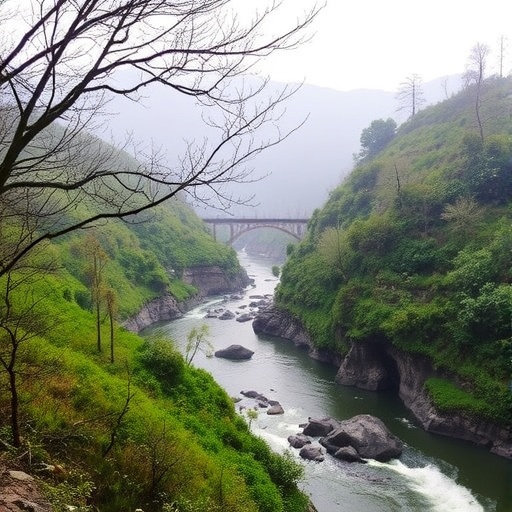
Researchers have long recognized the critical role that riparian vegetation plays in maintaining ecological balance and supporting biodiversity, yet the complex dynamics of these systems remain poorly understood. A groundbreaking study, led by Yang, Qin, and Zhao, delves deep into the classification and distribution characteristics of riparian vegetation within the reach scales of the Nanliu River in China. This study is not only a significant contribution to environmental science but also highlights the urgent need for conservation strategies in these vital ecosystems.
The Nanliu River serves as a unique natural laboratory, where various types of vegetation interact with different hydrological conditions, soil types, and anthropogenic influences. The researchers aspired to categorize these vegetation types effectively while analyzing their distribution patterns across different ecological niches. Through this meticulous classification, the study delineated how natural and human-induced variables influence riparian vegetation dynamics.
To achieve their objectives, the study employed sophisticated remote sensing technologies alongside field surveys to gather comprehensive data. Utilizing tools like satellite imagery and aerial photography empowered the researchers to identify vegetation types with impressive detail. The integration of these advanced techniques allowed for an extensive examination of vegetation cover, composition, and distribution, covering various reach scales.
Additionally, the research highlights the importance of riparian buffers, which are critical zones that filter pollutants, stabilize shorelines, and support fish and wildlife habitats. These buffers serve as life-support systems for both terrestrial and aquatic species, underscoring their necessity in environmental management strategies aimed at mitigating the effects of human activity and climate change. The study puts forth compelling evidence, advocating for the restoration and preservation of these riparian zones to foster biodiversity and ecosystem resilience.
The classification system established by the study categorizes riparian vegetation into distinct groups based on specific characteristics, including species composition, growth form, and ecological function. These classifications enhance our understanding of vegetation dynamics, offering insights into how different species adapt to varying environmental conditions. As the research highlights, understanding these classifications could aid in developing targeted conservation efforts, ensuring the sustainability of these precious ecosystems.
In addition, the study delves into the distribution patterns of riparian vegetation, revealing a remarkable heterogeneity across different sections of the Nanliu River. Factors such as topography, hydrology, and anthropogenic disturbances were identified as significant influencers of vegetation distribution, informing future conservation strategies. The findings suggest that riparian ecosystems are far from homogenous; rather, they exhibit a mosaic of habitats that can change drastically even within short distances.
An alarming revelation from the research is the increasing threat posed by urbanization and agricultural expansion. As human activities continue to encroach upon these vital ecosystems, the study elucidates the urgent need for effective management practices and policies aimed at safeguarding riparian zones. The scientists call for heightened awareness among local communities regarding the significance of preserving these natural habitats, urging collaborative efforts for their protection.
Furthermore, the study raises awareness of the potential climate change impacts on riparian vegetation. As shifting climate patterns influence water availability and vegetation growth, certain species may experience stress, leading to alterations in composition and distribution. This highlights the need for ongoing monitoring and research to anticipate these changes and implement adaptive management strategies proactively.
One of the most compelling aspects of this research is its potential implications for restoration ecology. Armed with a precise understanding of the classification and distribution of riparian vegetation, conservationists can develop informed strategies for restoring degraded areas. By utilizing native species identified in the study, restoration efforts can be tailored towards achieving a balanced and resilient ecosystem.
As we move forward in a rapidly changing world influenced by human activity, the findings of this study echo a crucial message: protecting and understanding riparian ecosystems is paramount to sustaining biodiversity and environmental health. The authors of the study urge policymakers, researchers, and community stakeholders to come together to prioritize the conservation of these invaluable habitats.
In conclusion, Yang, Qin, and Zhao’s study serves as a milestone in understanding riparian vegetation along the Nanliu River, showcasing the intricate interplay between ecological factors and human influences. By effectively classifying and understanding the distribution of riparian plants, this research not only contributes to a significant body of knowledge but also lays the groundwork for future studies aimed at preserving these ecosystems.
Through their meticulous efforts, the researchers have generated a foundational understanding that serves as a vital resource for ongoing conservation initiatives, environmental planning, and management policies. The holistic approach adopted in this study reinforces the undeniable connection between healthy riparian zones and the overall well-being of our planet’s ecosystems, making it a necessary read for environmental advocates and policymakers alike.
This research exemplifies the importance of scientific inquiry in addressing pressing environmental challenges, reminding us that nature’s resilience is intricately tied to our actions. As we forge ahead, let us take heed of the insights presented and commit ourselves to the stewardship of these irreplaceable riparian ecosystems.
Yang, L., Qin, Y., Zhao, Y. et al. A study on the classification and distribution characteristics of riparian vegetation at reach scales in the Nanliu River, China.
Environ Monit Assess 197, 1315 (2025). https://doi.org/10.1007/s10661-025-14788-8
Cite Scienmag News
Margaret Porter. (November 9, 2025). Exploring Riparian Vegetation Patterns Along China’s Nanliu River. Scienmag. https://scienmag.com/exploring-riparian-vegetation-patterns-along-chinas-nanliu-river/
Margaret Porter. "Exploring Riparian Vegetation Patterns Along China’s Nanliu River." Scienmag, 9 November 2025, https://scienmag.com/exploring-riparian-vegetation-patterns-along-chinas-nanliu-river/. Accessed 5 September 2026.
Margaret Porter. "Exploring Riparian Vegetation Patterns Along China’s Nanliu River." Scienmag. November 9, 2025. https://scienmag.com/exploring-riparian-vegetation-patterns-along-chinas-nanliu-river/


